Think of powder as a finishing tool, not a full-face rule
Setting powder can reduce shine and help cream or liquid makeup feel less tacky. It can also soften the look of a very dewy finish. That does not mean every part of the face needs the same amount. Powder is usually most useful where makeup creases, shifts, or becomes shinier than you want. Areas that stay comfortable and look the way you like may need little or none.
Before powdering, give foundation and concealer a moment to settle. If product has collected in a line, gently smooth it with a fingertip or a clean sponge first; powder can make an existing crease more noticeable. Then pick up a small amount of powder and tap off the excess. It is easier to add a little more than to remove a heavy layer without disturbing the makeup beneath.
Start with the center of the face
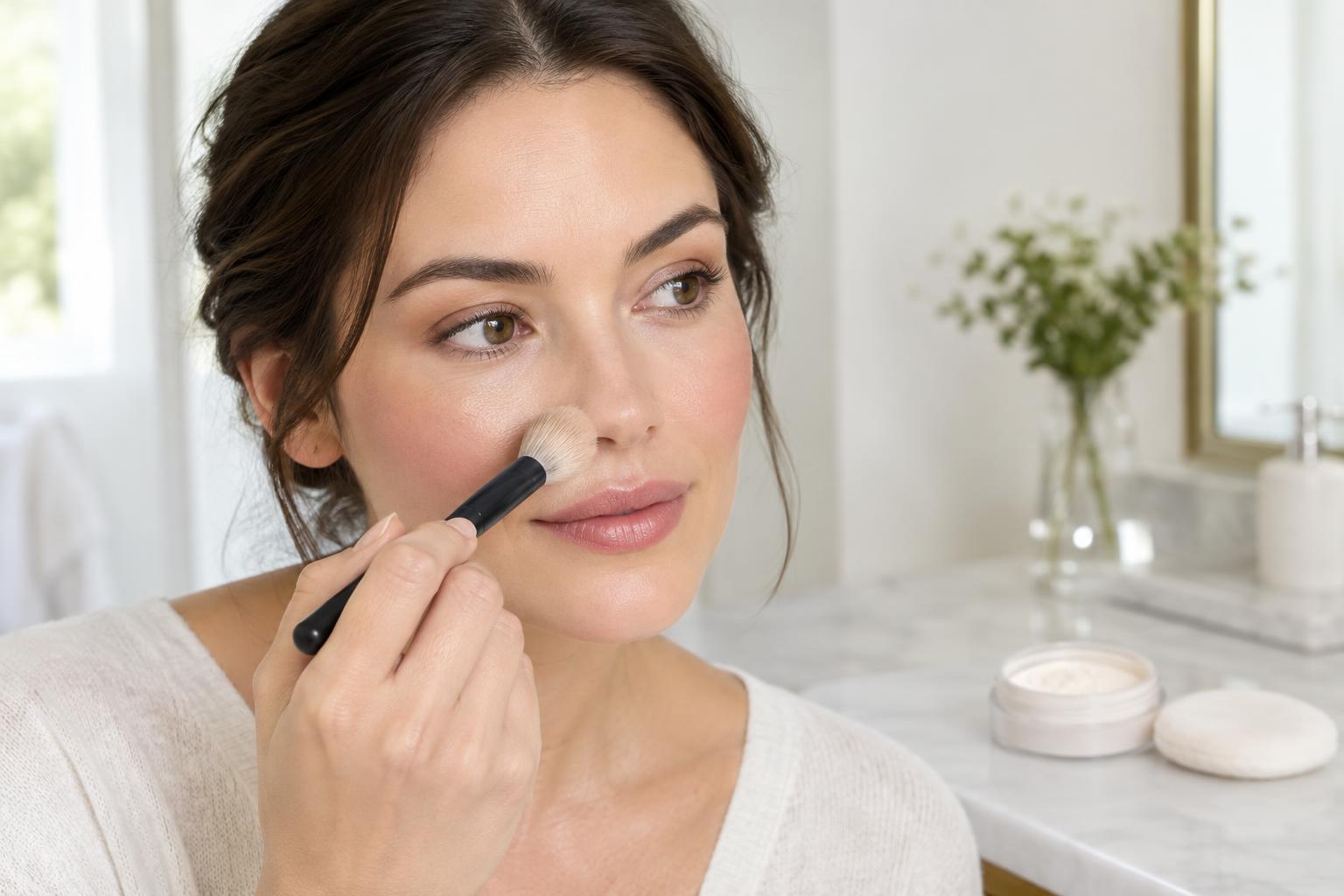
The sides of the nose, the area between the brows, and the center of the forehead are common places to use powder when you want to control shine. A light press with a puff or small brush gives you more control than sweeping a large brush across the whole face. You can extend the powder to the chin if makeup there tends to wear unevenly.
Pay particular attention to the folds beside the nostrils, where base makeup can gather. Use only what fits on the tip of a small brush or the edge of a puff, and press rather than rub. If your cheeks are not shiny, you can stop powdering before you reach them. Leaving the outer face unpowdered can preserve the finish of a luminous foundation or cream blush.
Use a lighter hand under the eyes and around the mouth
A small amount of powder can set under-eye concealer, but a thick layer may emphasize fine texture or make the area look dry. After smoothing the concealer, use a small, soft brush or the corner of a puff to place a thin veil of powder only where the concealer tends to crease. You do not have to powder all the way up to the lower lashes if that area already looks smooth.
The lines around the mouth also move frequently, so extra foundation and powder can build up there. Smooth away any visible excess before applying a trace of powder where makeup shifts. For the chin, powder only the parts that need it. This targeted approach is often more useful than repeatedly layering powder over the entire lower face.
Know where to leave powder off
High points of the cheeks often look best with less powder, especially if you want cream blush or highlighter to retain its glow. Dry-looking patches can also appear more textured under a dense layer of powder. If an area looks comfortable and your makeup stays in place there, leaving it alone is a valid choice.
Be careful when powdering over cream color products. A broad sweep can move blush or bronzer and leave an uneven edge. If you need to set the skin nearby, press powder around the color rather than directly across it. For a softer overall finish, use what remains on your brush to blend the boundary between powdered and unpowdered areas—without adding another scoop of product.
Choose an application method you can control
A small brush is useful for precise spots, while a puff makes it easy to press powder onto areas where makeup moves. A larger, fluffy brush can apply a light veil, but it may spread powder farther than intended. Loose and pressed powders can both work; the amount you pick up and where you put it matter more than the format. If a powder has color, check that it blends with your base rather than changing its shade.
Look at your makeup in ordinary light after applying powder. If one area still appears shiny and you want it more matte, add a small amount there. If the face looks flat or powdery, avoid adding more elsewhere. During the day, blotting excess shine before a touch-up can help prevent layers from building up. The goal is not to powder every visible pore or line; it is to keep the finish comfortable and intentional.