What denier measures
Denier is a measure of fiber weight: one denier means that 9,000 meters of the fiber weigh one gram. On a tights package, it offers a practical clue about the material used. Lower-denier hosiery is generally finer and more transparent; higher-denier hosiery is generally heavier and more covering. That makes the number helpful when you want to decide whether your legs should remain visible or the tights should look more like a solid part of the outfit.
Denier is not an exact opacity rating, though. The knit, fiber blend, color and amount of stretch all affect the result. A pair pulled taut may look more transparent over the knees than it does at the ankles. Lighting and the contrast between the tights and your skin also change what you see. Treat the number as a starting point, then check the product’s description for words such as sheer, semi-opaque or opaque.
How common denier ranges tend to look
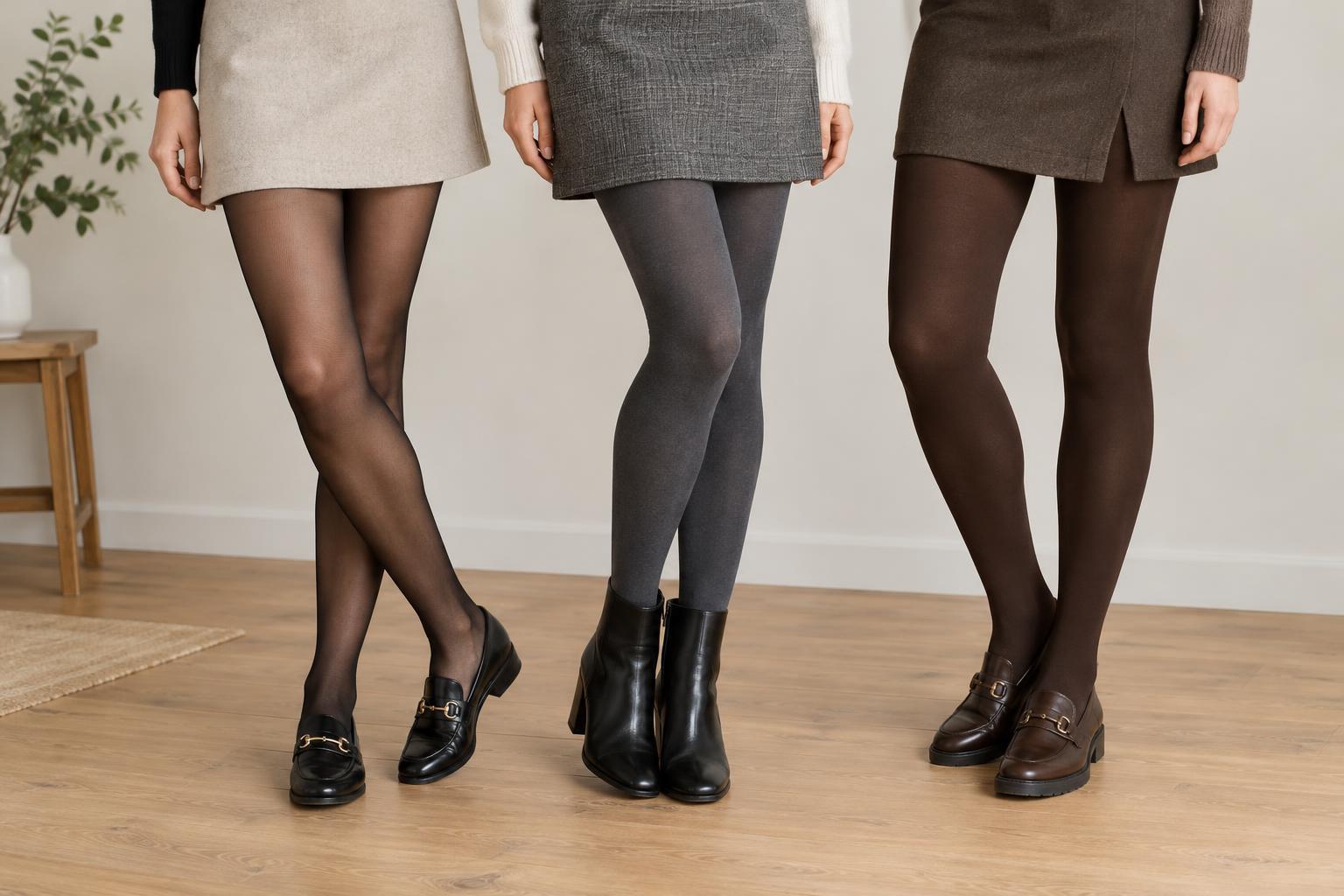
Very fine tights, around 5 to 15 denier, usually leave skin clearly visible. They can make an outfit feel lightly finished without drawing much attention to the hosiery. Around 20 to 40 denier, tights often look more noticeable while still allowing some skin to show, particularly where the fabric stretches. These ranges are useful guides, not promises: two pairs with the same number can look different when worn.
At roughly 50 to 80 denier, many tights give a more covered appearance. They can provide a defined block of color beneath a skirt or dress. Pairs around 100 denier and above are often chosen for a denser, more solid look. If coverage matters more to you than a particular number, prioritize the word opaque and look at how the tights appear on the model or in a product image, while allowing for differences in lighting and fit.
Choose opacity as part of the outfit
Sheer hosiery lets the color of your legs show through, so it tends to keep the lower half of an outfit visually light. It can work when you want a dress, skirt or pair of shoes to remain the main focus. Midweight tights introduce more visible color without always creating a fully solid line. Opaque tights have a stronger visual presence and can balance heavier fabrics, substantial shoes or a bold accessory.
For a continuous look, try tights and shoes in similar colors. For contrast, choose a hosiery color that stands apart from your footwear or hemline, then repeat that color in another small detail if you want the outfit to feel connected. Black is not the only option: brown, gray, navy and other muted shades can soften the contrast with clothes or shoes. The best choice is the one that gives you the amount of definition you want.
Check color, finish and fit before deciding
Color can change your impression of opacity. A shade close to your skin tone may appear subtler than a contrasting shade at the same denier. Finish matters too: matte tights tend to look quieter, while a shiny finish catches light and makes the legs more noticeable. Patterns, ribbing and seams add another layer of detail, so consider them alongside the clothes rather than relying on the denier number alone.
Fit affects both appearance and comfort. Tights that are stretched beyond their intended fit may look sheerer than expected and feel strained at the waistband or toes. A pair with excess length may bunch around the ankles. Use the maker’s size guide where available, paying attention to both height and other listed measurements. If you are between sizes, the fabric’s stretch and the fit you prefer may help you choose.
Make the choice easier in practice
Start with the role you want the tights to play: nearly invisible finishing touch, visible but translucent layer, or solid color. Then choose an approximate denier range and narrow it down by color and finish. If you are shopping online, read the opacity description as well as the number. If you already own a pair you like, its label can be a useful reference for your next purchase.
When getting dressed, check the tights in the lighting where you can see the whole outfit. Look at the knees, ankles and waistband area for differences in stretch and coverage. Finally, handle fine hosiery gently when putting it on and store pairs away from snag-prone accessories. These small checks help you choose tights for the look they create, rather than expecting one number to tell the whole story.