Start with the job your shoes need to do
The best casual shoe is not necessarily the one that goes with the most outfits in theory. It is the one you will reach for on an ordinary day. Before comparing styles, think about where you usually go, how long you expect to be on your feet, and whether your route includes uneven pavement, stairs, or wet ground. A shoe for short trips between indoor spaces may not be the pair you want for a full day of errands.
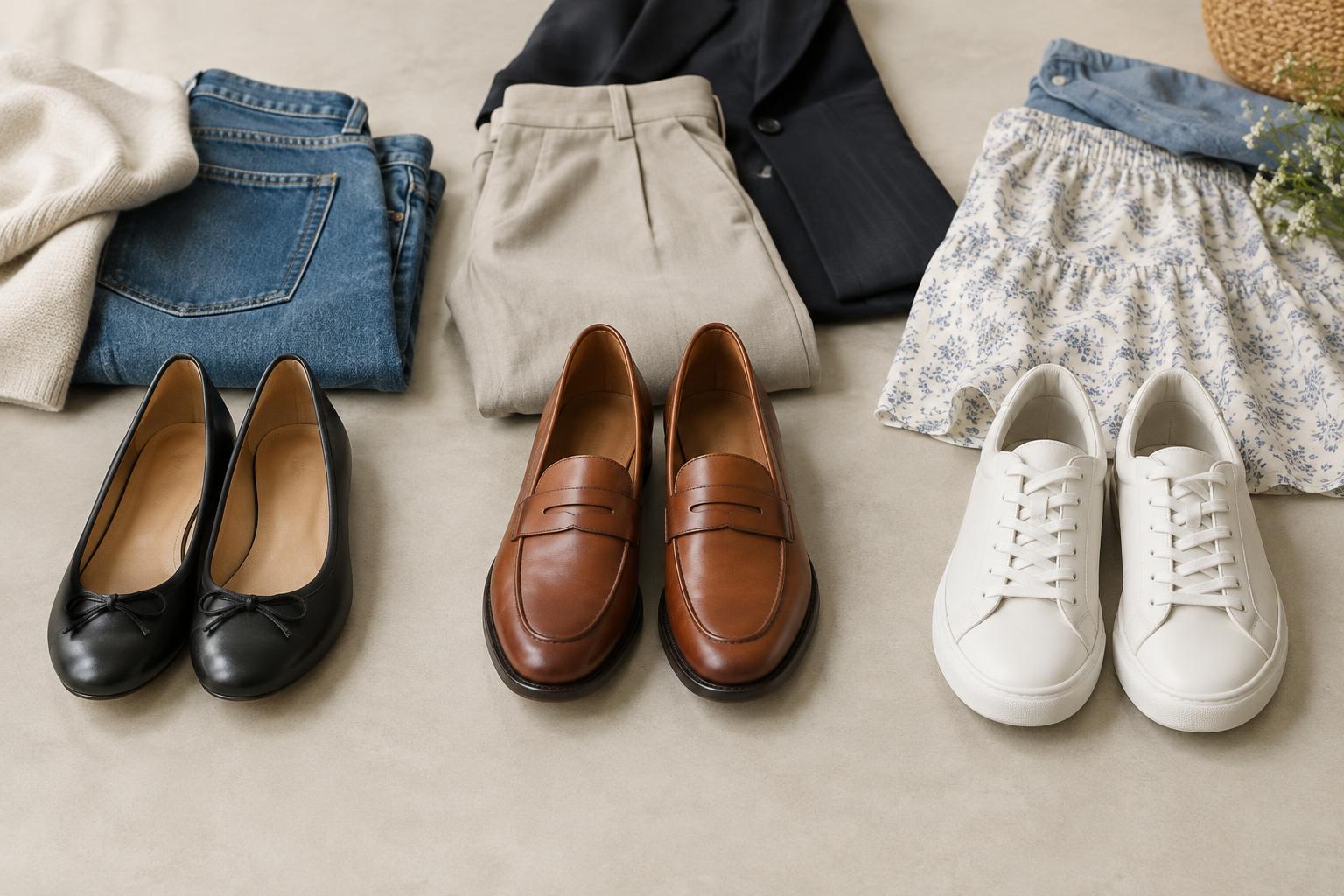
Then look at your wardrobe. If you wear relaxed trousers and denim most days, all three options can fit in, but they change the mood of an outfit. Ballet flats look light and understated, loafers add structure, and sneakers make the result more relaxed. If most of your clothes lean one way, choose the shoe that fills a gap rather than buying another version of a look you already have.
Ballet flats: a light, simple finish
Ballet flats sit low on the foot and usually have a slim sole and a rounded, square, or pointed toe. Their low profile makes them easy to pair with cropped trousers, jeans, skirts, and casual dresses without drawing much attention away from the clothes. A rounded toe can feel softer and more relaxed; a pointed toe gives the same basic shoe a sharper outline. Small details, such as a strap or bow, can also shift the look.
The trade-off is that flats vary widely in structure. Some bend easily and have little cushioning, while others have a firmer sole and a more substantial upper. When trying on a pair, check that the heel stays in place as you walk and that your toes have room without the shoe feeling loose. Do not assume a tight pair will become comfortable simply because the material feels soft. If you regularly walk long distances, consider whether the particular sole and fit suit that use.
Loafers: a more polished casual option
Loafers cover more of the foot than ballet flats and tend to have a defined sole, making them an easy bridge between casual and dressed-up outfits. They work especially well when you want jeans and a plain top to look more considered, or when you want a comfortable-looking alternative to a formal shoe. Penny, tassel, and plain-front designs each add a slightly different detail, but a simple shape is often the easiest to style repeatedly.
Fit matters because a loafer needs to stay on without laces or an ankle strap. Your heel should not slip excessively, yet the upper should not press uncomfortably across the top of your foot. Try them with the socks or insoles you intend to wear; both can change how snug they feel. Also notice the weight and stiffness of the sole. A chunky loafer makes a stronger visual statement, while a slimmer one may be easier to pair with lighter fabrics.
Sneakers: relaxed style with plenty of variation
Sneakers are the most adjustable of the three because many styles have laces, but the category is broad. A low-profile canvas or leather-look pair can sit quietly alongside straight-leg trousers or a simple dress. A larger athletic-style sneaker creates a sportier focal point. Neither is automatically more versatile: it depends on whether you want the shoe to blend into your outfit or help define it.
For everyday wear, pay attention to more than color. Check the toe space, heel hold, sole flexibility, and overall weight as you move around. A pair that feels fine while standing still may feel different after several minutes of walking. Think about upkeep, too. Light-colored shoes show marks more readily, textured panels can take more effort to clean, and some materials are less suited to damp conditions. Choose a finish you are willing to maintain.
Make the final choice with real outfits
If you are choosing just one pair, try each candidate with two or three outfits you already wear often. Look at the whole silhouette, including where your trouser hem meets the shoe. Ballet flats can balance wide or cropped bottoms without adding bulk. Loafers can give loose clothing a clearer shape. Sneakers can make tailored pieces feel more casual. These are starting points, not rules; proportions and personal taste matter more than any fixed formula.
A useful final test is to picture a typical week rather than a special occasion. Pick ballet flats if you want a minimal, light-looking shoe and have found a pair that fits your walking needs. Pick loafers if you want one step more polish without giving up an everyday feel. Pick sneakers if adjustability and a relaxed look are your priorities. Whichever you choose, a comfortable fit and a style you will actually wear are worth more than a shoe that only looks useful in the box.