Start with the job you want the headband to do
A headband that keeps short layers off your face may not be the best choice for holding back thick hair during a busy day. Before choosing one, decide whether you need light control, a polished finishing touch or a secure hold for loose strands. That decision helps you judge the band by how it performs, rather than by how firmly it grips in your hand.
Think about when you will wear it, too. If you expect to keep it on for hours, comfort matters as much as hold. A band that feels secure for a quick mirror check can become distracting once you move around. Look for one that stays put with your usual hairstyle and does not depend on uncomfortable pressure to do its job.
Choose a shape that suits your hair and head
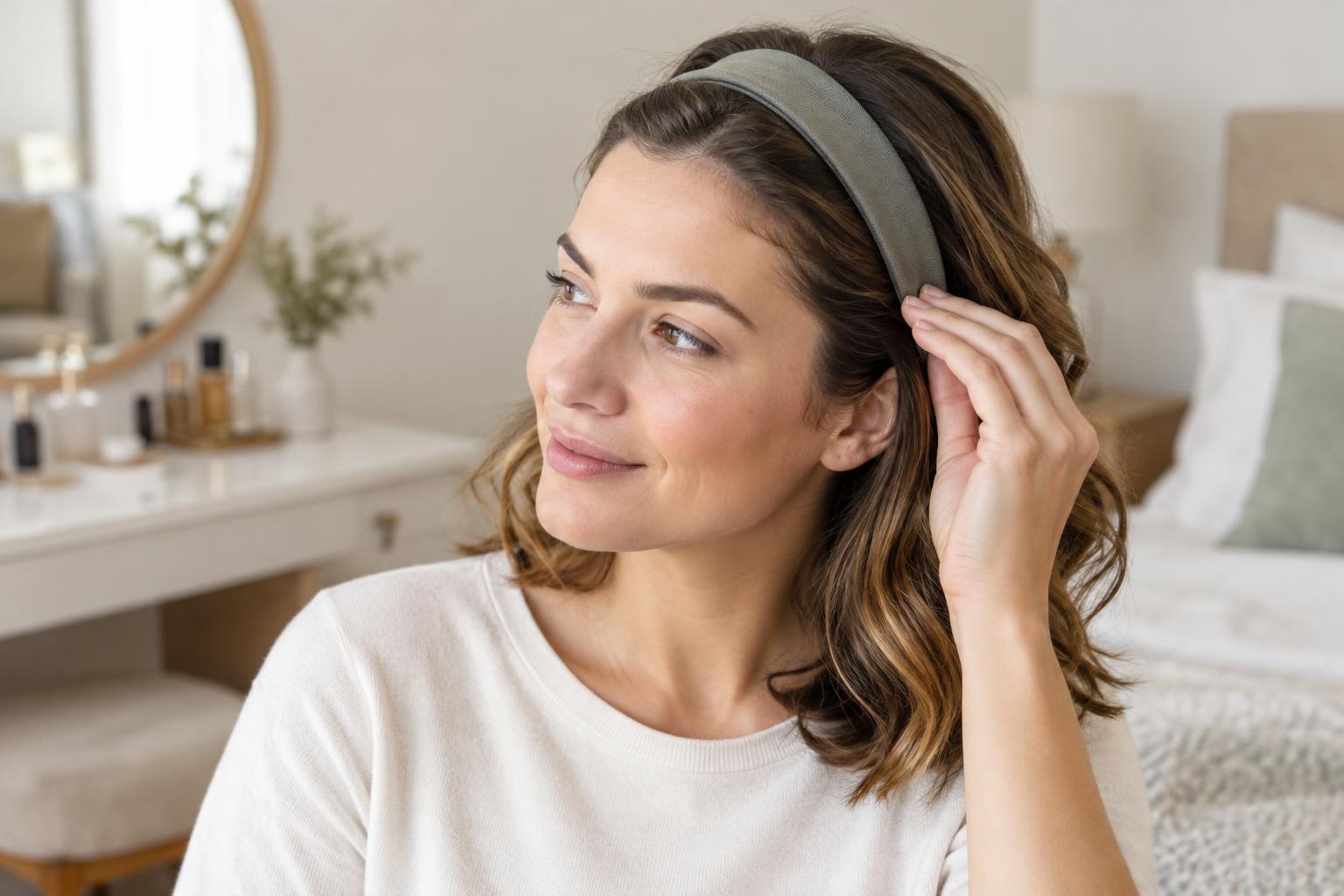
Rigid, open-ended headbands offer structure and are easy to slip on. Check the curve: it should follow your head without squeezing at the temples or pressing behind the ears. A very narrow band can put pressure on a small area, while a wider band spreads contact across more hair. Neither is automatically better; the right choice depends on your comfort and the look you want.
Soft fabric bands and wraps can feel gentler, especially when you want broad coverage. Their stretch matters, though. A band that slides on effortlessly may keep moving, while one that pulls tightly can creep backward or feel restrictive. Adjustable ties give you more control over tension, but a bulky knot may be uncomfortable if it sits where your head rests against a chair.
If possible, try the band with your hair styled as you normally wear it. Notice where the ends land, whether the top sits flat and whether it shifts when you turn your head. A good fit should feel stable without requiring you to push it down hard.
Match grip and material to your hairstyle
Smooth plastic, satin-like fabric and polished metal can be easy to slide into place, but they may also move more readily on sleek hair. A fabric-covered band, a lightly textured underside or small comb-like teeth may provide more grip. Teeth should catch the hair gently, not snag it. Run a finger along the inner edge to check for rough seams or sharp spots before wearing it.
Hair volume changes how a band sits. A rigid band may ride higher over thick or curly hair, while a very soft band may disappear into a full style or roll at the edges. If you wear a part, fringe or face-framing pieces, make sure the band can hold the sections you want back without flattening everything else. There is no need to force all your hair under it for the band to be useful.
For a smooth finished style, try a band with a grippy underside rather than relying on extra tightness. For a relaxed style with texture, a soft wrap may stay put more easily when it has enough hair to rest against. The aim is contact that feels secure, not friction that makes removal difficult.
Test placement before judging the fit
Placement can make the same headband feel either comfortable or frustrating. Begin near your hairline, then move it back a little at a time until it holds the strands you want. If a rigid band slips backward, try setting its ends in a slightly different position behind your ears. If a fabric band rolls, smooth it flat as you put it on and check that it is not stretched unevenly.
Give your choice a brief movement test: turn your head, look down and tuck hair behind your ears. If you immediately need to readjust it, try another placement or shape. If you notice pressure at your temples or behind your ears, take it off rather than assuming you will get used to it. A headband should be easy to forget about once it is on.
Make small adjustments without sacrificing comfort
A headband often works better when the hairstyle gives it a clear role. You can leave a few front pieces loose for a softer look, or place the band after gathering the rest of your hair so it only needs to manage shorter strands. If you use hairpins for extra hold, position them so they secure the hair rather than dig into your scalp.
Keep the band clean and check it occasionally for worn fabric, loose coverings or exposed edges that could affect grip and comfort. When shopping, prioritize a shape you can wear through ordinary movement over one that only looks right while standing still. The best headband stays in place because it fits your head, hair and routine—not because it squeezes.