Start with the style you want to secure
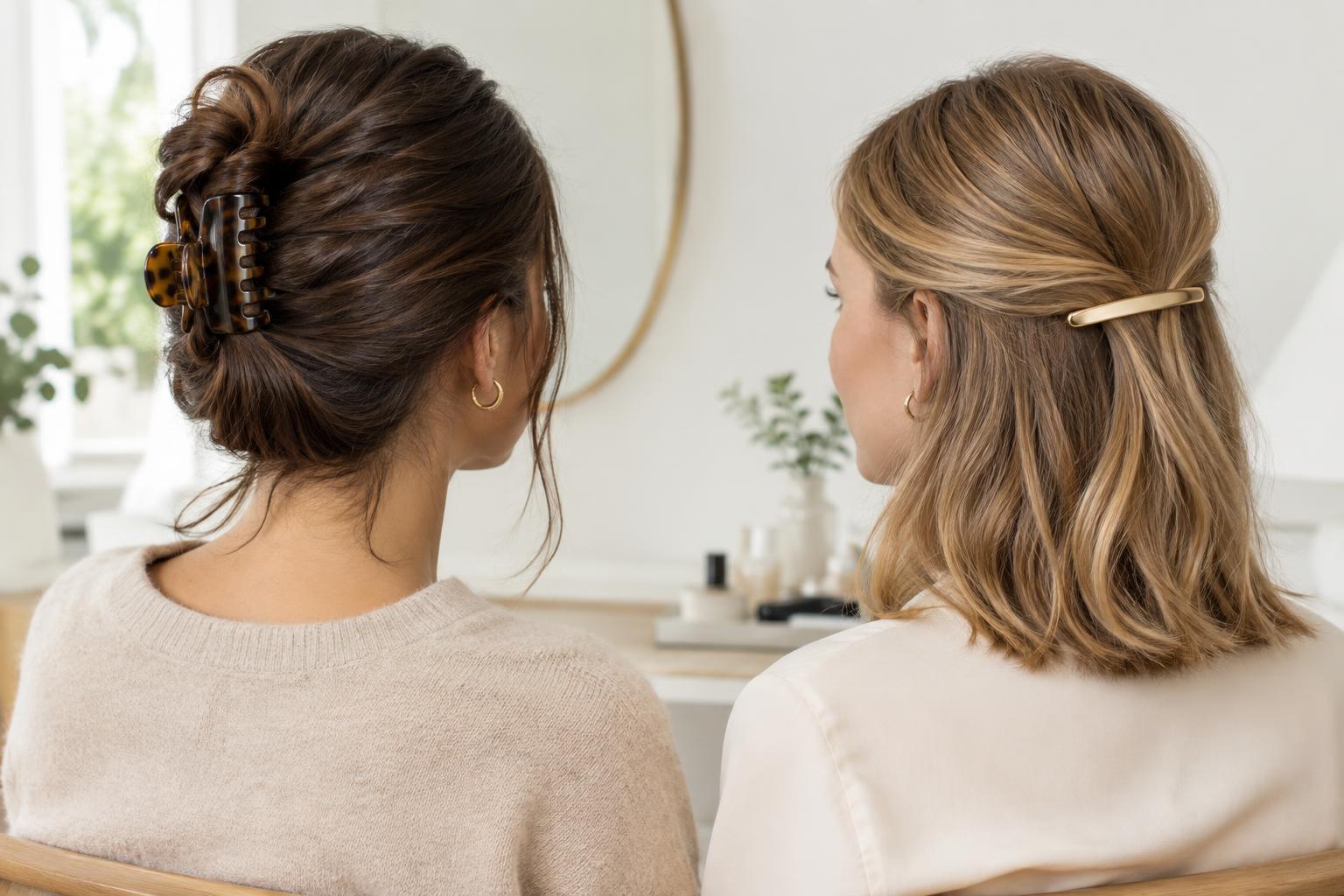
A claw clip is usually the easier choice when you want to gather a substantial amount of hair. Its spring-loaded jaws close around a twist or bundle, making it useful for quick updos and casual half-up styles. A barrette closes over a flatter section of hair, so it often works better for pinning back one side, securing a small half-up section or adding a visible detail to a finished style.
Neither accessory is automatically more secure. Hold depends on how much hair you put inside it, where you place it and whether the fastener can close comfortably. Before choosing one, decide what needs to stay put: the full length of your hair, a section at the crown or just the strands near your face. That question is more useful than choosing by appearance alone.
Match the fastener to your hair and the amount you gather
For a claw clip, look at the space between the jaws and the length of its teeth. A clip that is too small may not close around a thick twist; one that is too large may have too little hair to grip. If your hair is fine or short, a smaller clip can be easier to position. If it is thick or long, you may need more room inside the clip or a style that distributes the hair rather than forcing it all into one spot.
Barrettes vary just as much. A narrow barrette can hold a small side section neatly, while a longer one can span more hair across the back of the head. The clasp should close without straining or leaving a large gap. Very smooth hair may slip out of either accessory, so try gathering a slightly fuller section or changing the placement before assuming you need a stronger fastener.
Choose placement for a steadier hold
To use a claw clip for an updo, gather your hair, twist it gently upward and place the clip over the twist so its teeth catch hair on both sides. If the ends are long, you can leave them loose above the clip or tuck them in, depending on the look you want. When a clip slides down, try positioning it closer to the head or making the twist a little firmer without pulling at the roots.
For a barrette, keep the section relatively flat under the clasp. If you are pinning hair away from your face, place the barrette where the section naturally reaches the side or back of your head rather than stretching it tightly across the scalp. For a half-up style, gather a modest amount from each side first. Adding more hair is easy; an overfilled clasp is harder to close and more likely to shift.
Check comfort, not just appearance
A secure accessory should not need to pinch sharply or pull throughout the day. Claw clips can feel awkward if the hinge presses against your head, particularly when you lean back. Barrettes can tug if their clasp catches stray hairs or if they are placed over a tight section. Put the accessory on, move your head and check how it feels before you leave it in place.
If a style feels uncomfortable, loosen and reset it rather than trying to tolerate the tension. A lower placement, a smaller section or a different fastener may solve the problem. When removing a claw clip, open its jaws fully before lifting it away. When removing a barrette, release the clasp and ease the hair out instead of pulling the accessory through it.
Keep both options in your styling routine
Choose a claw clip when speed and volume are the priority: it can gather hair with little preparation and is easy to readjust. Choose a barrette when you want a flatter, more precise placement or a decorative accent that stays visible. A small barrette can also manage face-framing pieces while a claw clip holds the rest of your hair.
If you are deciding between two accessories in a shop or at home, test each with the style you actually plan to wear. Check that it closes easily, grips the intended amount of hair and remains comfortable after a few minutes. The best choice is the one that holds your particular style without repeated tightening—not necessarily the largest or most elaborate accessory.