Start with the basic braid
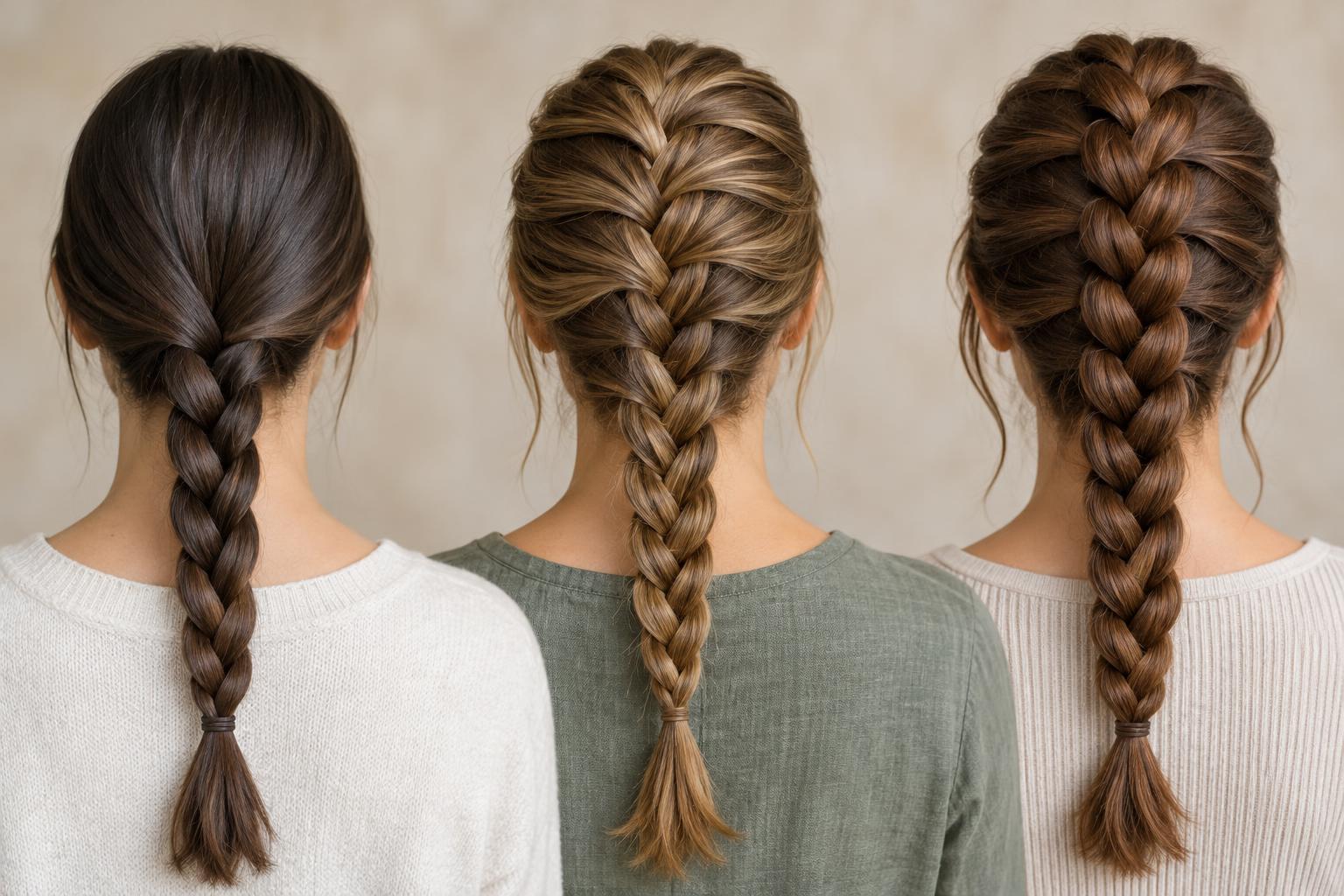
A three-strand braid is the foundation for both French and Dutch braids. In a basic braid, you work with the same three sections from start to finish. French and Dutch braids follow the same alternating pattern, but you add loose hair as you go. The key difference is direction: strands cross over the center in a French braid and under the center in a Dutch braid.
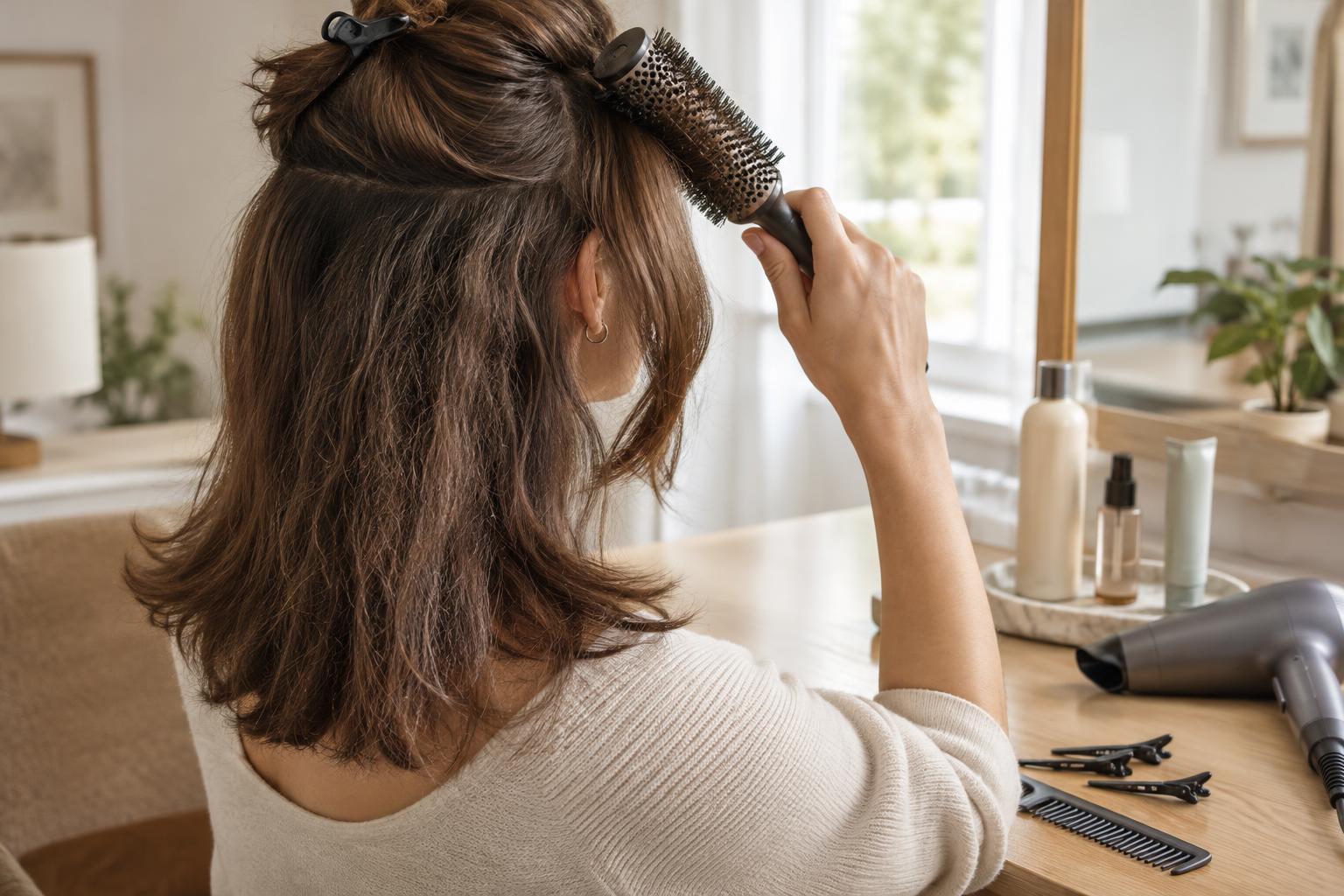
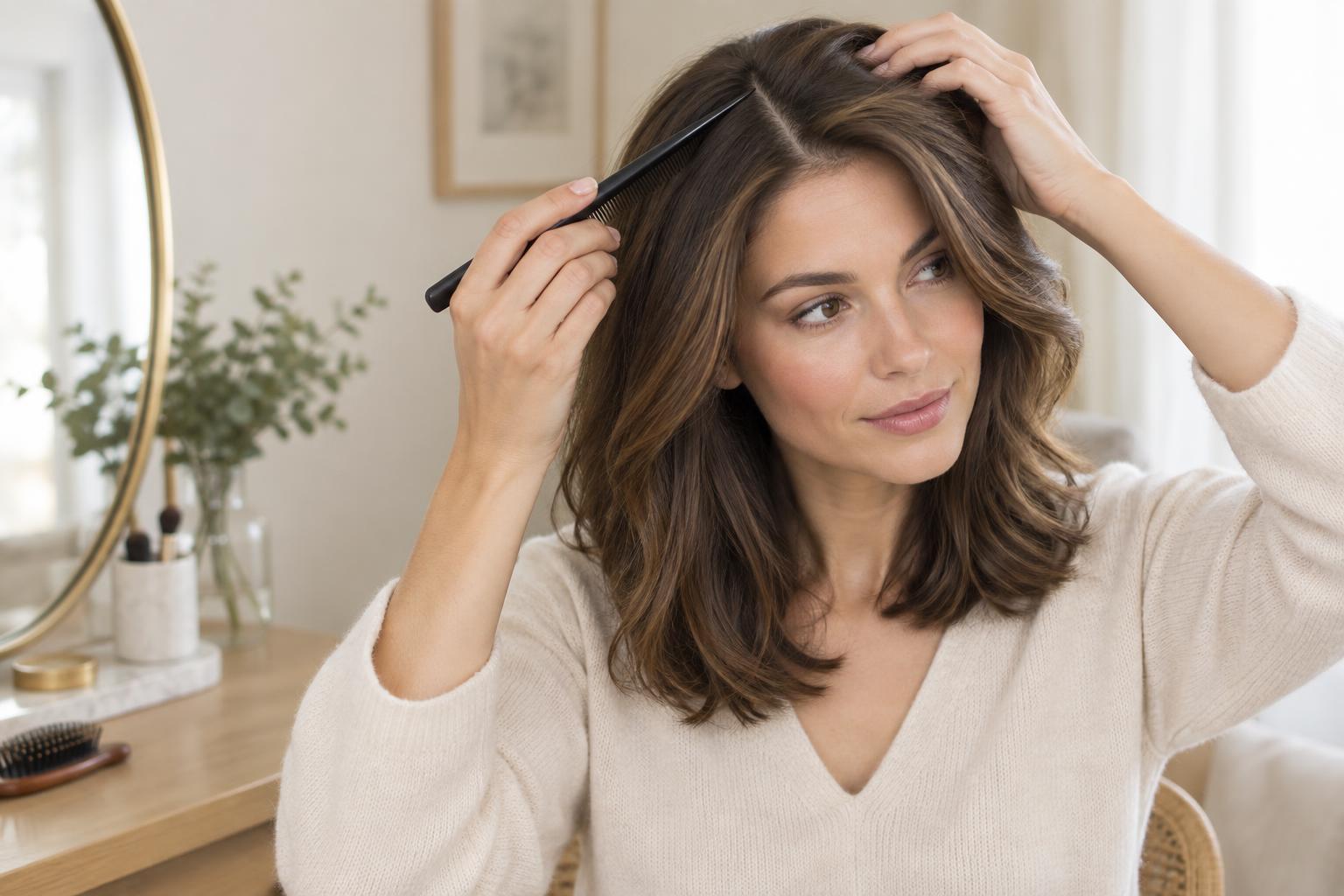
Before you begin, gently detangle your hair and decide where you want the braid to sit. A brush or wide-tooth comb, a hair tie and a mirror are enough to get started. If your hair slips easily, slightly damp hands or a small amount of styling product may help you hold the sections. You do not need to pull hard. A comfortable, consistent grip makes it easier to see what your fingers are doing.
Practice a three-strand braid first
Gather your hair into one section, as you would for a low ponytail, and divide it into three roughly equal parts: left, center and right. Bring the right section over the center section. The right section is now in the middle. Next, bring the left section over the new center. Continue alternating sides, always moving an outside section over whichever section is currently in the middle.
Try saying “right over, left over” while you practice. Keep the sections separate in your fingers, but pause whenever you need to reset your grip. If one section starts to look much thinner than the others, redistribute a little hair before continuing. Secure the end with a hair tie. Once the motion feels familiar, try braiding without looking at your hands; that skill will help when you move to the back of your head.
Make a French braid by adding hair over
For a single French braid, take a small section of hair near the front of your head and divide it into three parts. Begin as you would with a basic braid: cross one outside section over the center, then cross the other outside section over the new center. Before each following crossover, gather a little loose hair from that same side of your head and combine it with the outside section. Cross the combined section over the center.
Repeat on alternating sides as you work toward the nape of your neck. Try to gather hair from similar areas on each side so the braid follows a steady path. When there is no loose hair left to add, continue with a regular three-strand braid and tie off the end. For an early attempt, a low starting point can be easier to manage than beginning right at the hairline. You can also practice on one side of your head, where your hands and the braid may be easier to see.
Make a Dutch braid by crossing under
A Dutch braid uses the same three sections and the same add-hair-as-you-go approach as a French braid. The change is that each outside section travels under the center instead of over it. This places the braid more visibly on top of the surrounding hair.
Start with a small section near the front of your head and split it into three. Move the right section under the center, then the left section under the new center. Next, add a small amount of loose hair from the right side to the right section and move that combined section under the center. Repeat from the left, then keep alternating. Once all the loose hair is included, finish with a regular three-strand braid, crossing under each time. If you accidentally cross over, pause and undo that step rather than trying to correct it farther down.
Keep the braid neat without pulling tight
Uneven pickups are common when you are learning. Use your fingers to part off each new bit of hair before adding it, and check that you have not picked up strands from the opposite side. If the braid drifts, guide your hands along the path you want it to follow rather than tugging the finished sections into place. For a softer look, gently loosen a few loops after securing the end.
Comfort matters more than a perfectly smooth result. If a braid pulls at your scalp or feels uncomfortable, undo it and try again with a lighter grip. Short layers may slip out; you can leave them loose, use a small clip or start with a smaller practice braid. Work slowly at first. Once the alternating motion becomes familiar, French and Dutch braids are simply two ways of adding hair to that same pattern.