Notice what your current part is doing
A hair part is a small detail with a visible effect. It determines which direction the hair falls from the top of your head, changing the balance of volume on each side and the way shorter pieces frame your face. You do not need a new cut to experiment with it. A comb, a mirror, and a few minutes are enough to compare shapes.
Start by looking at your usual part before moving anything. Notice whether the hair lies flat near it, where your crown has the most lift, and which pieces tend to swing toward your face. Your hair may separate naturally in more than one place, or it may resist a change because of its growth pattern. Treat that pattern as useful information rather than something you have to fight.
Choose a placement for the shape you want
A center part gives both sides a similar amount of hair and can create a balanced outline. A slight off-center part keeps much of that balance while shifting the hair around your face. A deeper side part places more hair on one side, which can make that side look fuller and change where a fringe or front layer lands. The result also depends on your cut, density, texture, and how you style the lengths.
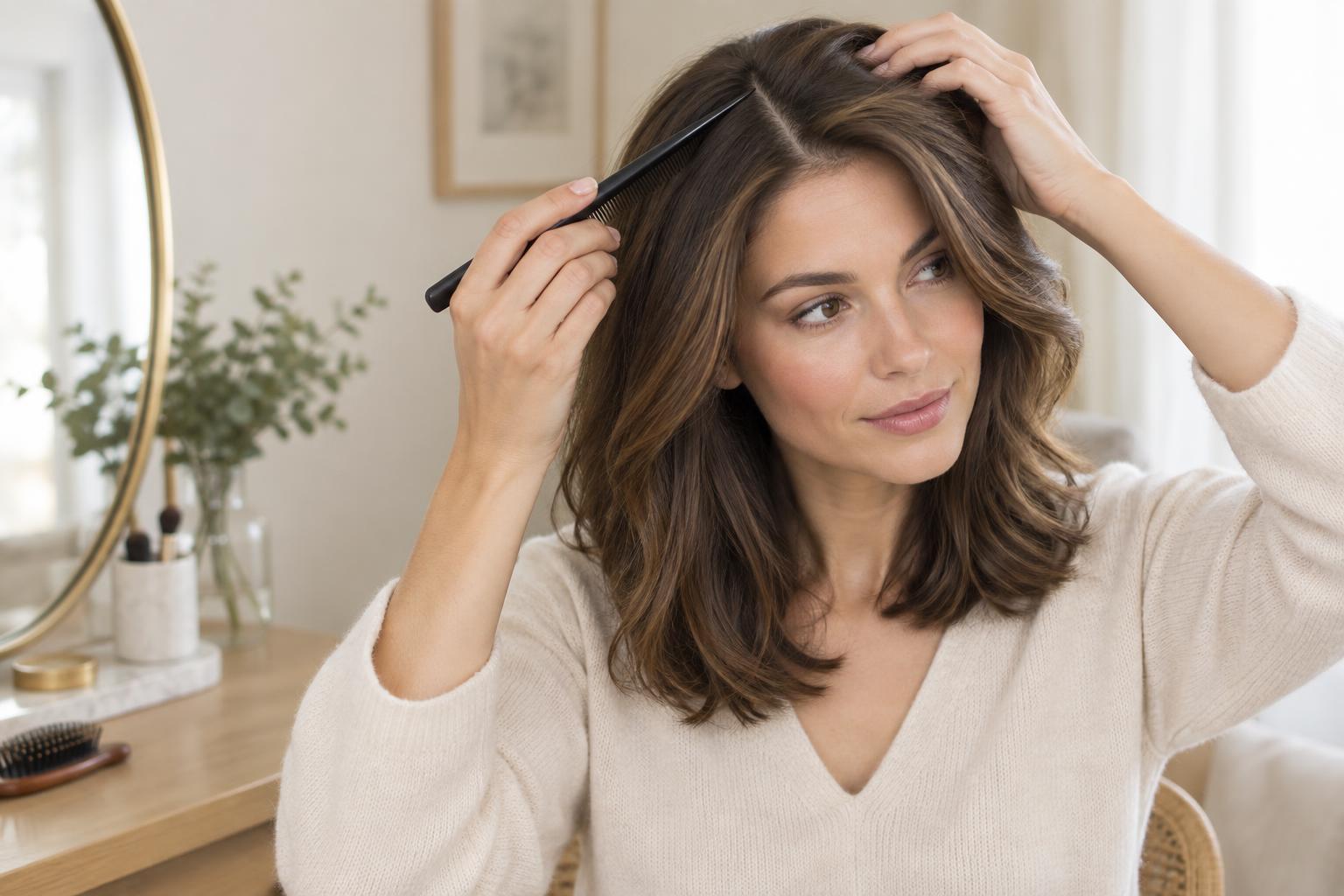
Instead of trying to find one universally flattering position, move the part in small steps. Use the end of a tail comb or your fingertip to trace a line from the front hairline toward the crown. Let the rest of your hair fall and check it from the front and sides. If a deep side part feels dramatic, try a line just to one side of center first. You can also make a softer, less precise part with your fingers if a sharp line is not the look you want.
Reset the roots when you change direction
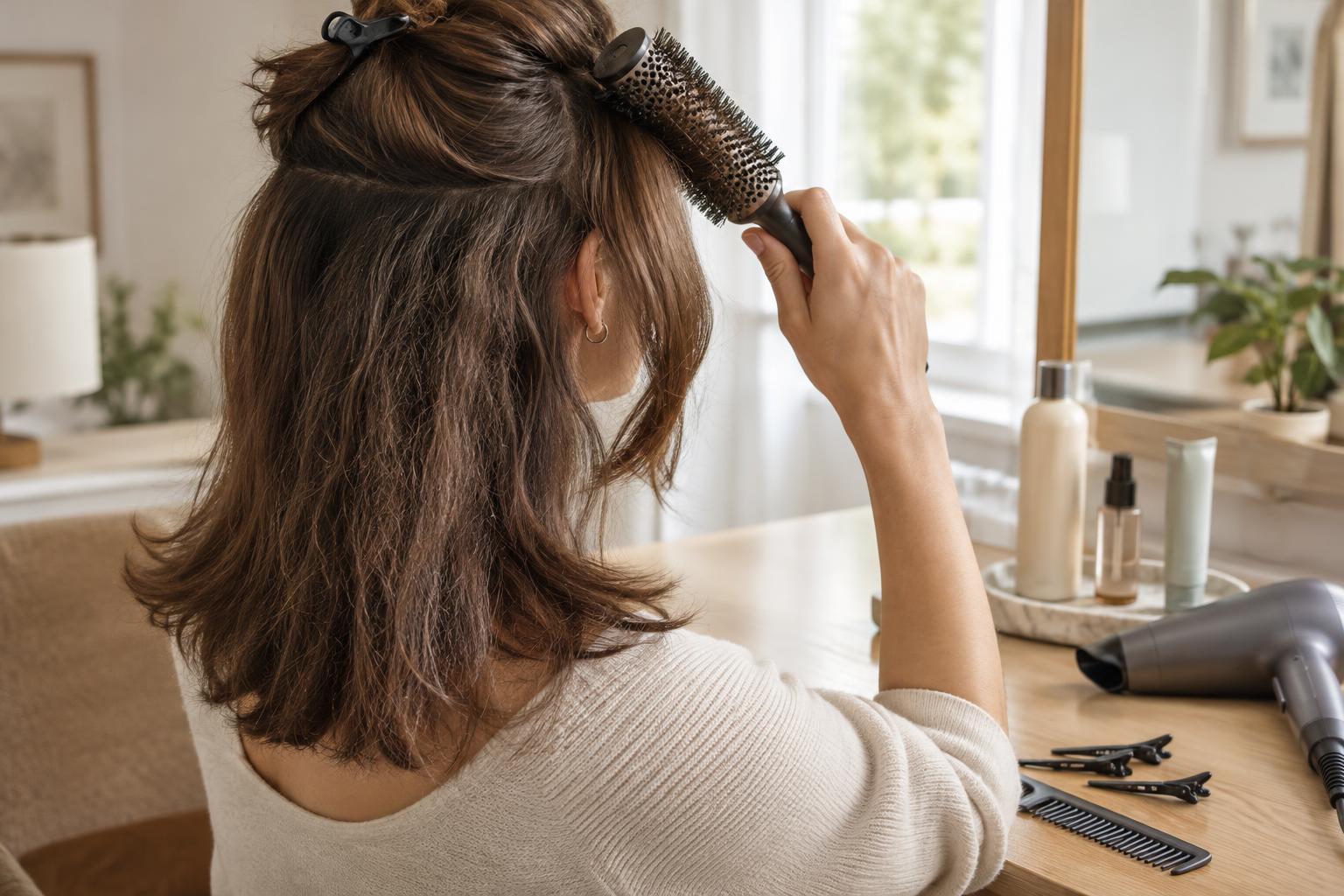
For a more lasting change, begin when your hair is damp rather than soaking wet. Comb or separate it into the new part, then direct the roots on each side where you want them to lie. A clip can hold a front section in place while the roots dry. Avoid fastening it so tightly that it leaves a dent. Once the hair is dry, remove the clip and loosen the lengths with your fingers.
If you use a blow-dryer, keep it moving and follow your tool’s heat guidance. For lift, briefly direct the roots opposite the way they will eventually fall, then guide them back into the new part as they dry. A brush can help shape the front, but you do not need to pull hard. Let the roots cool in the new position before making final adjustments. Hair that has dried in its usual direction may need another damp reset if it keeps flipping back.
Make a quick change on dry hair
You can still experiment between washes. Lift the hair at the roots, draw a new part, and gently move the top sections across it. If the roots resist, lightly mist only that area with water, reshape it, and allow it to dry. This is often easier than adding more product to hair that already has styling cream, oil, or spray in it.
For extra height, use your fingers to lift the roots beside the new part and apply a small amount of a styling product suited to your hair. Work gradually: too much product near the scalp can make a style look flatter instead of fuller. If you prefer a neat finish, smooth the surface after establishing the root shape rather than pressing the whole section down.
Adapt the part to your texture and keep it comfortable
On wavy or curly hair, separating every strand with a fine comb can disturb an established pattern. Try making the part with your fingers while the hair is damp, then arrange the surrounding waves or curls in larger sections. On coily hair or a set style, you can choose a part before styling and work section by section. A zigzag or loosely defined line is also an option if you want to move the hair without emphasizing a straight scalp line.
Check the whole style before deciding whether the new part works. You may like the shape better after moving a few face-framing pieces or changing where you tuck hair behind an ear. If your hair repeatedly springs back, choose a position closer to its natural direction or give it more time to dry in place. A part should feel comfortable; there is no need to force sections into a shape that pulls at your scalp.