Start by checking what needs a refresh
Bangs sit against the forehead and tend to move each time you touch your face, put on a hat, or tuck hair behind an ear. That means they may look flat or separated while the rest of your hair still looks fine. Before adding product, brush the pieces into place and check where the problem starts. If the roots look heavy, focus there. If the roots are fine but the ends flip the wrong way, you may only need to reshape the ends.
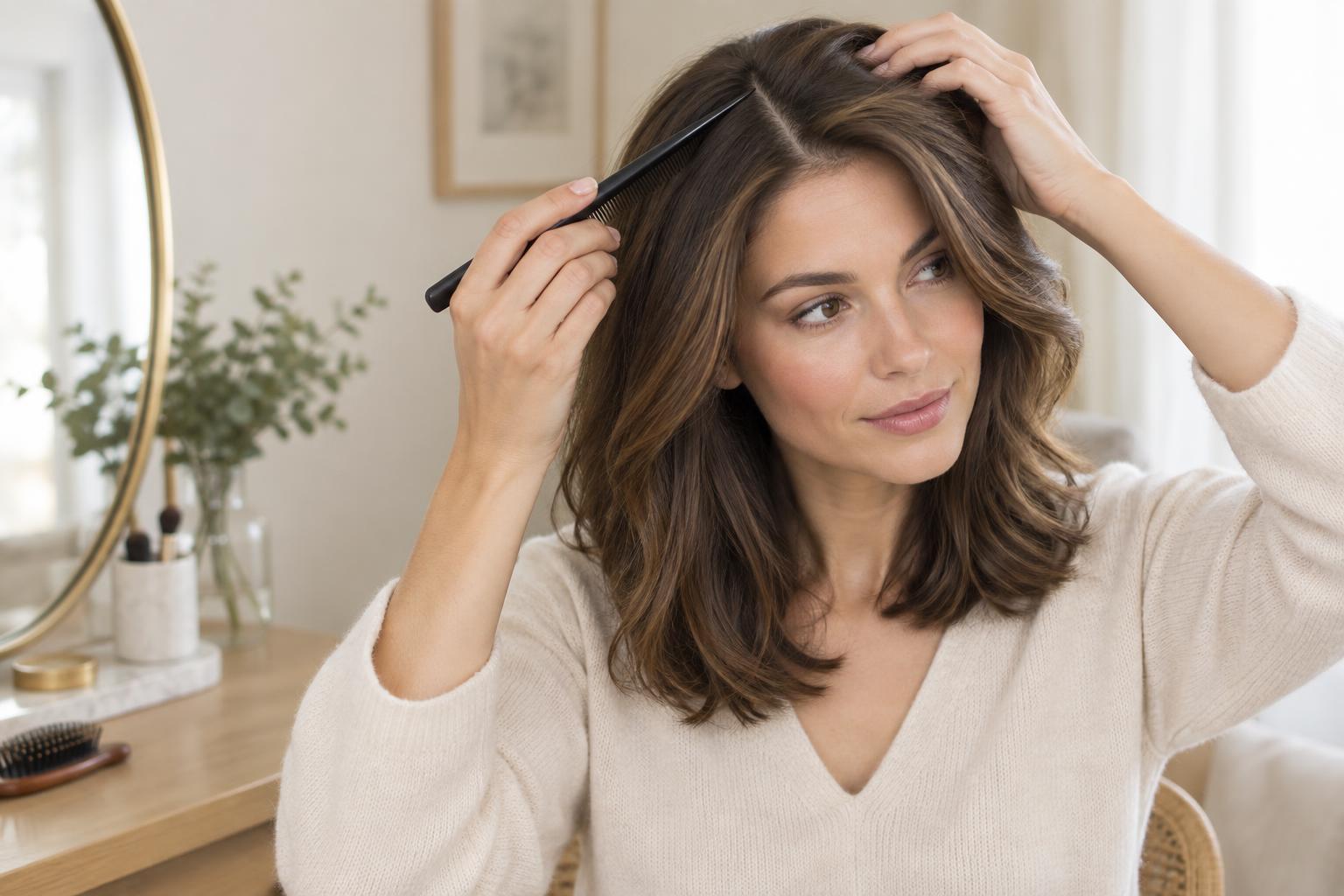
Keep your usual part in mind, but do not force every strand back into its freshly washed position. A fringe with a slight bend or a face-framing piece that curves away from the cheek can look intentional without being perfectly uniform. Starting with a small correction helps you avoid layering on more product or heat than the style needs.
Refresh the roots without weighing them down
If the roots look oily, a small amount of dry shampoo can add texture and reduce visible shine. Follow the product directions, aim near the roots rather than coating the ends, and give it time to settle before brushing or working it through with your fingers. Use a light hand, especially on fine bangs: too much powder or spray can make short pieces feel stiff or look dull.
Another option is to wash just the bangs or front pieces. Clip the rest of your hair back, wet the section over a sink, and use a little shampoo before rinsing thoroughly. Dry the section soon afterward so it does not settle into an unwanted shape. This takes more effort than a quick brush-through, but it can be useful when dry shampoo leaves a visible residue or the hair needs a clean reset.
Choose a shaping method for your cut
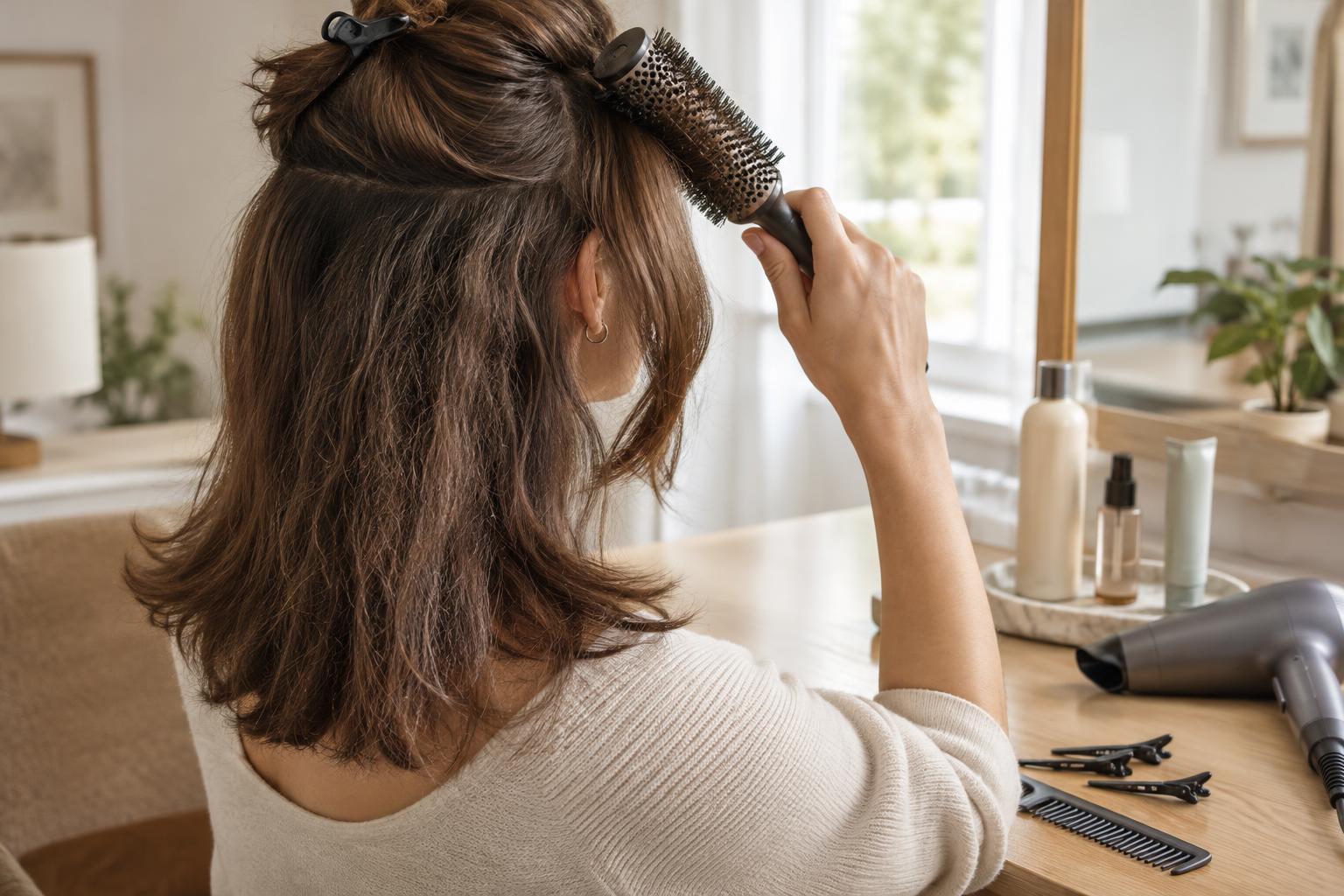
For straight-across bangs, direct a blow-dryer from above while moving the hair gently from side to side with a brush or your fingers. This helps you work against a strong part before letting the fringe fall forward. A small round brush can add a soft curve at the ends; rotate it only enough to shape the hair, rather than rolling the bangs tightly under.
Curtain bangs and longer face-framing layers often benefit from a different motion. Work with one side at a time, guiding the hair forward at the root and then away from the face through the ends. A round brush or a flat brush can create that sweep. For curly or wavy pieces, try dampening individual strands and reshaping them with your fingers first. Scrunch or twist them in the direction they naturally sit, then let them dry or use a diffuser if needed.
Use heat and styling products sparingly
If a piece still kinks or flips after brushing, a styling tool can help, but short front sections are easy to overwork. Apply heat protectant as directed if you are using hot tools, choose a temperature appropriate for your hair and tool, and keep the tool moving. Hair should be fully dry before using a flat iron or curling iron unless the tool is specifically designed for damp hair. Work in small sections and pause to check the shape before making another pass.
Finish with only what the style calls for. A little flexible hairspray can help a fringe hold its direction without making it look fixed in place. For longer layers, a small amount of lightweight cream or serum on the ends may smooth flyaways. Keep heavier products away from the roots, where they can make freshly styled pieces separate again.
Make tomorrow’s touch-up easier
Between washes, small habits can preserve the shape you have made. Try to touch the front pieces less often, and move them aside while applying face products so they do not pick up residue. If your bangs flatten under a hat or headband, give the roots a quick brush when you take it off rather than immediately adding more product.
For an overnight reset, brush the front section into its usual direction before bed. A soft clip can keep longer face-framing pieces out of your face, provided it does not leave a sharp crease. In the morning, assess the roots and ends separately again. You may find that a little water, a brief blow-dry, or one adjusted strand is all you need.