What the bristles are made of
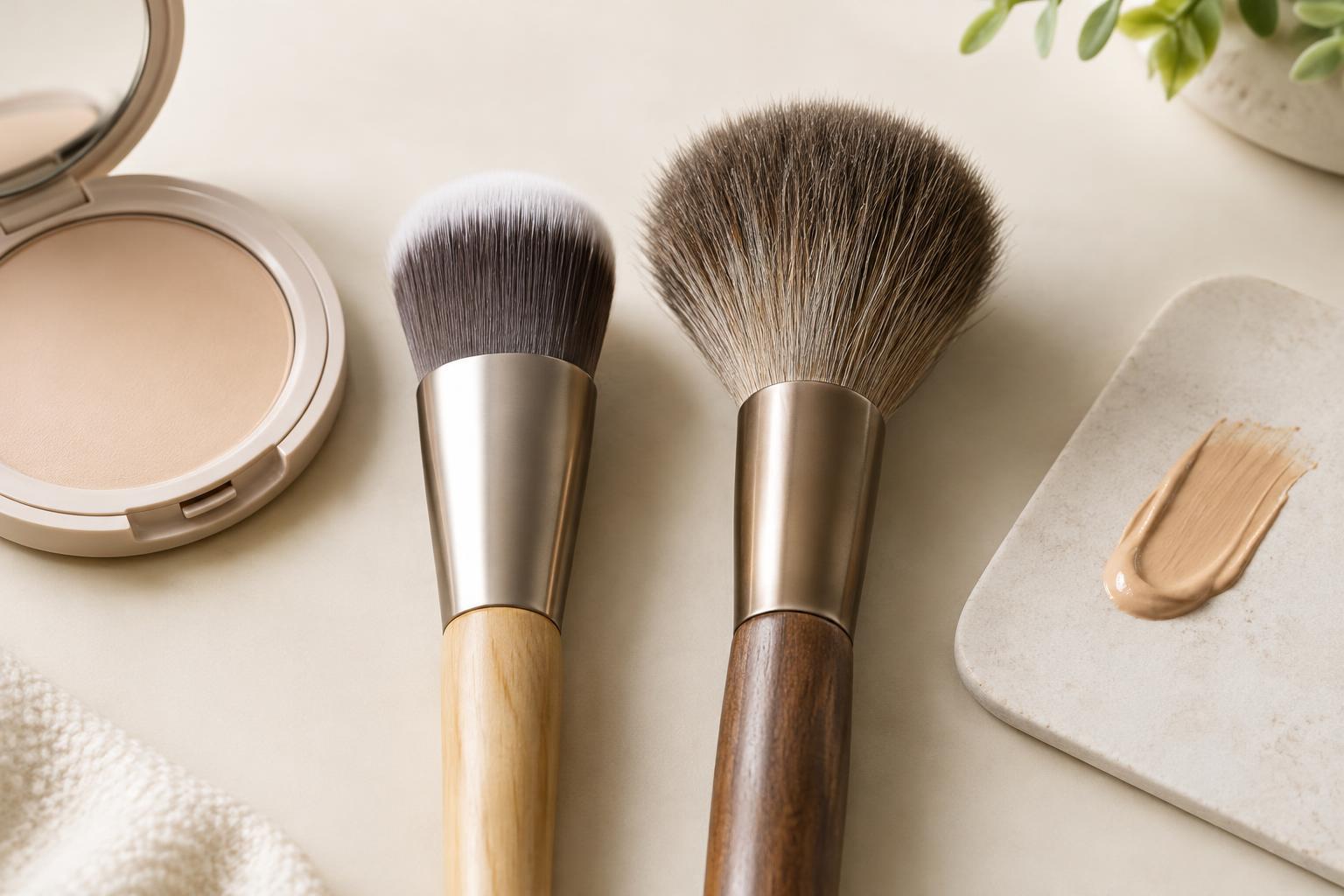
Synthetic brush bristles are manufactured fibers, often made from materials such as nylon or polyester. Natural bristles are animal hair. Both types come in many shapes, lengths and densities, so the label alone cannot tell you whether a brush will feel soft or apply makeup evenly. The way its fibers are cut, arranged and secured matters just as much.
A brush also needs to suit the makeup you use. A densely packed brush may place more product in one spot, while a looser, fluffier brush can spread it more lightly. Before choosing between fiber types, think about the job: pressing on foundation, blending eyeshadow, placing blush or brushing away excess powder.
Match the bristles to the formula
For liquid and cream products, synthetic bristles are a practical starting point. They tend to absorb less product than natural hair, which can make it easier to work with foundation, concealer, cream blush and gel liner. A dense synthetic brush can place product where you want it; a softer, more flexible one can help blend the edges. If a brush leaves streaks, try using less product or finishing with light tapping motions before assuming the fiber is the problem.
For powders, either type can work. Natural bristles are often chosen for their ability to pick up and release powder gradually, which some people like for a diffused eyeshadow or blush application. Modern synthetic brushes can also apply powder smoothly, particularly when their shape and density fit the task. If your powder brush picks up too much color, tap off the excess or choose a larger, less dense brush.
The product’s texture makes a difference, too. A firm pressed powder may need a brush that picks up color readily, while a loose powder may call for a light touch. Rather than looking for one fiber type that handles everything, match each brush to the formula and level of coverage you prefer.
Consider feel, cleaning and personal preferences
Comfort is worth checking if you can handle a brush before buying it. Sweep it gently across the back of your hand: the tips should feel comfortable, and the brush should spring back into shape. A scratchy feel is not an unavoidable feature of natural hair, nor is softness guaranteed by a synthetic label. Fibers vary between brushes.
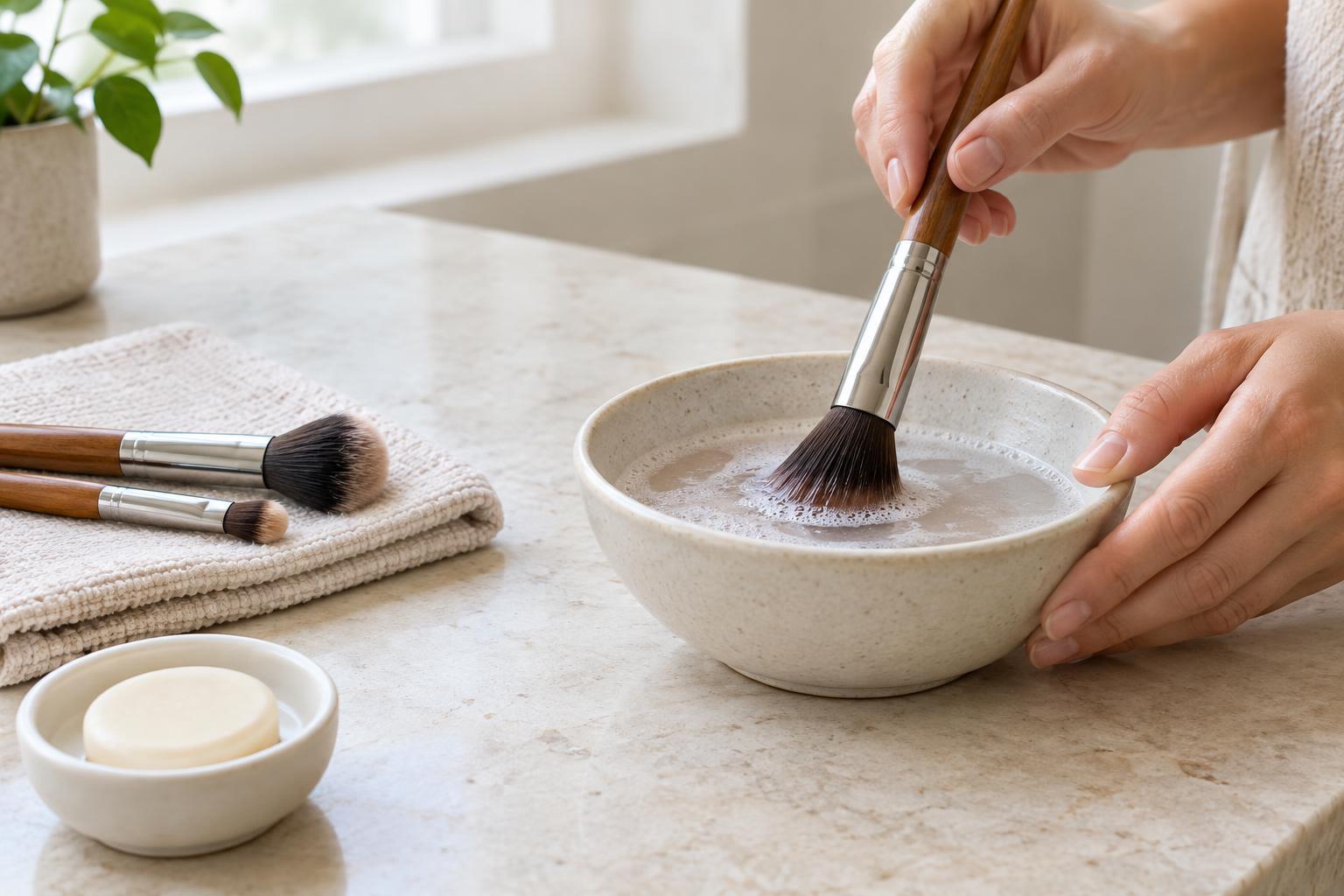
Synthetic brushes are often convenient for products that require frequent washing, especially creams and liquids. Natural hair may need a gentler approach to help preserve its shape and feel. For either type, clean with a suitable gentle cleanser, rinse without soaking the handle or the metal ferrule, reshape the bristles and let the brush dry fully with air circulating around the head. Follow any care directions supplied with the brush.
Preferences beyond application matter as well. If you avoid animal-derived materials, choose synthetic bristles and check the product description rather than relying on the brush’s appearance. Price is not a dependable shortcut to quality: inspect whether the handle feels secure, the bristles sit evenly and the brush keeps its shape with normal use.
Choose by task, not by a matching set
You do not need a large collection to cover everyday makeup. Start with the products you actually use. A synthetic brush for liquid or cream base makeup, a fluffy brush for setting powder or blush, and one or two eye brushes may be enough. If you mostly wear powder products, you might prioritize a comfortable powder brush and a smaller brush for controlled placement instead.
Brush shape can be more useful than a name printed on the handle. A small, flat brush helps place color precisely; a rounded, fluffy brush helps soften edges. An angled brush can reach narrower areas or make a defined line. Brush names are suggestions, not rules: the best choice is the one that fits the area you are working on and gives you the amount of product you want.
If you are uncertain, begin with synthetic brushes for their versatility across formulas, then add a natural-bristle powder brush only if you want to explore how it applies your favorite powder. You can also stay entirely with synthetic brushes. Try each brush with a light amount of product first; it is easier to build coverage than to remove an overly heavy application.
A simple way to decide
Choose synthetic bristles if you mainly use liquids and creams, prefer animal-free tools or want a straightforward set that can handle several formulas. Consider natural bristles if you mainly use powders and enjoy the way a particular brush picks up and diffuses them. Neither choice guarantees a better result on its own.
When comparing two brushes, check their size, density and feel alongside the fiber type. Then ask whether the brush solves a specific problem in your routine, such as applying blush more lightly or blending concealer in a small area. A few brushes that suit your makeup and that you will clean regularly are more useful than a full set chosen by bristle label alone.