What moisture changes
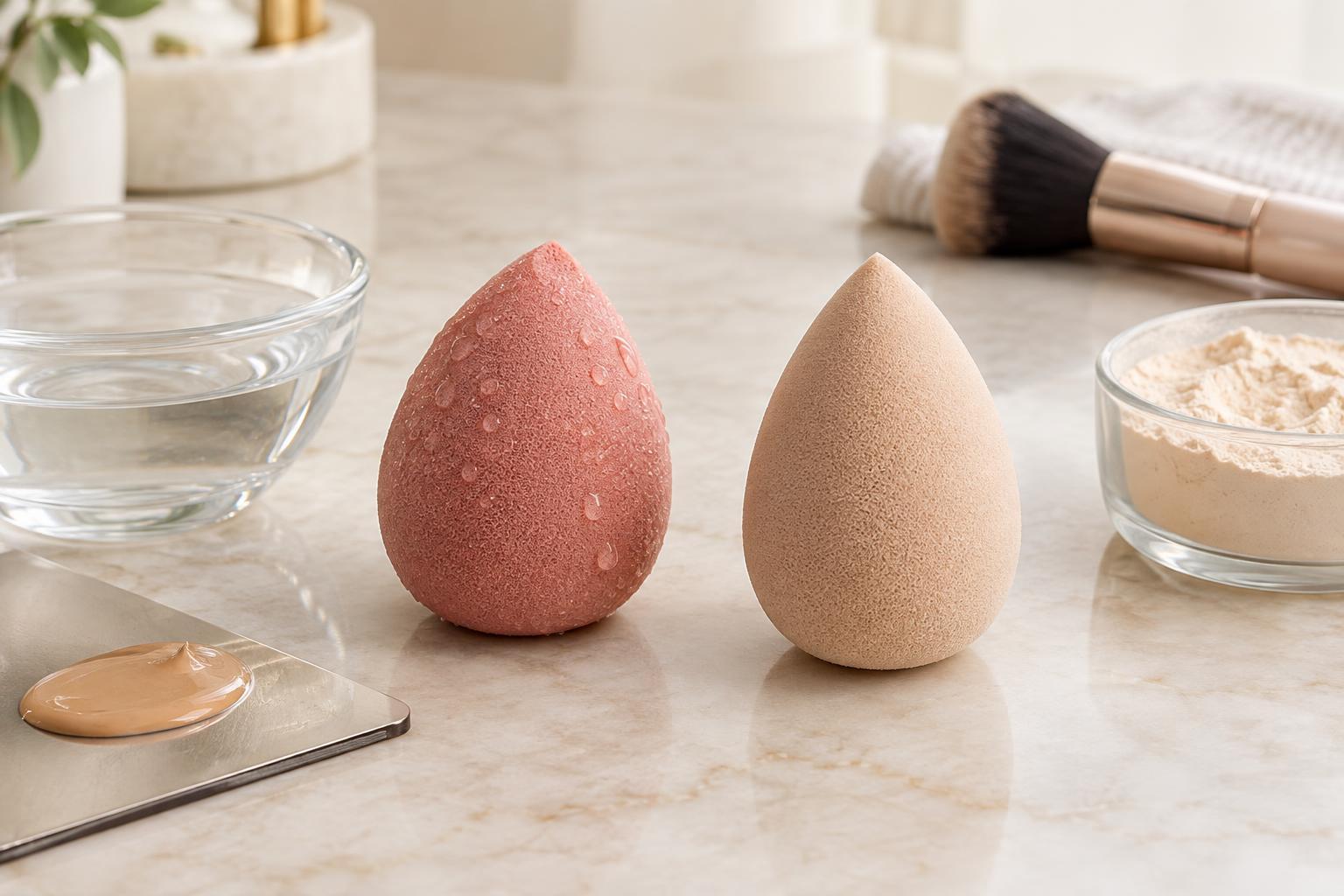
A makeup sponge works by picking up product and transferring it to your skin as you tap or press. Adding water changes how it does that. A damp sponge tends to feel softer and spread liquid or cream products in a thinner layer. A dry sponge can place product more directly, though it may also absorb more liquid formula before that formula reaches your face.
Neither method is automatically better. The right choice depends on the product, the amount of coverage you want, and whether you are blending across a broad area or placing makeup in a small spot. If you are unsure, check the product’s directions first, then try a small amount with your chosen sponge.
Use a damp sponge for liquids and creams
For liquid foundation, skin tint, cream blush, and similar formulas, a damp sponge is a useful starting point. It can help soften visible edges and build coverage gradually. Apply a little product to your face or the back of your hand, then bounce the sponge over it with light pressure. Pressing repeatedly is usually more effective than dragging, which can move product away from where you placed it.
To prepare the sponge, wet it thoroughly with clean water and squeeze it several times. Then press it in a clean towel until it feels damp rather than wet. It should not drip when squeezed. Too much water can thin a formula more than you intended or make application uneven; if that happens, squeeze the sponge again before continuing.
A damp sponge is also handy for blending the edges of concealer or cream contour. Use a clean side so you do not spread a darker shade into a lighter area. If you want fuller coverage in one spot, first place the product where you need it, then use small, gentle taps rather than blending it over a wider area.
Leave it dry when precise placement matters
A dry sponge or powder puff can work well for pressing loose or pressed powder onto areas where you want a more concentrated application, such as around the nose or on a shiny part of the forehead. Pick up a modest amount, tap off excess, and press rather than sweep. Using less powder at first makes it easier to avoid a heavy-looking patch.
Dry use is not limited to powder, but it requires a lighter hand with liquid products. A dry sponge may pick up more foundation and leave less time to blend before an edge becomes noticeable. If you prefer its firmer feel for a small correction, start with very little product and check the result in ordinary light.
Be cautious about dipping a damp sponge directly into a powder compact. Moisture can change the surface of some powders and make them harder to pick up evenly later. If you want to experiment with a damp sponge and powder, put a small amount of loose powder on a separate clean surface instead of wetting the product in its container.
Match the technique to the finish you want
For a light, blended base, start with a damp sponge and thin layers. Let each layer settle briefly before deciding whether you need more. For targeted powder, use a dry tool and press only where needed. You can use both approaches in one routine: blend cream products with a damp sponge, then switch to a separate dry sponge or puff for powder.
The shape of the sponge can help with placement, but it does not dictate a single correct use. A broad side covers cheeks and forehead efficiently, while a pointed tip reaches beside the nose or under the eyes. Whichever surface you choose, keep the pressure gentle. If makeup looks patchy, try using less product, a cleaner sponge, or a sponge that has been squeezed more thoroughly before adding another layer.
Clean and store sponges with care
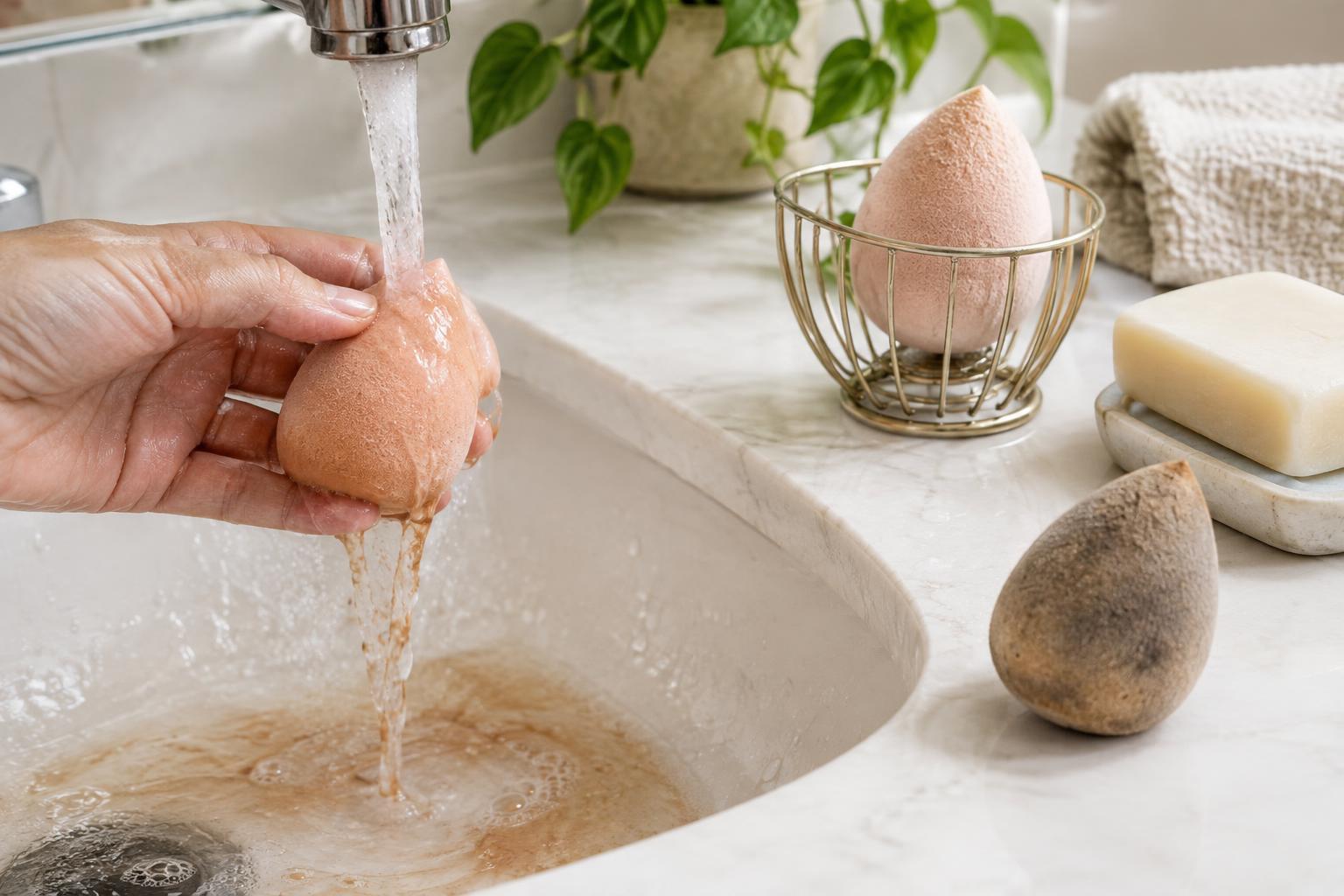
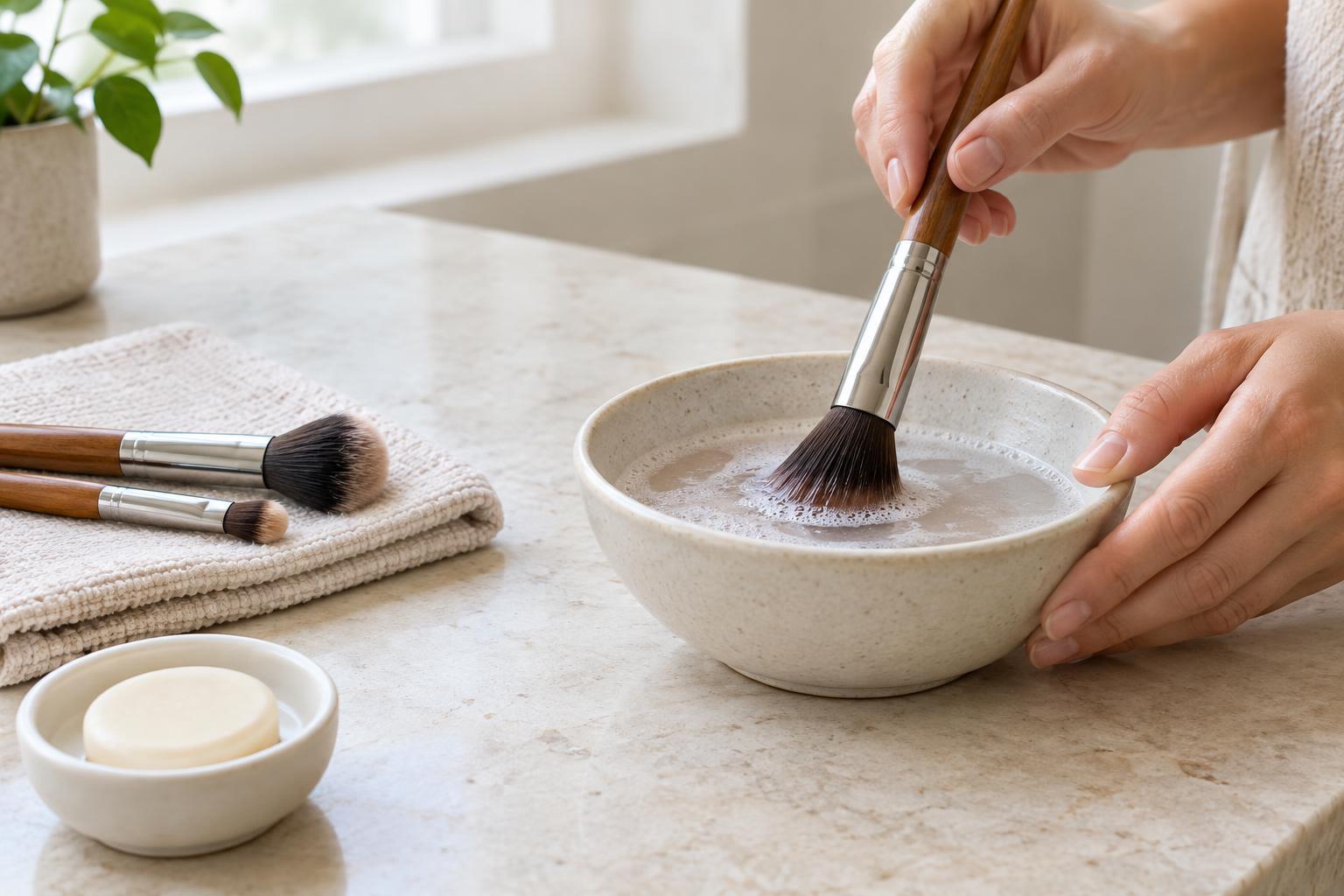
Because sponges hold product and moisture, cleaning matters for both application and upkeep. Wash a reusable sponge regularly with a suitable gentle cleanser, working it through the material and rinsing until the water runs clear. Squeeze it without twisting aggressively, then let it air-dry completely in a well-ventilated place before storing it. A closed container is more useful for carrying a dry sponge than for drying a wet one.
Keep a separate sponge for powder if you can, especially if you often switch between damp creams and dry powder. This helps prevent leftover foundation from clumping in your powder application. Replace a sponge if it develops a persistent odor, visible damage, or residue you cannot wash out. A clean tool, used damp or dry as the formula calls for, gives you a more reliable starting point than any single application rule.