Start with the scarf and the outfit
Before choosing a knot, decide what you want the scarf to do. A patterned scarf can bring together colors already in your outfit, while a solid one can add contrast to a plain top or coat. If your clothes have several bold details, a small scarf tied close to the neck may feel more balanced than a long, loose drape. There is no need to match colors exactly; repeating one color or choosing a similar tone is often enough to make the accessory feel intentional.
Size and fabric affect how easily a scarf ties. A small square is useful for neat neck knots, hair ties and bag handles. A longer rectangle works well for loops and loose ends. Lightweight fabric makes smaller knots, while thicker fabric creates more volume and may need a simpler tie. If a scarf slips as you handle it, fold it more narrowly or make the knot a little firmer without pulling it tight against your skin.
Try three easy neck ties
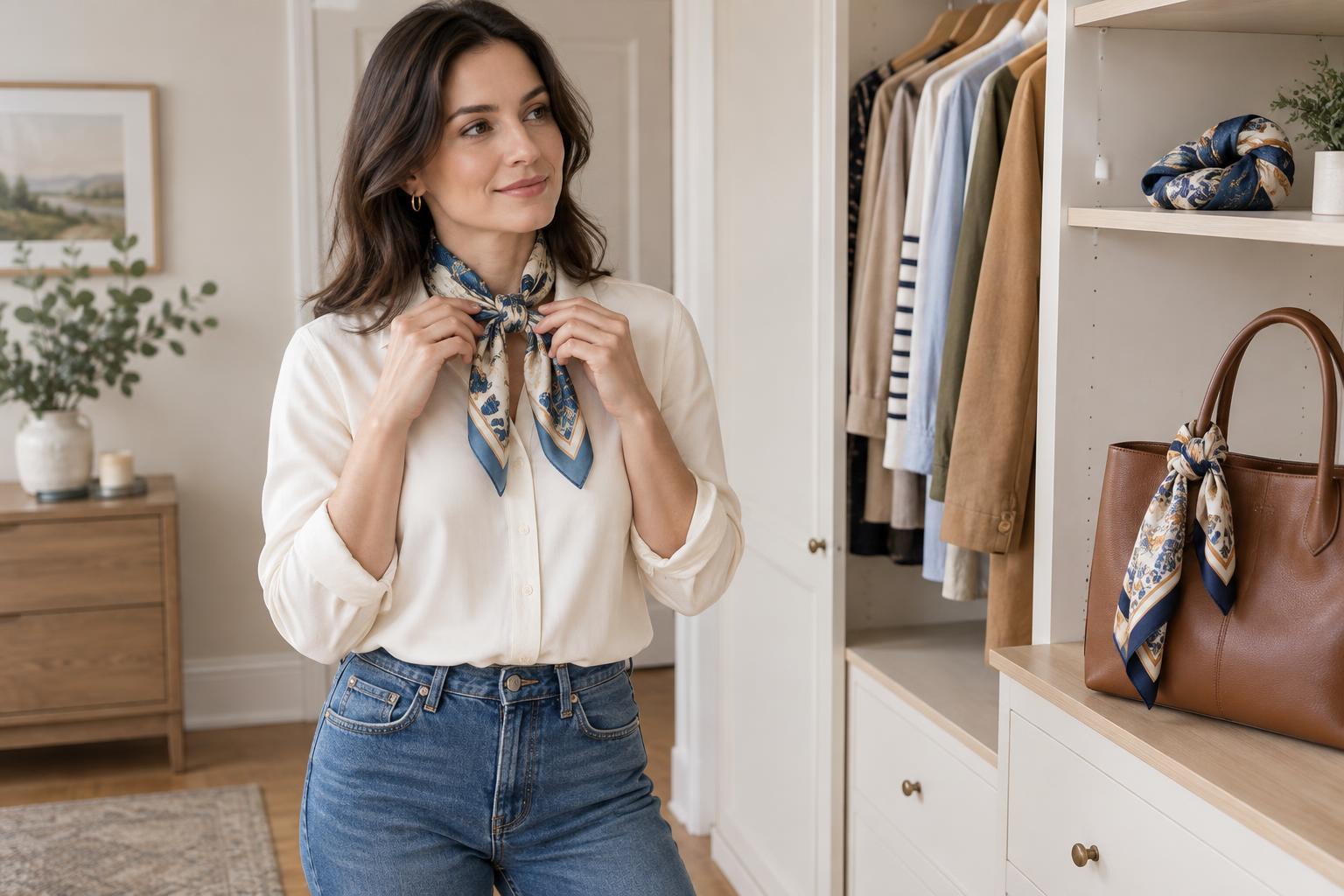
For a small square scarf, try a side knot. Fold the square diagonally into a triangle, then fold from the pointed edge toward the long edge until you have a narrow band. Place the center at the front of your neck, bring the ends around to the back, and return them to one side. Tie a loose single or double knot, then adjust the ends so they sit comfortably. This tie adds a small accent near a shirt collar or simple crew neck.
For a long scarf, use a relaxed loop. Drape it around your neck with one end longer than the other. Wrap the long end around your neck once and let both ends hang in front. Loosen the loop until it sits comfortably and arrange the ends at slightly different lengths. This is an easy way to wear a scarf over a sweater or jacket because it does not rely on a precise knot.
A front knot works when you want the scarf to look tidy without hiding it. Place a narrow scarf behind your neck, bring both ends forward, and tie them once at chest level. Shift the knot a little to one side if you prefer an asymmetrical look. Keep the ends short and even for a neat finish, or leave one longer for a more relaxed shape. If the knot looks bulky, unfold the scarf slightly or choose a thinner one.
Wear a scarf in your hair
A scarf can dress up a low ponytail with very little styling. Secure your hair with a hair tie first so the scarf does not have to hold it in place. Fold a small square into a band, wrap it around the base of the ponytail, and tie it once or twice. Let the ends hang with your hair, or tuck them under the knot for a shorter finish. Keeping the knot above or beside the hair tie can help it stay visible.
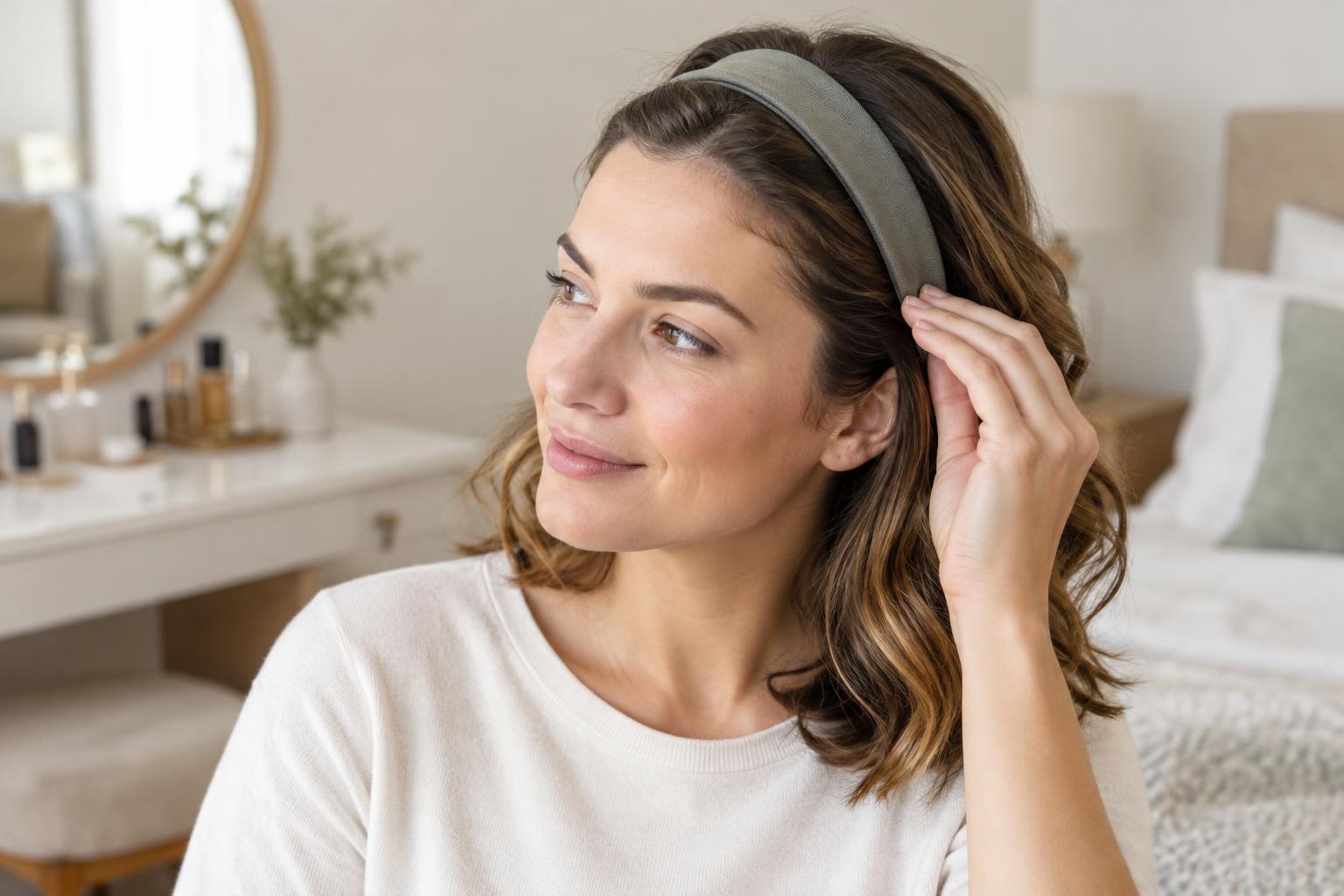
For a headband, fold the scarf into a band and place its middle at the nape of your neck. Bring the ends up behind your ears and tie them at the top of your head, slightly off-center if you like. Tuck the ends under the band or leave them loose. Make sure the band feels secure rather than tight, and adjust its width before tying so it sits where you want it.
Add a small accent to a bag
Tying a scarf to a bag lets you wear a color or print without adding another layer to your clothes. For a quick accent, fold a small scarf into a narrow band, pass one end through a handle, and tie a double knot near the base. Let the ends hang, keeping them clear of the bag opening and any zippers. If the handle is smooth, check the knot occasionally to make sure it has not slid.
You can also wrap a narrow scarf around a sturdy bag handle. Secure one end with a knot, wind the fabric along the handle, and tie the other end when you reach the far side. Try to keep the wraps even but not stretched tight. This works best on a handle with enough room to hold comfortably after the fabric is added.
Make the finishing adjustment
Once the scarf is tied, look at the whole outfit rather than the knot alone. If a print feels too prominent, show less of it by folding the scarf narrower. If the scarf disappears against your clothes, loosen a loop or let the ends hang longer. A quick check for comfort matters too: you should be able to move your head, use your bag and go about your day without repeatedly fixing the scarf. Small adjustments usually make more difference than learning a complicated tie.