What a silicone mask brush does
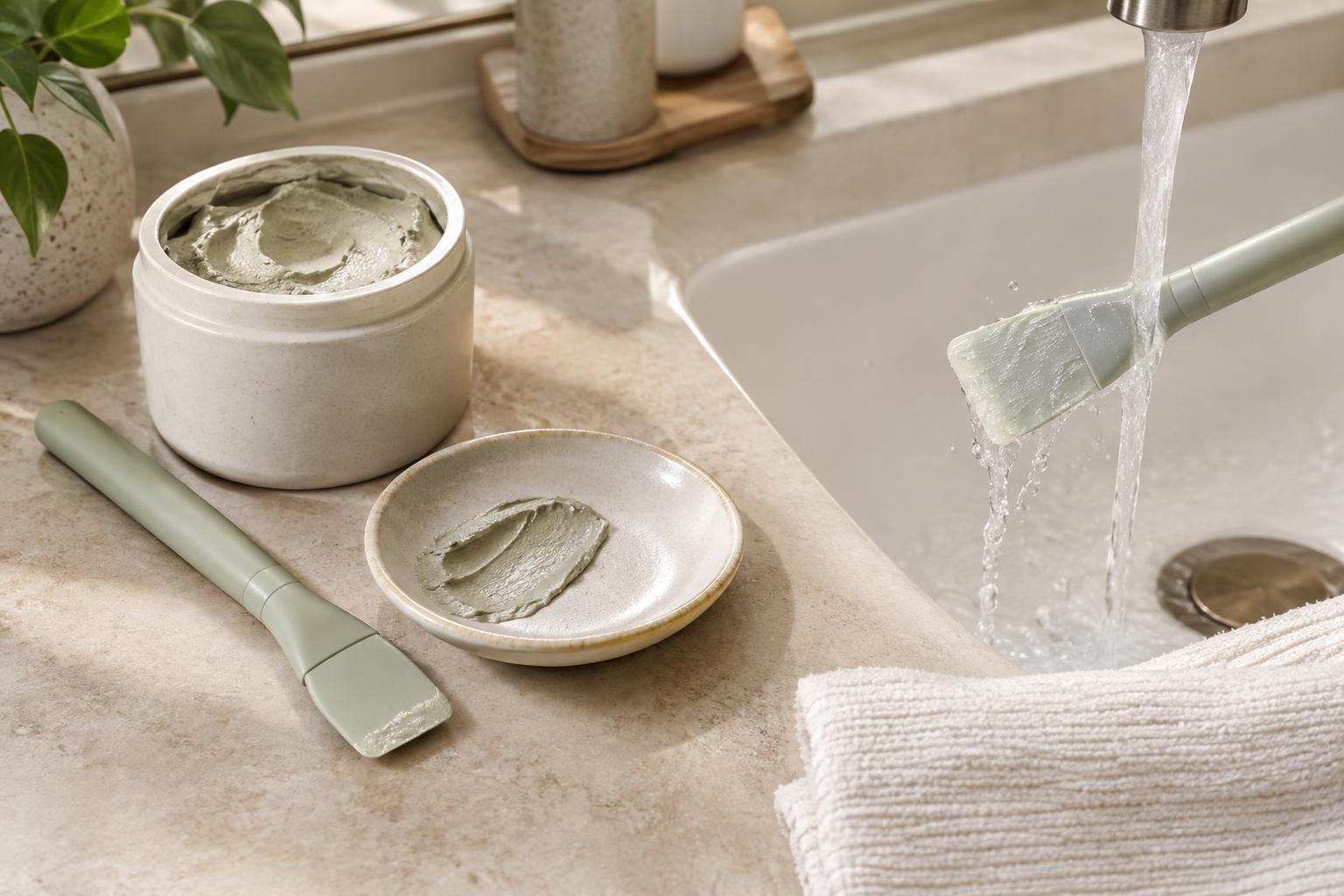
A silicone mask brush is a small applicator with a flexible, smooth head, usually attached to a handle. Unlike a bristle brush, its head does not hold much product within fibers. That can make it useful for spreading a mask across broad areas of the face while keeping most of the formula on your skin rather than in the tool.
It is a convenience tool, not an essential skincare step. Clean fingertips can apply many masks just as well. The main reasons to reach for a silicone brush are to keep a thick or sticky formula off your hands, spread it in a more even layer, or scoop out a small amount without repeatedly dipping your fingers into a jar. A brush does not make a mask more effective, and it still needs cleaning after use.
Choose it for the right texture
Silicone brushes tend to work best with smooth, spreadable formulas such as cream masks, gel masks, and some clay masks. Place a small amount on the brush, then glide it gently over clean skin. Add more as needed rather than loading the head with a large scoop. A thin, even coat is often easier to manage than a thick one, but follow the mask’s own application directions for the amount to use and how long to leave it on.
The brush may be less helpful with very runny products, which can slide off the head, or with chunky formulas that are difficult to spread evenly. It is also awkward around tight areas such as the sides of the nose. For those spots, a clean fingertip may give you more control. Avoid pressing or scraping with the edge of the brush, especially if your skin already feels sensitive.
If you use a mask from a shared jar, set aside only what you need with a clean tool and do not return leftovers to the container. For a tube or pump, you can dispense product directly onto the brush. These habits help keep your routine tidy, but they do not replace washing the brush.
Clean it after every use
Rinse the brush soon after applying the mask, before product dries around the edge of the silicone head. Wash it with lukewarm water and a small amount of mild soap, gently rubbing both sides and the area where the head meets the handle. Rinse until it no longer feels slippery or has visible residue. If product is caught in a seam, take a little extra time to work it free without pulling the tool apart.
Shake off excess water and leave the brush to air-dry fully on a clean towel or in a position that lets moisture drain away. Store it only once it is dry, preferably where the head will not pick up dust or touch other used tools. Do not assume that silicone can go into boiling water or a dishwasher: handles, adhesives, and decorative parts may have different care limits. Follow any cleaning instructions supplied with your brush.
Check the tool occasionally for splits, loose parts, or residue that will not wash away. A smooth head is easier to clean when it is intact. If the brush becomes damaged or persistently difficult to clean, replacing it is simpler than trying to work around worn areas.
Keep the routine simple
Use the brush only on the areas where the mask is meant to go, keeping clear of the eyes and lips unless the product directions say otherwise. Do not use it to apply a mask over irritated or broken skin. If a product feels uncomfortable, remove it according to its directions rather than trying to spread it thinner with the brush.
One well-maintained brush is enough for most occasional mask routines. If you switch between formulas during the same session, wash and dry the brush between products or use clean fingertips for the next step. The useful habit is not collecting more tools; it is using a tool when it makes application easier and putting it away clean.