Start with the job, not the tool
The main purpose of a daily facial cleanse is to lift away surface dirt, excess oil, sunscreen and makeup without leaving your skin feeling uncomfortable. Your cleanser, the time you spend rinsing and the pressure you use often matter more than whether you buy an accessory. If your current routine leaves your face feeling clean and comfortable, there is no need to add a tool.
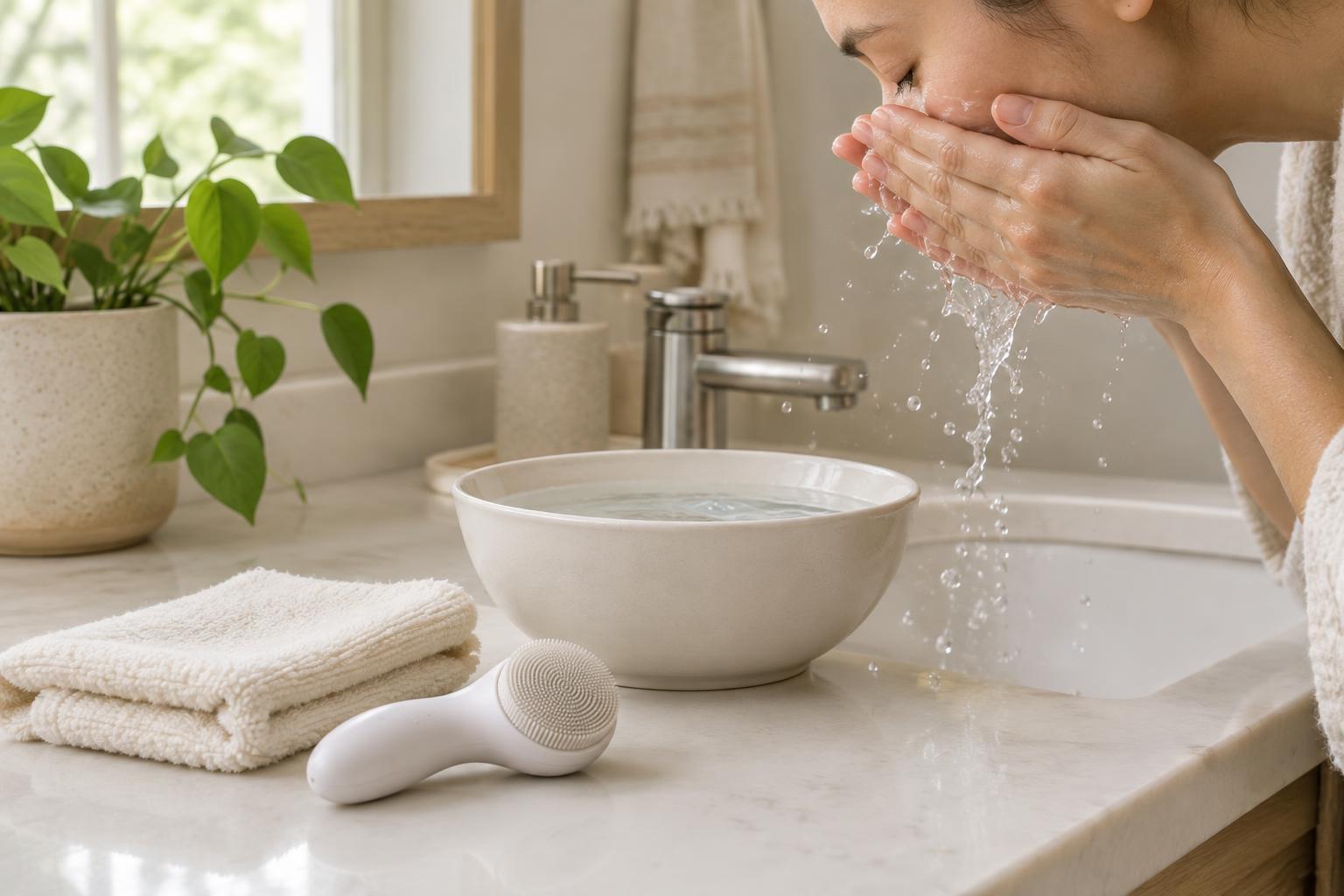
Hands, washcloths and facial cleansing brushes offer different levels of contact with the skin. Hands are the simplest and usually the gentlest option. A soft washcloth adds a little friction and can help remove residue around the hairline. A brush adds more movement and texture, but it also asks you to pay closer attention to pressure and cleaning. Think of these as choices for different preferences, not steps in a required upgrade path.
Hands: the easy baseline
Clean fingertips make a useful starting point because they let you feel where cleanser has reached and how much pressure you are applying. Wet your face with comfortably lukewarm water, spread the cleanser gently over your skin, then rinse thoroughly. Pay attention to easily missed areas such as the sides of the nose and the jawline without scrubbing them.
If you wear heavier makeup or water-resistant sunscreen, a single wash with your usual cleanser may not remove everything comfortably. You can first use a makeup remover or cleansing product suited to what you wear, then follow with a gentle wash if needed. That does not mean you need a brush: a change in cleansing product or an extra rinse may be more useful than extra friction. Pat your face dry with a clean towel rather than rubbing.
Washcloths: useful texture with simple upkeep
A soft washcloth can help lift cleanser and loosen makeup residue, especially when you prefer to wipe rather than splash water repeatedly. Wet it thoroughly, use light strokes and let the damp fabric do the work. A coarse cloth or vigorous back-and-forth motion can feel harsh, particularly around the eyes and other delicate areas. If a cloth leaves your face feeling tight or tender, use less pressure, use it less often or return to your hands.
The advantage of a washcloth is that it is easy to replace with a fresh one. Avoid leaving a damp cloth bunched up for repeated use; let it dry between uses and wash it regularly. Choose a texture that feels soft when wet, since a fabric that feels pleasant on your hands may still be too rough for your face. A cloth is an optional aid, not a substitute for a cleanser that rinses well.
Facial cleansing brushes: more contact, more care
Facial cleansing brushes vary. Some have soft silicone surfaces, while others use bristles; some are manual and others move with a motor. Their textured surfaces can make cleansing feel thorough, but that sensation is not a reason to press harder or keep going longer. Use a brush according to its instructions, keep it moving gently and avoid pairing it with a gritty scrub. If you are trying one for the first time, occasional use can help you judge whether it adds anything to your routine.
A brush also needs maintenance. Rinse away cleanser after use, allow the head to dry as directed and replace removable parts when the manufacturer recommends it or when they are worn. Do not share a facial brush. If using one repeatedly leaves your skin feeling uncomfortable, the simpler option may be the better fit. A higher price or more settings does not necessarily make a brush more useful for your face.
Choose by comfort and convenience
For a low-effort routine, begin with your hands and a cleanser you can rinse away easily. Consider a soft washcloth if you want a little help wiping off residue and are happy to keep fresh cloths available. Consider a brush only if you enjoy using it, can maintain it properly and find that gentle use suits your skin. You can also use different methods on different days; there is no rule that one tool must handle every cleanse.
Whatever you choose, treat persistent stinging, redness or a newly uncomfortable feeling as a cue to stop adding friction and simplify the routine. Cleansing should not feel like polishing a surface. The best tool is the one that helps you wash consistently, rinse well and leave your skin comfortable without turning an everyday task into extra work.