What a lash comb does
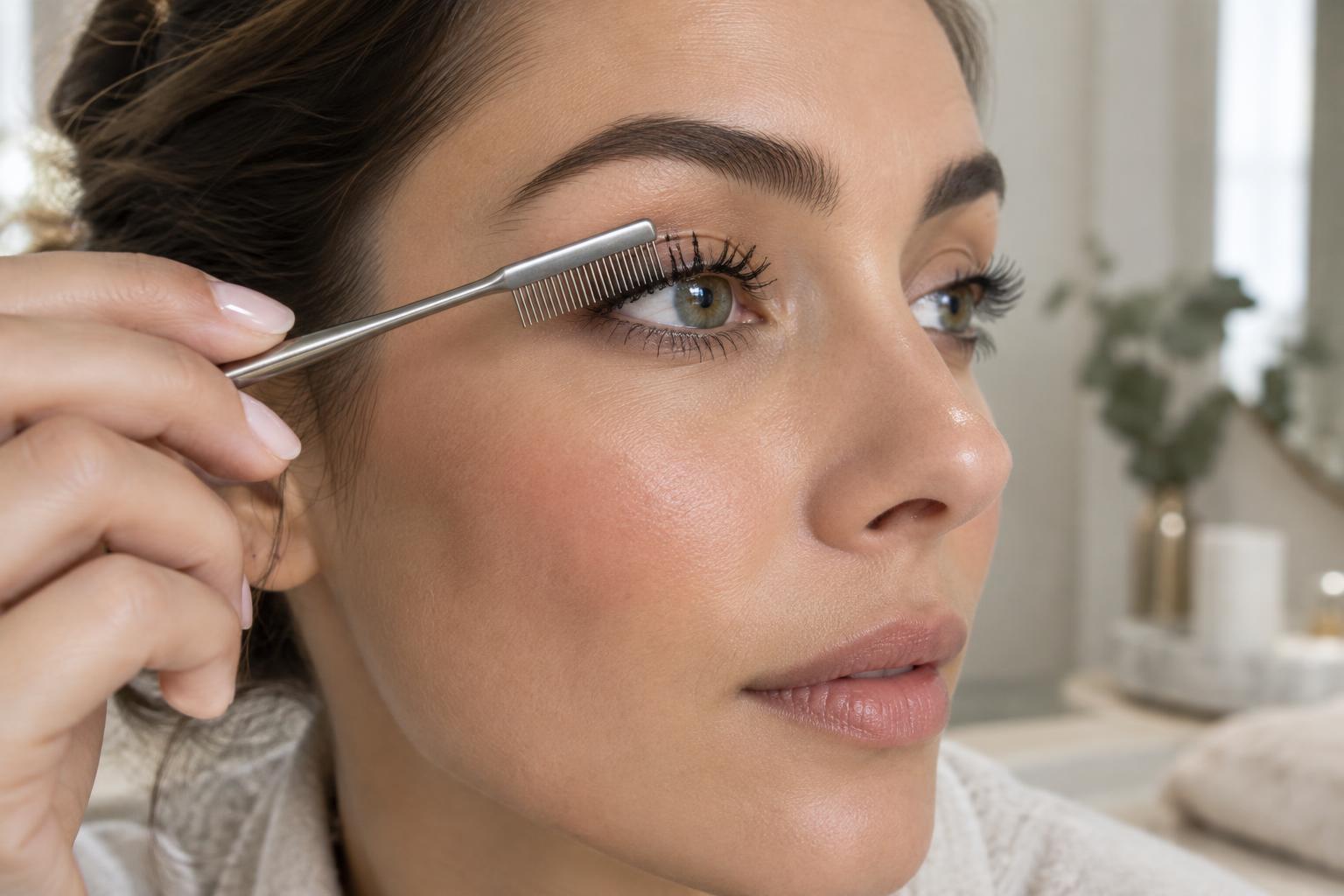
A lash comb has a row of closely spaced teeth designed to pass between lashes. After mascara, it can spread out lashes that have stuck together and lift away some excess product. It is most useful when you like the definition of mascara but want a less clumped finish. It will not create length or curl on its own; it simply helps you work with the lashes and mascara already in place.
Lash combs may have metal or plastic teeth, and some are attached to a brow brush. Either type can be useful if the teeth are straight, clean, and comfortable for you to control. Because the tool is used close to your eye, choose one you can hold steadily rather than one that feels awkward or slippery. Check it before each use for bent or damaged teeth.
Get the timing and position right
Apply mascara as you normally would, then pause just long enough for the coating to settle. Combing is usually easiest while the mascara is still slightly flexible, before it has dried into a firm finish. If it is very wet, the comb may move product around rather than separate the lashes. If it is fully dry, forcing the teeth through can pull on them. Work on one eye at a time so you do not have to rush.
Use a mirror in a well-lit spot and rest your elbow on a stable surface if that helps steady your hand. Look slightly downward for the upper lashes, keeping your eye relaxed. Hold the comb so you can see its teeth clearly, and keep their tips away from the surface of your eye. You do not need to place the comb against the eyelid to get a useful result.
Separate the lashes in small passes
Start around the middle of the lash length rather than pressing the comb into the roots. Gently guide the teeth through a small group of lashes toward the tips, following the direction the lashes grow. Lift the comb away at the end of each pass instead of dragging it sideways across the lash line. Repeat only where lashes are stuck together, moving across the eye in manageable sections.
For a stubborn clump, make a second light pass from a slightly different angle. If the comb catches, stop rather than pulling: move it away carefully and try a less crowded part of the lashes. A light touch is more helpful than repeated scraping. You can wipe collected mascara from the comb between passes with a clean tissue so that you do not transfer a blob of product to the next section.
Lower lashes are shorter and give you less room to maneuver. If you choose to comb them, use especially short, gentle passes and keep the tool where you can see it. It is fine to leave a few lashes together; separation does not need to be perfect to look polished.
Keep the tool clean and the routine comfortable
Remove mascara from the comb after use, following any care directions that came with the tool. A washable comb can generally be cleaned with mild soap and water, rinsed thoroughly, and left to dry completely before storage. Do not share a lash comb, and avoid using one with residue caught between its teeth. A clean tool is easier to use and less likely to deposit old mascara on a fresh application.
Never comb while walking or riding in a moving vehicle. If your eye feels irritated, or the comb or mascara is causing discomfort, stop and leave the lashes alone. Avoid trying to separate lashes by tugging with the comb. The aim is a controlled finishing step, not a forceful correction.
Prevent clumps before you need to comb
A lash comb works best as a finishing tool, but mascara application affects how much separating you will need. Wipe obvious excess product from the mascara wand at the tube opening before applying it. Begin with a light coat, using deliberate strokes rather than repeatedly loading the same lashes. If you add another coat, do so while the first is still workable instead of trying to cover a thick, dry layer.
Keep the comb nearby when you apply mascara so you can address small clumps as they appear. With a steady hand and a few gentle passes, you can preserve the mascara look you want while giving individual lashes a little more definition.