Start with where the necklace sits
A necklace length usually describes the chain measured from end to end, including its clasp. It does not tell you exactly where the necklace will land when worn. Neck size, shoulder shape, the weight of a pendant, and even the thickness of a shirt can change its position. Use listed lengths as a guide, then check the drop on your own outfit.
Common labels include choker, princess, matinee, opera, and rope. A choker sits close to the neck. A princess-length necklace generally rests around the collarbone or just below it. A matinee length falls toward the upper chest, while opera and rope lengths hang lower. Retailers may use these names differently, so an actual measurement is more useful than a label alone. If you already own a necklace that sits well, measure it flat and keep that number handy when shopping.
Match the chain to the space around the neckline
An open neckline gives a necklace room to be seen. With a crew neck, a short necklace can sit above the fabric, while a longer pendant can fall clearly below the collar. A chain that lands right on the edge of the crew neck may disappear and reappear as you move. If that happens, try a slightly shorter or longer setting.
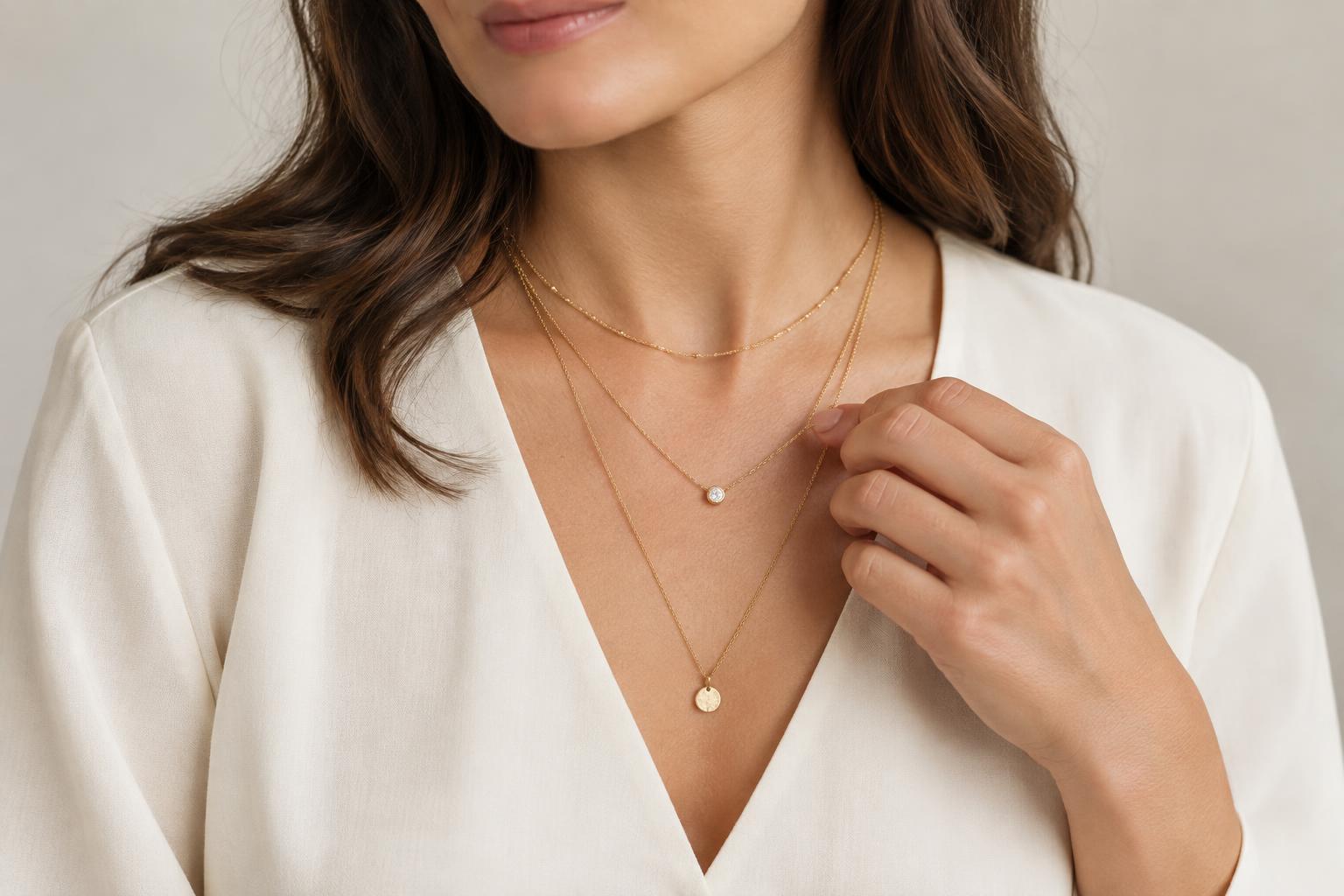
A V-neck naturally creates a point of focus. A pendant that ends above the bottom of the V often echoes its shape; a shorter chain can also work if you want a little space between the pendant and the neckline. With a scoop or square neck, consider how much bare space you want to fill. A curved chain, a small pendant, or layered lengths can each create a different effect without needing to trace the neckline exactly.
High necklines, including turtlenecks, offer a smooth background for longer chains. Boat necks and off-the-shoulder styles can pair well with a close-fitting necklace that leaves the neckline visible. These are options rather than rules: the most useful test is whether the necklace looks intentional against the top and stays visible when you move.
Consider the pendant as well as the chain
The chain length is only part of the finished drop. A large pendant hangs below the chain’s lowest point, and a heavier pendant may pull a delicate chain into a sharper V. Before buying, check whether the listed measurement refers to the chain alone and look for the pendant’s dimensions separately. A small charm and a long statement pendant can look very different on chains of the same length.
Scale also affects how a necklace works with a neckline. A tiny pendant may get lost against a patterned blouse, while a wide pendant may compete with a ruffle, bow, or decorated collar. Neither choice is wrong. If the outfit already has detail near the face, a simple chain can give it breathing room; if the top is plain, a more noticeable pendant can become the focal point.
Try the length before committing
To preview a length, use a soft measuring tape or a piece of string cut to the listed measurement. Drape it around your neck and bring the ends together where a clasp would close. Then try it with the tops you wear most often. Look in a mirror while standing and sitting: a chain can shift when you change posture or when a collar moves.
For an adjustable necklace, check both the shortest and longest settings. An extender can help move a pendant away from a neckline edge, but it may also leave a short tail at the back. If you plan to layer necklaces, choose lengths with enough separation that each piece is visible. Mixing a plain chain with a pendant can make the layers easier to distinguish.
Choose for comfort and repeat wear
The best length is one you enjoy wearing with your clothes. A close chain should feel comfortable when you turn your head and move; a long chain should not catch constantly on buttons, bag straps, or work surfaces. Clasps, pendant weight, and chain texture matter as much as the number on the tag.
If you are choosing one versatile necklace, start with a length that works with several of your usual necklines rather than one special outfit. Note where it lands over bare skin and over fabric, and whether you prefer a pendant or an uninterrupted chain. That simple comparison will make future necklace choices much easier.