Start with the style you want to make
Hair prep is easier when you work backward from the finished style. An air-dried wave, a smooth blowout and a curled look do not need the same starting point. Before reaching for products, decide whether you want to encourage your natural texture, create a smooth shape or use a hot tool on dry hair. That choice helps you judge how damp your hair should be and which products are worth using.
Begin by gently removing excess water after washing. Squeeze with a towel or soft T-shirt rather than rubbing vigorously, which can disturb the shape you may want to keep. Detangle using a method that suits your hair: a wide-tooth comb or flexible brush may help, while curls often benefit from being detangled with conditioner before rinsing. Work from the ends toward the roots and pause at knots instead of pulling through them. If you are styling between washes, lightly refresh only the areas that need reshaping rather than wetting everything by default.
Match dampness to the tool
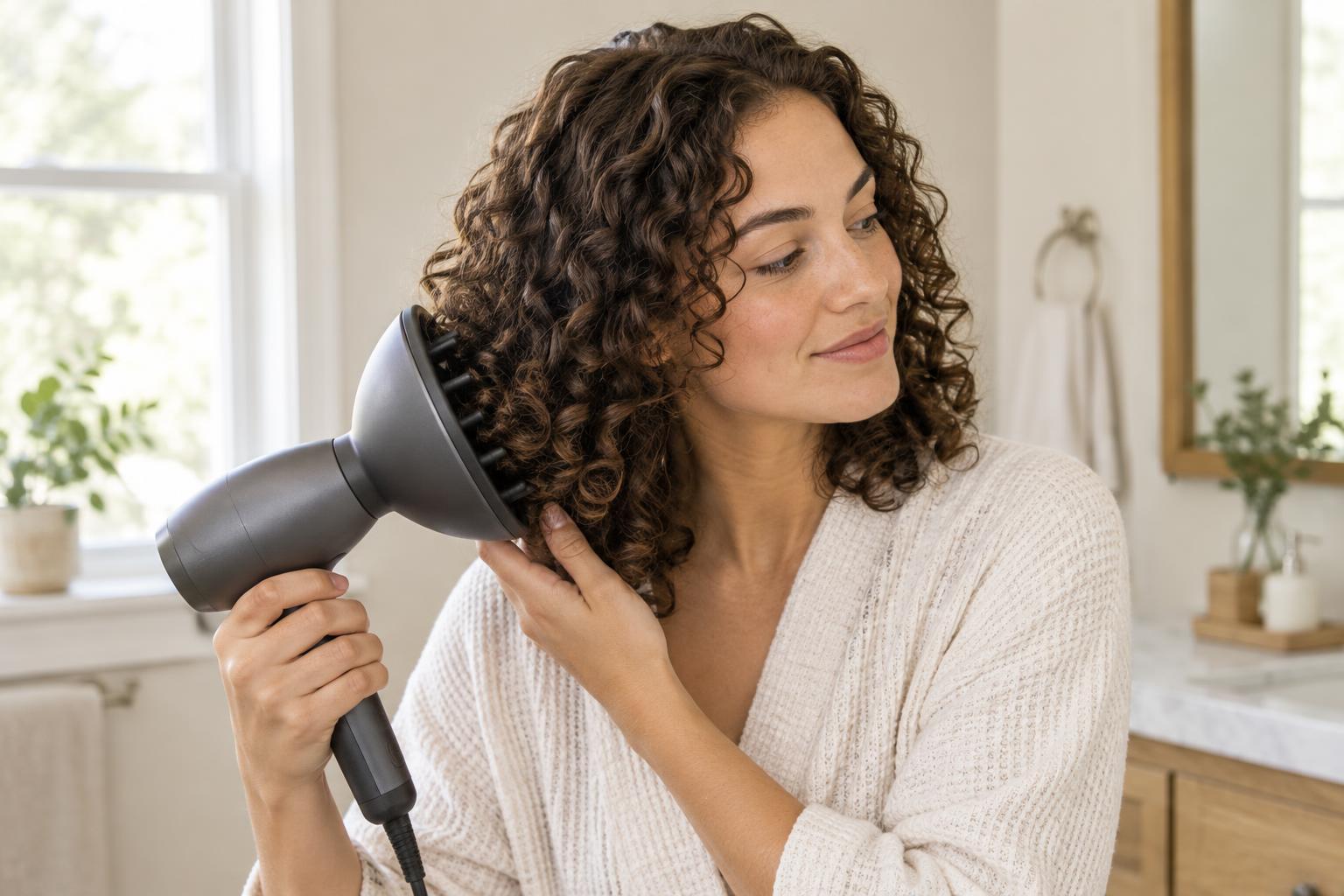
Dampness changes how hair responds to styling. For many air-dried styles, hair that is wet to damp gives a cream, mousse or gel room to spread and helps you arrange strands before they settle into shape. If dripping hair makes a product slide off or dilutes its effect, squeeze out more water first. There is no single ideal moisture level for every product, so check its directions and adjust based on how your hair behaves.
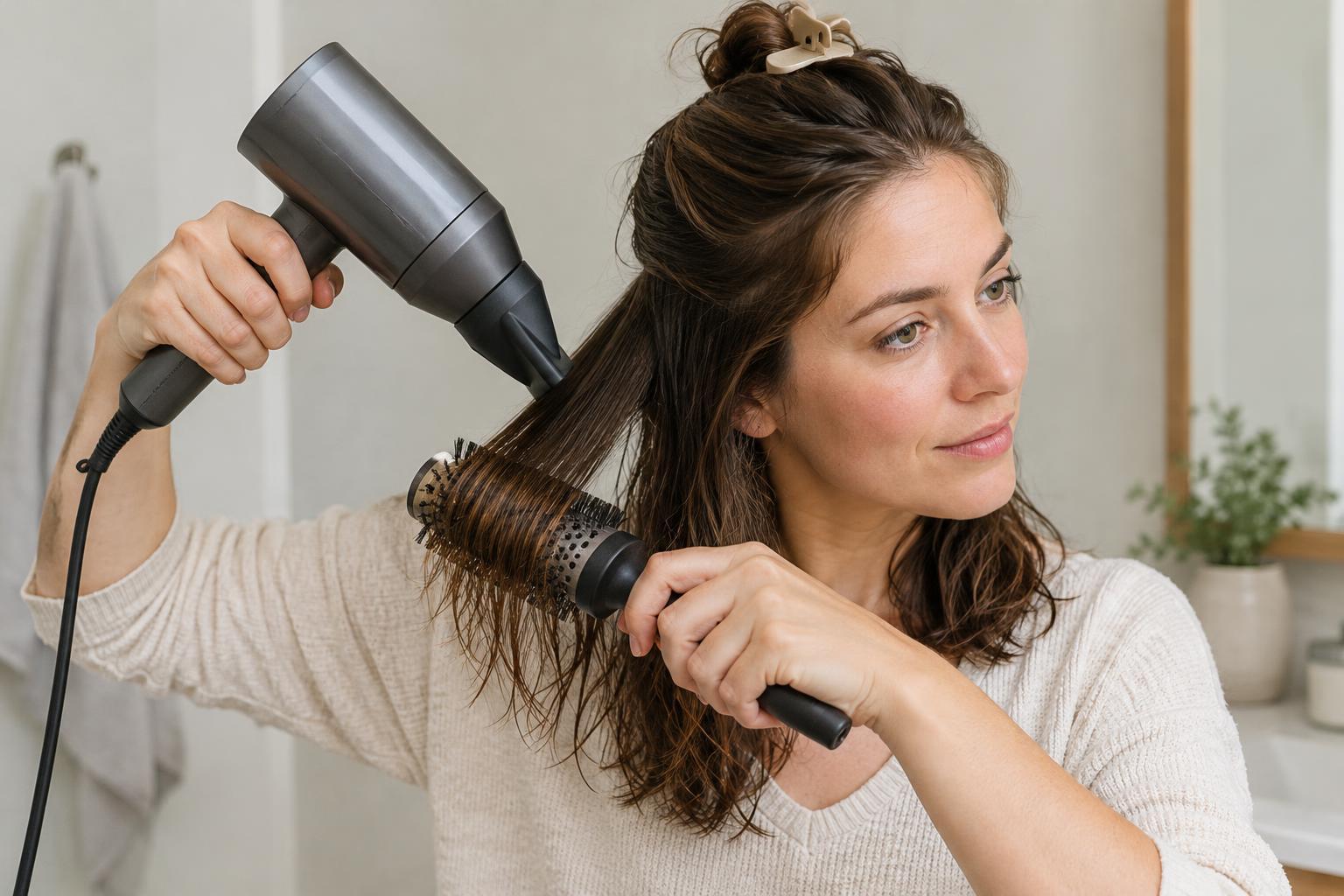
For a blowout, towel-dried hair is a practical starting point. Hair that is still saturated generally takes longer to dry and can be harder to control with a round brush. You can rough-dry it partway with your hands before shaping smaller sections, keeping the dryer moving and following the tool’s instructions. Hot irons are different: use a curling iron or straightener only on fully dry hair unless the tool is specifically designed and labeled for another use. If you hear sizzling or see steam, stop and check for remaining moisture or excess product before continuing.
Section for control, not perfection
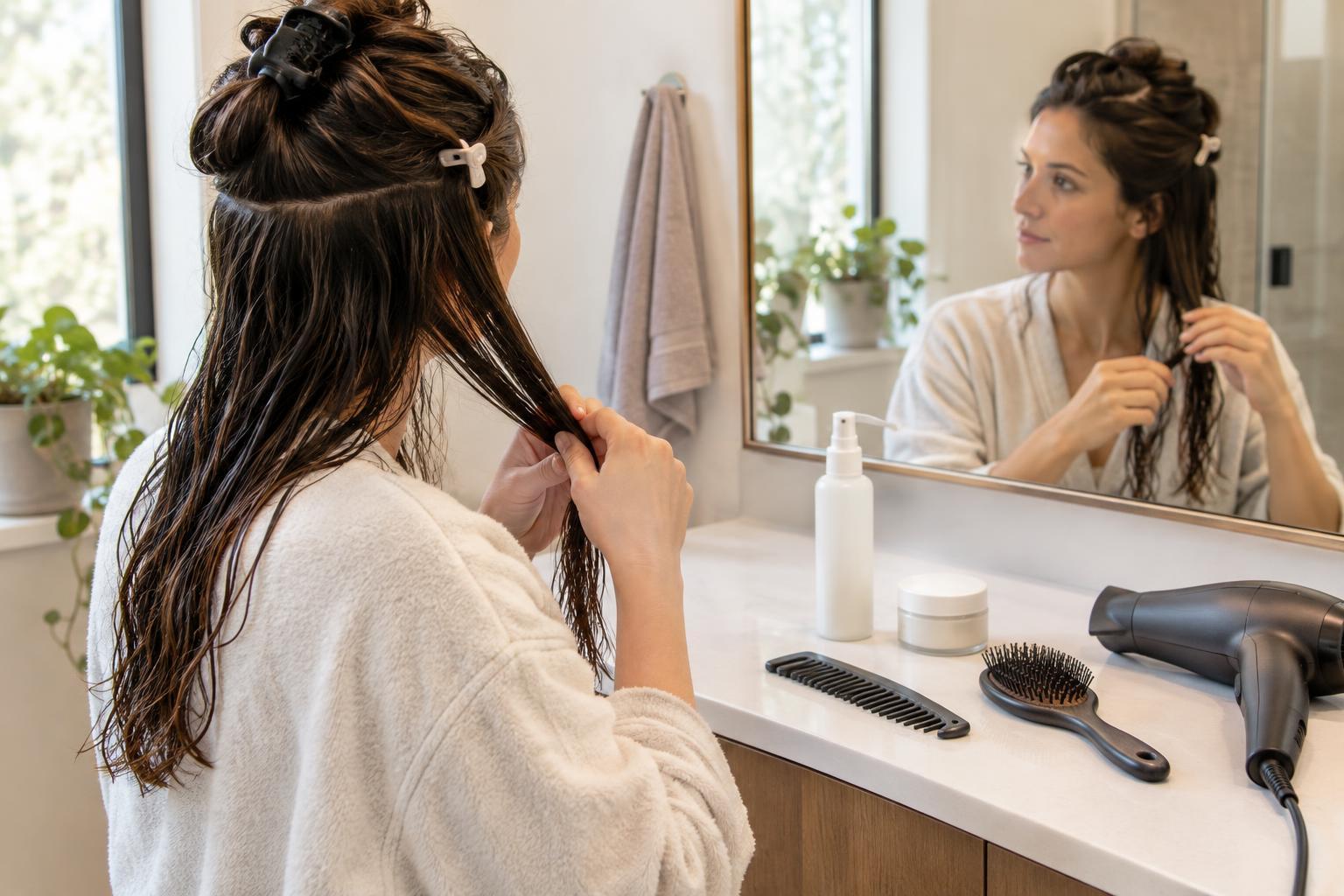
Sectioning makes it easier to apply product evenly and reach the hair underneath. Start with a simple middle or side part, then divide the hair into an upper and lower layer. Clip the upper layer out of the way and work through the lower layer first. For dense or long hair, add more horizontal layers; for shorter or finer hair, fewer sections may be enough. The goal is to keep each working section manageable, not to create perfectly straight lines.
Match section size to the task. A broad section may be fine when distributing a lightweight leave-in product, while a brush, dryer attachment or curling iron needs a section it can handle without hair spilling out. Before styling, check the back of your head with your fingers for missed damp patches or product-heavy spots. If one area feels coated, comb or brush it through rather than adding more product elsewhere to compensate.
Layer products by purpose
Use the fewest products that do the job. On damp hair, a leave-in conditioner or detangling spray can come first if you need slip. Follow with a styling product chosen for the finish you want: mousse for airy hold, curl cream for definition, or a smoothing cream for a sleeker result. These are useful starting points, not fixed rules; formulas vary. Apply a small amount, distribute it through the relevant sections and add more only where needed. Concentrating richer products on the mid-lengths and ends can help avoid a heavy-feeling root area.
If you will use heat, choose a heat-protectant product suitable for your tool and follow its application directions, including any instruction to let hair dry before using an iron. A protectant does not make unlimited heat harmless, so use a suitable temperature and avoid repeatedly working the same section. Save finishing products, such as a small amount of serum for flyaways or hairspray for hold, until the shape is in place. Applying everything at the start can make it harder to tell what your hair actually needs.
Make a repeatable prep routine
A useful routine can be short: remove excess water, detangle, divide into sections, apply the products that serve your chosen style, then style at the appropriate dampness. When you try a new product, change one part of the routine at a time. That makes it easier to notice whether the amount, placement or starting dampness needs adjusting.
Pay attention to simple cues as you work. If a brush catches, take a smaller section or detangle again. If roots look flat, keep heavy products away from them or try less product next time. If an air-dried style feels stiff, wait until it is fully dry before gently softening it with your hands. Prep does not need to be elaborate; it needs to give you enough control to style comfortably and repeat the result.