Start with damp, detangled hair
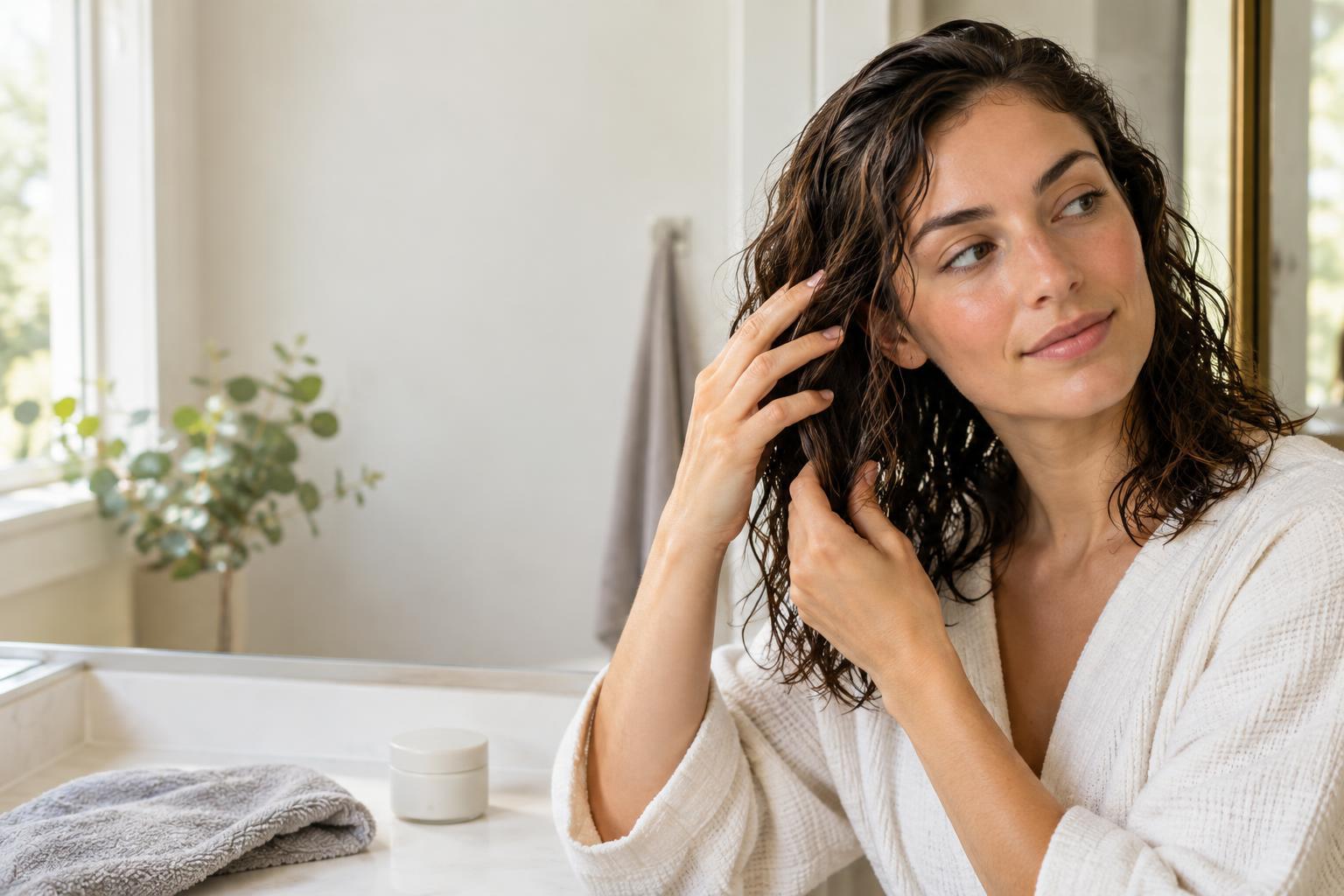
A blow-dry is easier to control when hair is damp rather than dripping wet. Gently squeeze out excess water with a towel, then detangle, starting at the ends and working upward. Apply any leave-in product according to its directions; if you use a heat protectant, distribute it through the areas you plan to dry. No product makes heat harmless, so a moderate temperature and steady movement still matter.
Fit the routine to your goal. For a smooth finish, you will use the nozzle and brush to guide hair in the same direction. For a more natural texture, you may need less brushing and less tension. Before reaching for a round brush, roughly dry the roots and lengths with your fingers until the hair is no longer very wet. This shortens the time each section spends under concentrated heat.
Aim the nozzle along the hair, not against it
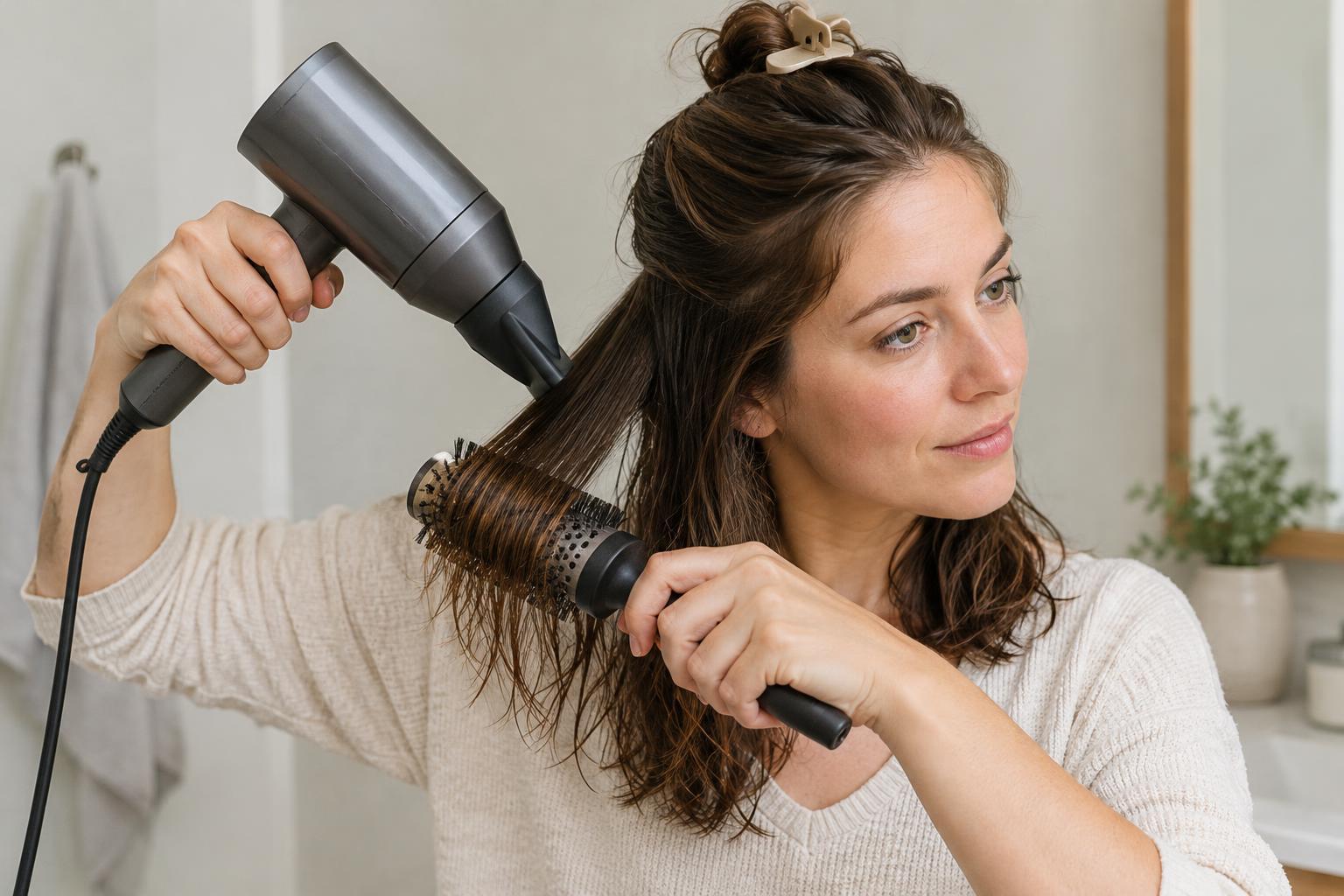
A concentrator nozzle narrows the airflow so you can direct it where the brush is working. For a smooth blow-dry, point the nozzle from roots toward ends, following the direction of the hair shaft. Keep the dryer moving just behind or above the brush rather than blowing up into the underside of a section. Air aimed in several directions can scatter the strands and make the finish look less tidy.
Keep a little space between the nozzle and your hair and avoid pressing the hot opening against the brush or scalp. A lower heat or airflow setting can make short layers and hair around the face easier to control. If your dryer has a cool setting, you can use it briefly once a section is dry to let the hair settle before releasing it. Cool air helps with handling and shape, but it will not rescue a section that is still damp underneath.
Use tension to guide, not pull
Tension means holding a section gently taut as the brush and dryer move down its length. It helps keep strands aligned while they dry. Begin with the brush near the roots, hold the section comfortably, and follow the brush with the nozzle toward the ends. Move at a pace that dries the hair without leaving heat in one spot for long.
You do not need a hard tug to get a neat result. If the brush catches, stop the airflow, ease it out and detangle before trying again. A paddle brush can be straightforward for a relatively straight finish, while a round brush can add a bend at the ends or lift at the roots. For lift, direct a root section slightly away from its usual fall as it dries, then let it cool before placing it where you want it. Use only as much tension as your hair and scalp find comfortable.
Work in sections you can actually manage
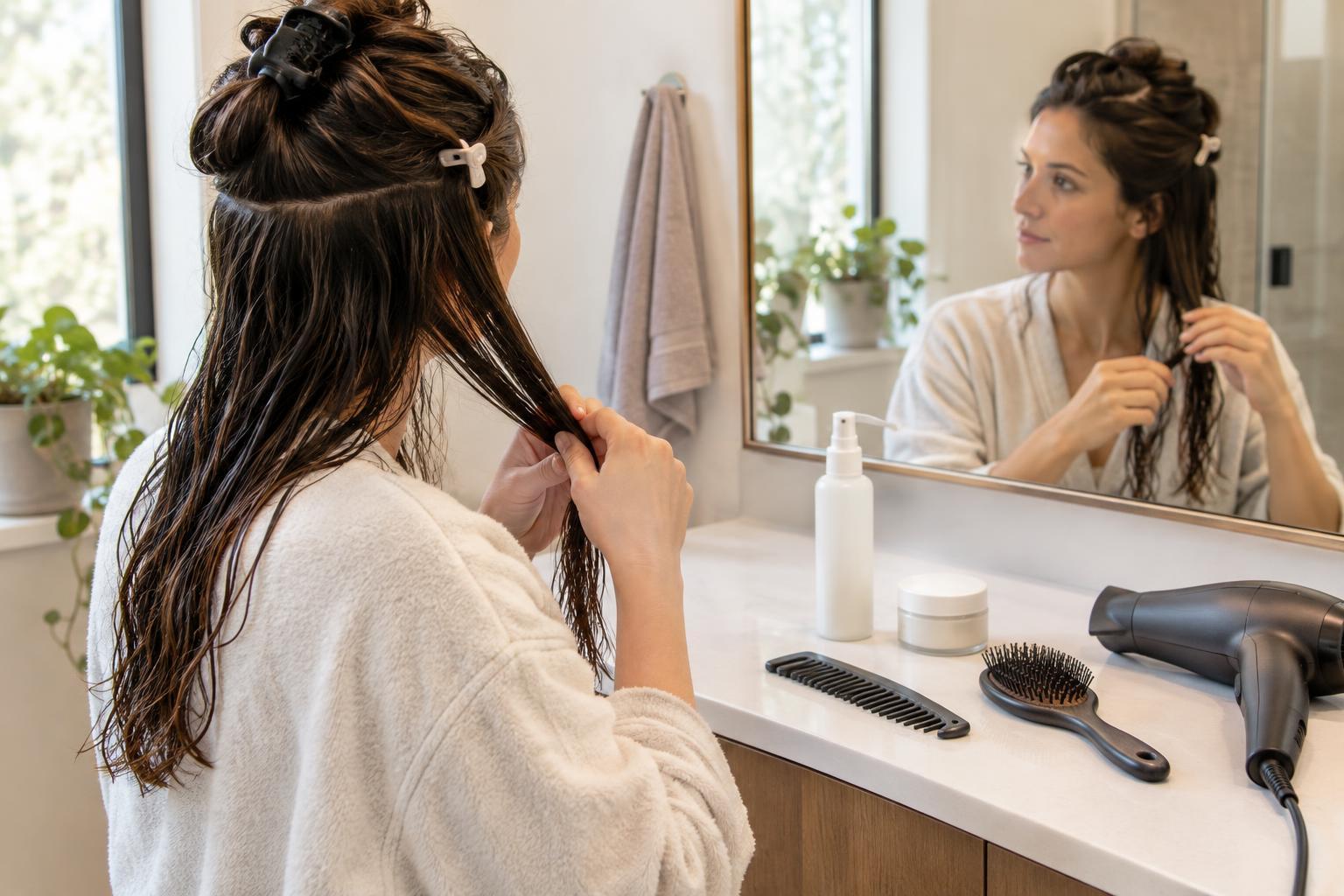
Sections give the brush and airflow access to the hair underneath, which is easy to miss when drying everything at once. Clip the top layers out of the way and begin with a lower layer. Divide that layer into pieces no wider than you can control with your brush. Thick or dense hair may need smaller pieces; finer or shorter hair may need fewer clips.
Dry each piece from roots through ends before moving on, checking the underside with your fingers rather than judging only the surface. Release the next layer and repeat. Around the face, use smaller sections so you can choose where the hair falls without repeatedly reheating it. If a finished piece becomes damp from neighboring hair, clip it aside while you complete the wetter areas. The aim is a repeatable order, not a perfect salon-style section pattern.
Finish according to your texture and comfort
Once the hair feels dry, let it cool before brushing through or adding a small amount of finishing product. If the ends need a little more polish, direct the nozzle downward for one controlled pass instead of turning up the heat across your whole head. Stop if the dryer feels uncomfortably hot on your scalp or hair, and adjust the setting or distance.
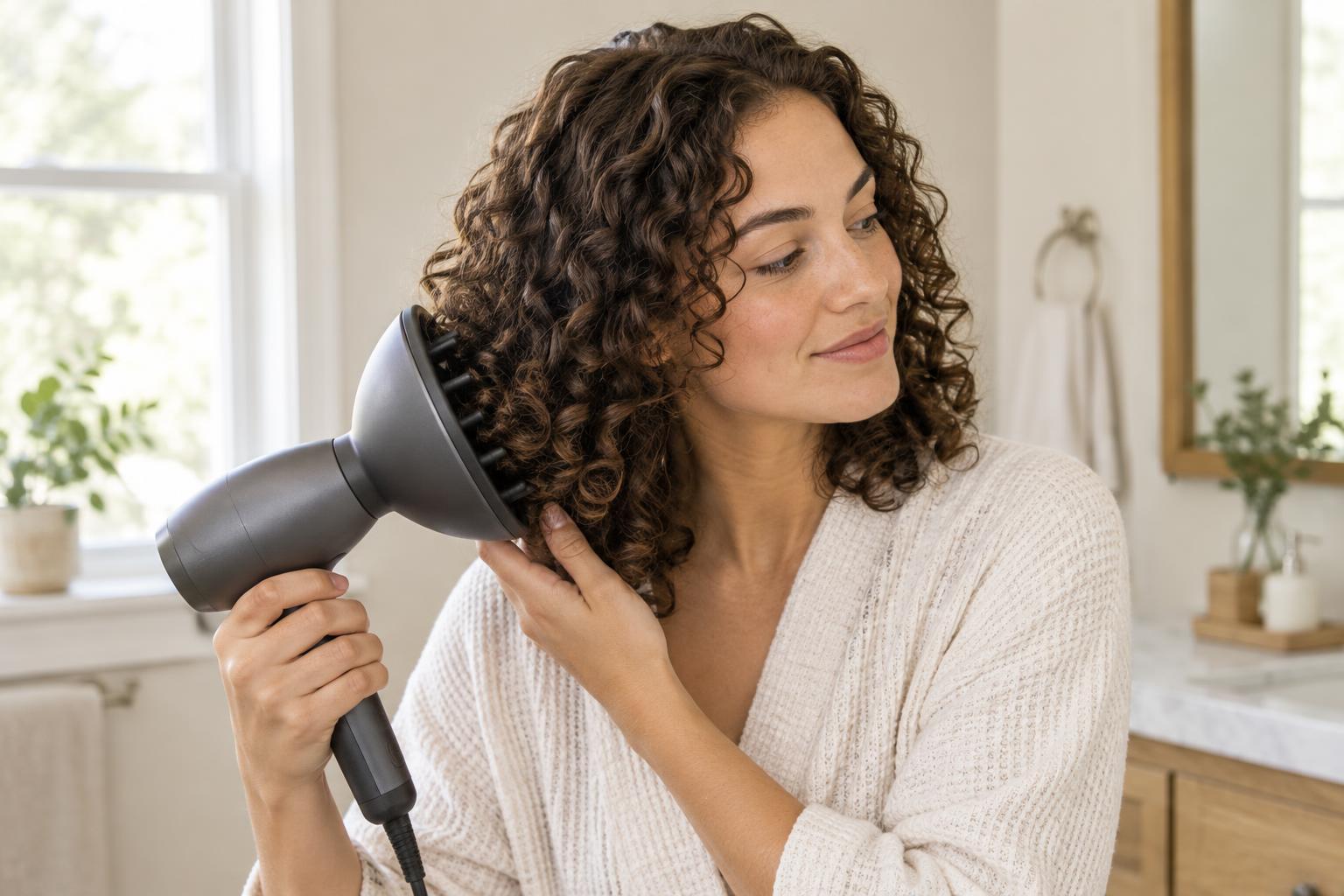
These steps are a starting point, not a rule that every texture must follow. Curls and waves may keep more definition when dried with a diffuser and minimal brush tension; coily hair may call for a different brush, smaller sections or a lower-heat approach, depending on the finish you want. Choose the amount of smoothing that works for your hair, and treat nozzle direction, gentle tension and manageable sections as tools you can adjust rather than requirements for a single look.