Start with a finish in mind
Air-drying works best when you decide what you want your hair to do before you leave it to dry. You might want defined waves, a smooth shape, a little lift at the roots or simply fewer pieces falling across your face. The aim is not to make every strand behave perfectly. It is to give your natural texture a direction.
Notice how your hair dries when you do nothing: where it separates, which sections flatten and which ends bend outward. Use that as a starting point. If you have straight hair, a neat part and controlled ends may make the biggest difference. If your hair is wavy or curly, keeping its natural groupings intact may matter more than making it lie flat. An intentional finish can be loose and lived-in.
Remove water without undoing your texture
After washing, gently squeeze excess water from your hair rather than rubbing it vigorously with a towel. A soft towel or cotton T-shirt can help absorb moisture while leaving waves and curls less disturbed. Work in sections if your hair is thick. You do not need to get it nearly dry before styling; you just want it damp enough that product will spread without dripping away.
Detangle at the stage that suits your hair. A wide-tooth comb on damp hair can help create a smooth shape, but repeated brushing as textured hair dries may separate its clumps and make the finish look less defined. If your hair tangles easily, detangle carefully before shaping it, then try to leave it alone. Fragile-feeling strands deserve a light touch, especially when wet.
Choose one main styling job for your product
Product labels are easier to navigate when you choose a job first. A leave-in conditioner can add slip and make hair feel softer. A mousse can provide light hold and volume; a gel can help waves and curls keep their shape; a cream can encourage a softer, more controlled finish. These are general tendencies, not guarantees. How much you use and where you place it can change the result as much as the product type.
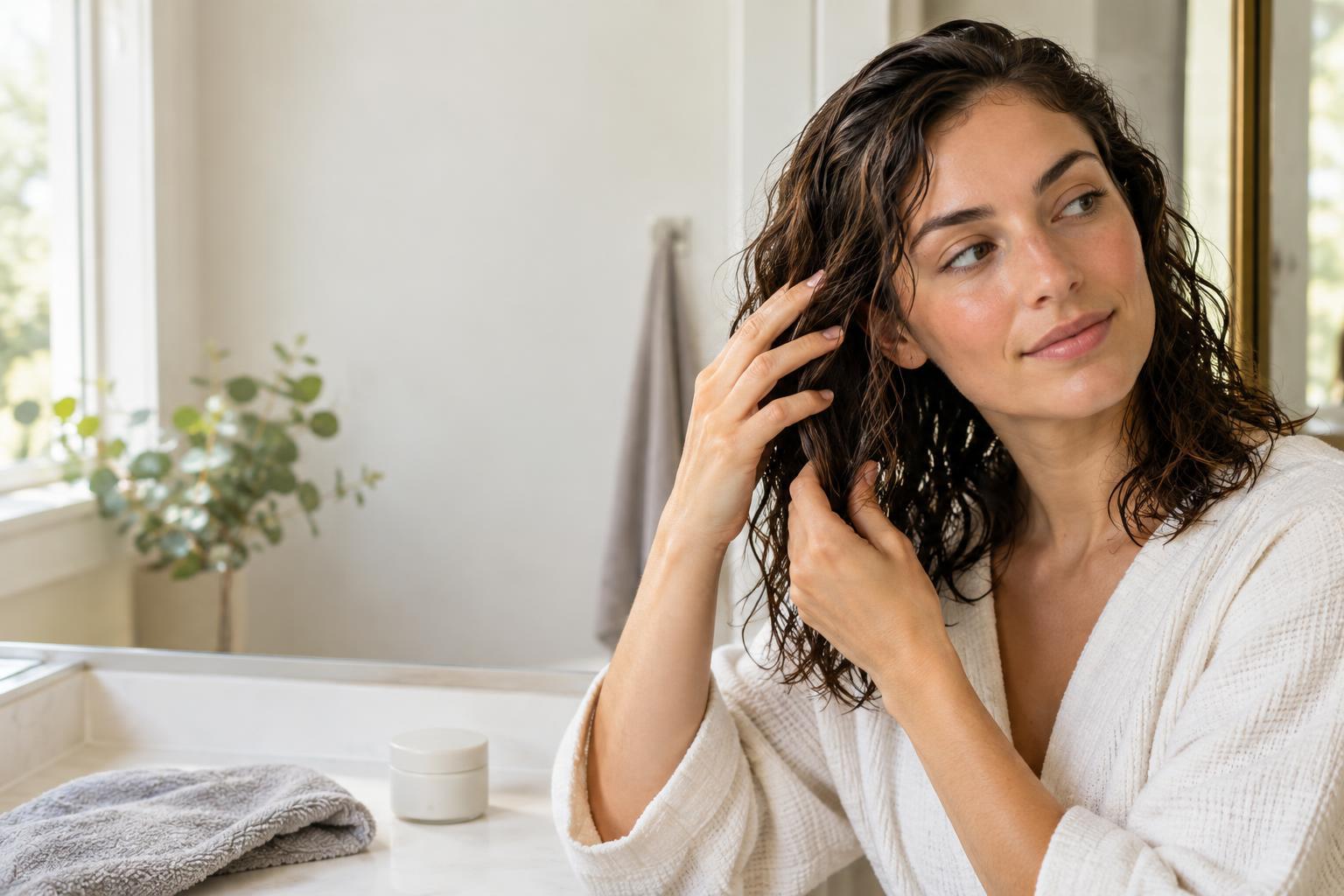
Start with a modest amount and distribute it evenly, adding more only where needed. For fine hair, concentrating heavier products near the roots may leave them looking flat, so begin at the mid-lengths and ends. For thicker or drier-feeling hair, working through sections may give better coverage than smoothing product over the surface. If you are trying a new product, test one change at a time so you can tell what helped.
Shape it, then let it set
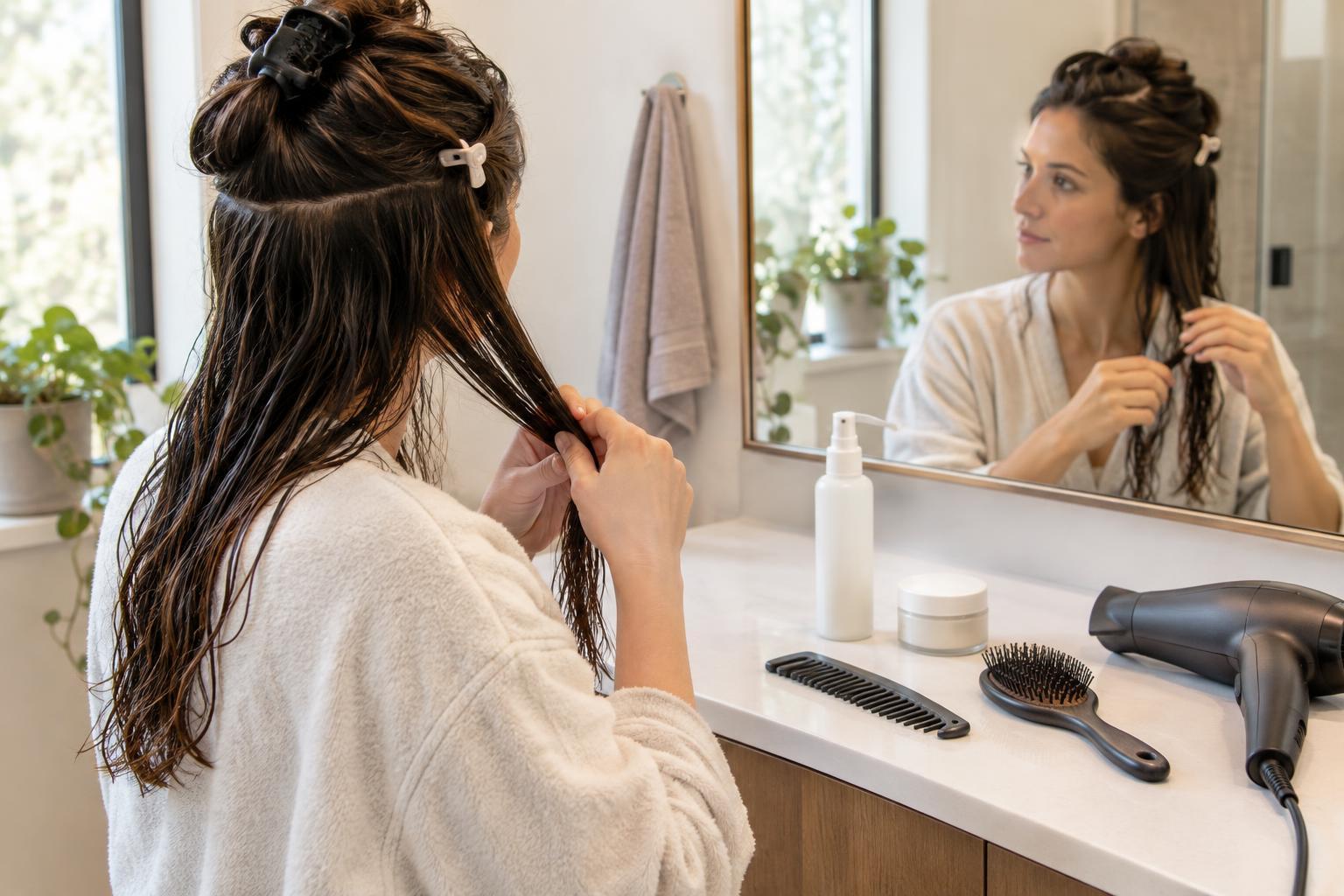
Choose your part while your hair is damp. For a smoother finish, comb or finger-position the front pieces and gently smooth the outer layer in the direction you want it to dry. For waves and curls, scrunch upward from the ends or wrap a few face-framing pieces around a finger to encourage a consistent shape. You can also use small clips at the roots to hold a section away from your scalp while it dries; place them gently so they do not leave a sharp crease.
Once the shape looks right, give it time without frequent checking. Touching, brushing or rearranging hair while it is partly dry can disrupt the pattern you just made. If you have somewhere to be, remember that dense sections may take longer to dry than the surface suggests. Styling early enough to let your hair dry fully is often more useful than adding another product at the last minute.
Make the final adjustment when hair is dry
When your hair is completely dry, assess the shape before changing it. If a gel has left a firm feel, gently scrunch the hair to soften it while keeping much of its definition. Lift the roots lightly with your fingertips if you want more volume, or smooth a small amount of product over a flyaway section if it needs control. Avoid adding a lot of product all at once; it is easier to build than to remove.
Treat each air-dry as a useful test rather than a pass-or-fail result. If the roots dried flat, try changing your part or using clips next time. If the ends look weighed down, use less product or apply it to wetter hair for easier distribution. A repeatable routine usually comes from a few small adjustments, not from making your natural hair look like someone else’s.