Start with the belt’s job
Before choosing a belt, decide what you want it to do. A belt threaded through trouser loops may need to keep the waistband secure. A belt worn over a dress may be there mainly to define the shape. If it is holding clothing in place, fit and stability come first. If it is a styling detail, you have more freedom to experiment with width, placement, and buckle size.
Look at the outfit without a belt, then notice where it already has structure. A tailored waistband, a seam at the waist, or a gathered skirt gives you a natural starting point. A loose, uninterrupted silhouette leaves more choices: you can add definition at the waist or place a belt lower for a relaxed effect. Neither position is a rule about your body. The useful question is whether the belt supports the shape you want and stays comfortable as you move.
Match width to the garment
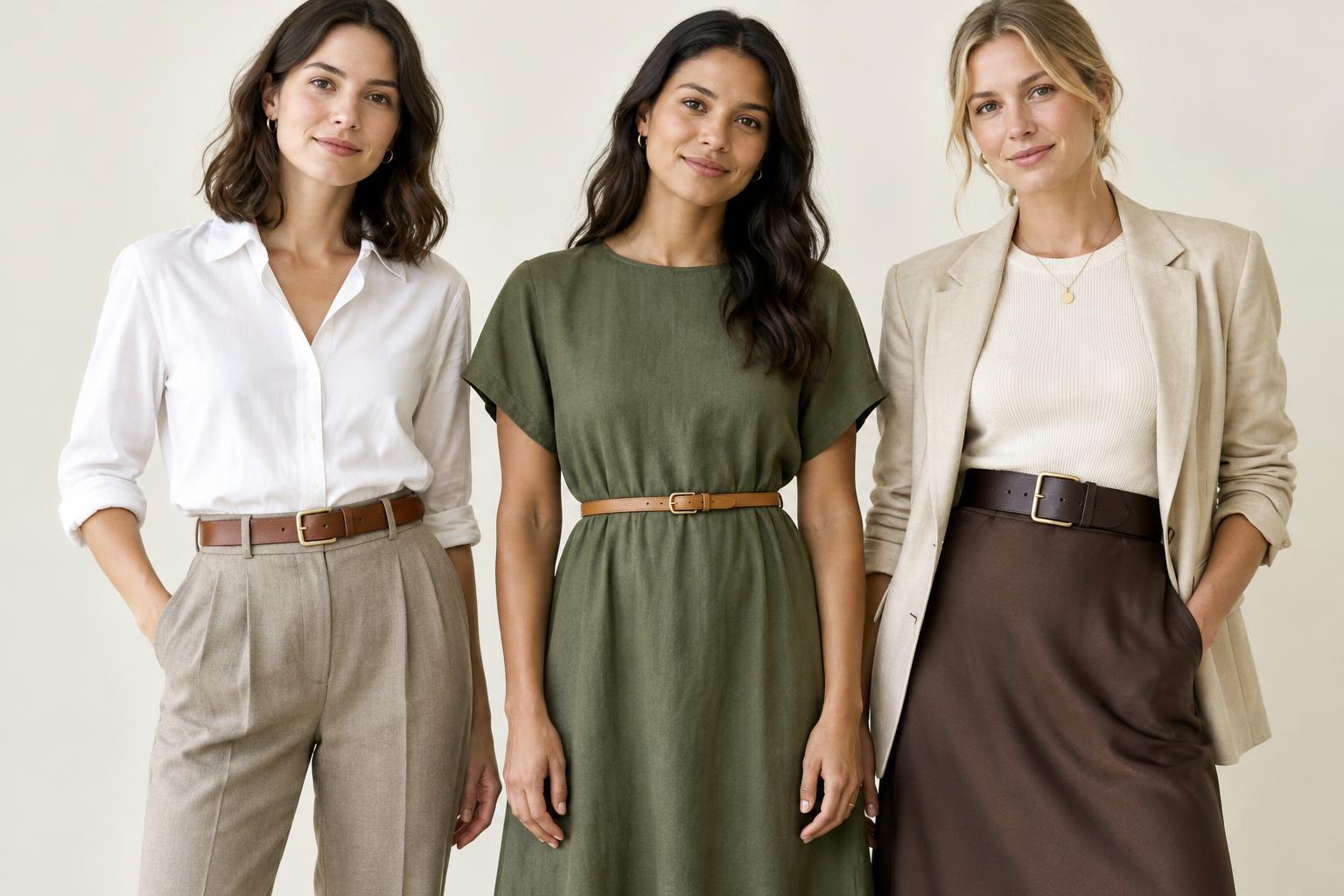
Narrow belts add a small line of contrast without covering much fabric. They can work well with lightweight dresses, fine knits, skirts, and trousers with slim loops. A medium-width belt is a versatile option for jeans and everyday trousers because it is noticeable without dominating the waistband. A wide belt makes a stronger visual statement and is often easiest to wear over an unbelted dress, long shirt, or substantial layer.
Let the garment’s details guide you. If trousers have belt loops, choose a belt that passes through them easily and lies flat; forcing a wide belt through narrow loops can bunch the fabric. If a dress has pleats, pockets, or a decorative seam, try placing the belt where it does not compress those details. Thicker fabrics may support a heavier-looking belt, while delicate or slippery fabrics may sit more neatly under a lighter one. These are starting points, not restrictions: the mirror and a short walk around the room will tell you more.
Find a placement that works with the outfit
For trousers and jeans, the simplest placement is usually the waistband. Check that the belt follows it rather than pulling it upward or leaving a gap at the back. With high-waisted trousers or a skirt, a belt can emphasize the garment’s existing waistline. With a lower-sitting waistband, keeping the belt at that level often looks more intentional than trying to lift the garment with it.
Dresses, tunics, and long shirts give you more room to adjust. Place the belt at the narrowest part of the garment for a defined shape, or slightly lower for a looser, bloused effect. If you want fabric to fall over the belt, gently pull a little upward all the way around rather than gathering it in one spot. Check the result from the side as well as the front. Sitting down is worth testing too: a position that looks good standing may press into your ribs or shift when you bend.
Balance a belt with layers and accessories
A belt worn over a cardigan, blazer, or lightweight coat becomes part of the outer layer’s silhouette. Make sure the layer closes or overlaps comfortably before fastening the belt; otherwise, it may pull open or create bulky folds. A narrow belt can provide gentle definition, while a wider one can anchor a roomy layer. If the material bunches under the buckle, try a softer belt, a different position, or no belt at all.
Consider how much attention the rest of the outfit draws. A large buckle, contrasting color, or textured strap can serve as a focal point, so other accessories can stay quiet if you prefer a simple look. For a subtler finish, choose a belt close in color to the garment beneath it. You do not need to match every metal finish or accessory exactly. Repeating one element, such as a color or texture, is often enough to make the choice feel deliberate.
Do a quick fit check before you leave
Fasten the belt at a comfortable setting, then sit, walk, and reach. It should not pinch, twist, or require frequent readjustment. If you are buying a belt for loops, measure against a belt that already fits those trousers rather than relying on a clothing size alone. For a belt worn over layers, allow for the added fabric and check that the strap has enough length to fasten securely without an awkwardly long end.
Finally, check how the belt looks with the whole outfit, including shoes and any bag you plan to carry. If a belt seems out of place, change one thing at a time: its width, its height, or how tightly it is fastened. A small adjustment can be more effective than replacing the outfit. The best choice is one that gives the clothing the shape or support you want while letting you go about your day comfortably.