Start with your real daily essentials
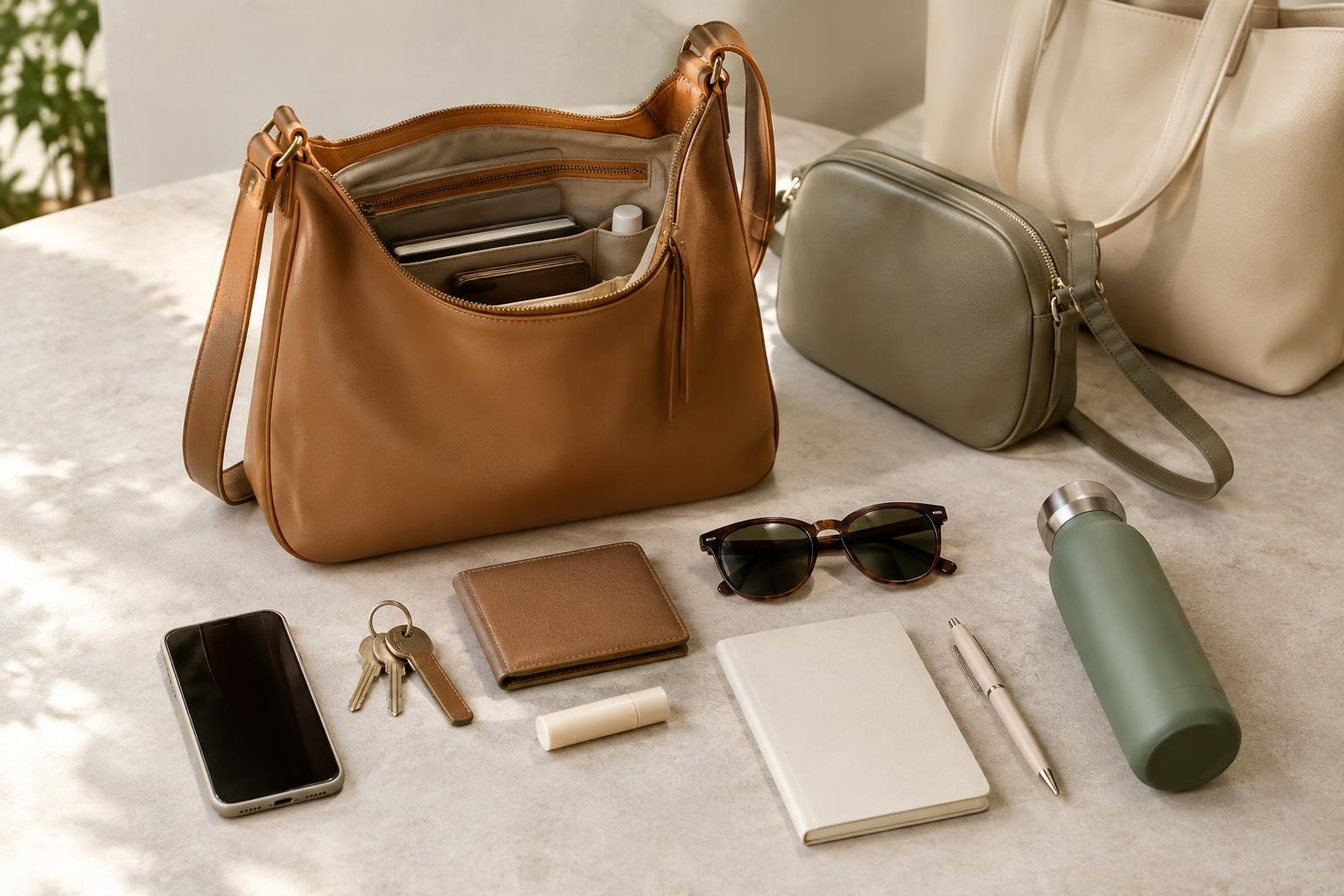
Before choosing a handbag, empty the one you use now or gather everything you normally take out. Separate the items you carry every day from those you need only occasionally. Your daily group might include a phone, keys, wallet, glasses, lip balm and a small pouch. Depending on your routine, you may also need room for a water bottle, paperback, compact umbrella or work items. Choosing for your usual day is more useful than choosing for every possible errand.
Pay attention to the largest and most awkward objects. A slim bag may have enough total space but still be too narrow for a glasses case or too shallow for a bottle to stand upright. If you carry a tablet, notebook or lunch container, note its dimensions and check the bag’s usable interior rather than relying on a label such as “medium.” Leave a little extra room so you can put things away without rearranging the whole bag.
Match the shape to how you pack
Bag shape affects how easily you can see and reach your belongings. A structured tote often suits flat items such as folders or a notebook because its sides keep a defined shape. A softer hobo or slouchy shoulder bag may be comfortable for flexible items, but small objects can settle at the bottom. A crossbody can keep your hands free, although a compact one works best when you are willing to carry a shorter list of essentials.
Consider the opening as carefully as the outside dimensions. A bag that widens at the base but has a narrow top may be difficult to pack. A very deep bag can make keys and cards harder to find. If possible, place your usual items inside a candidate bag and try removing your phone and wallet one-handed. That simple check reveals more about daily convenience than an empty bag’s appearance does.
Choose organization you will actually use
Compartments help when they give frequently used items predictable places. A reachable pocket for keys, a secure spot for a wallet and a sleeve for a phone may be enough. Too many small pockets can be less useful if you forget where you put things or if their seams take up space. If you prefer an open interior, one removable pouch can contain small items while leaving the main compartment flexible.
Think about what needs to be protected or separated. Glasses should not sit loose beside keys, and a leaky pen or loosely capped cosmetic is better kept in a pouch. If you carry a bottle, check that it can stand securely and that other belongings have some distance from it. For a commute or crowded setting, decide whether a zipper, flap or magnetic closure gives you the balance of access and security you want.
Test comfort with the bag filled
An empty handbag can feel very different once it holds your daily load. If you can try it in person, fill it with items similar in size and weight to your own. Walk around, sit down and reach inside. Notice whether a shoulder strap slips, a short handle crowds your arm, or a crossbody strap lets the bag swing into your path. Adjustable straps offer more flexibility for changing clothing layers and carrying positions.
Weight and hardware matter too. A sturdy bag does not have to feel heavy before you put anything in it. Check whether the handles feel comfortable in your hand and whether the strap attachments seem suited to what you intend to carry. If your essentials make a small bag bulge or strain at the closure, a slightly larger size may be more practical than forcing a tight fit.
Make the final choice fit your routine
Look at the care a material requires before committing to it. Smooth surfaces may be easy to wipe but can show marks; textured materials may disguise minor scuffs but have crevices that need attention. Fabric, coated materials and leather each have different care needs, so follow the maker’s instructions rather than assuming one cleaning method works for every bag. A color that works with most of your usual outfits may also help the bag earn its place in your daily rotation.
As a final check, imagine a normal trip from leaving home to returning. Can you close the bag without a struggle, find essentials quickly and carry it comfortably for the time you need? Does it hold your everyday list without depending on space you only wish it had? The right handbag need not carry everything you own. It should make the things you regularly bring easier to manage.