Start with the finish you want
Under-eye concealer does not have to erase every shadow to look effective. A small amount placed where darkness is most noticeable can make the area look more even while allowing natural skin texture to show. Before applying anything, look straight into a mirror in ordinary light. Notice whether you want to soften darkness near the inner corner, even out a wider area or simply brighten one small spot.
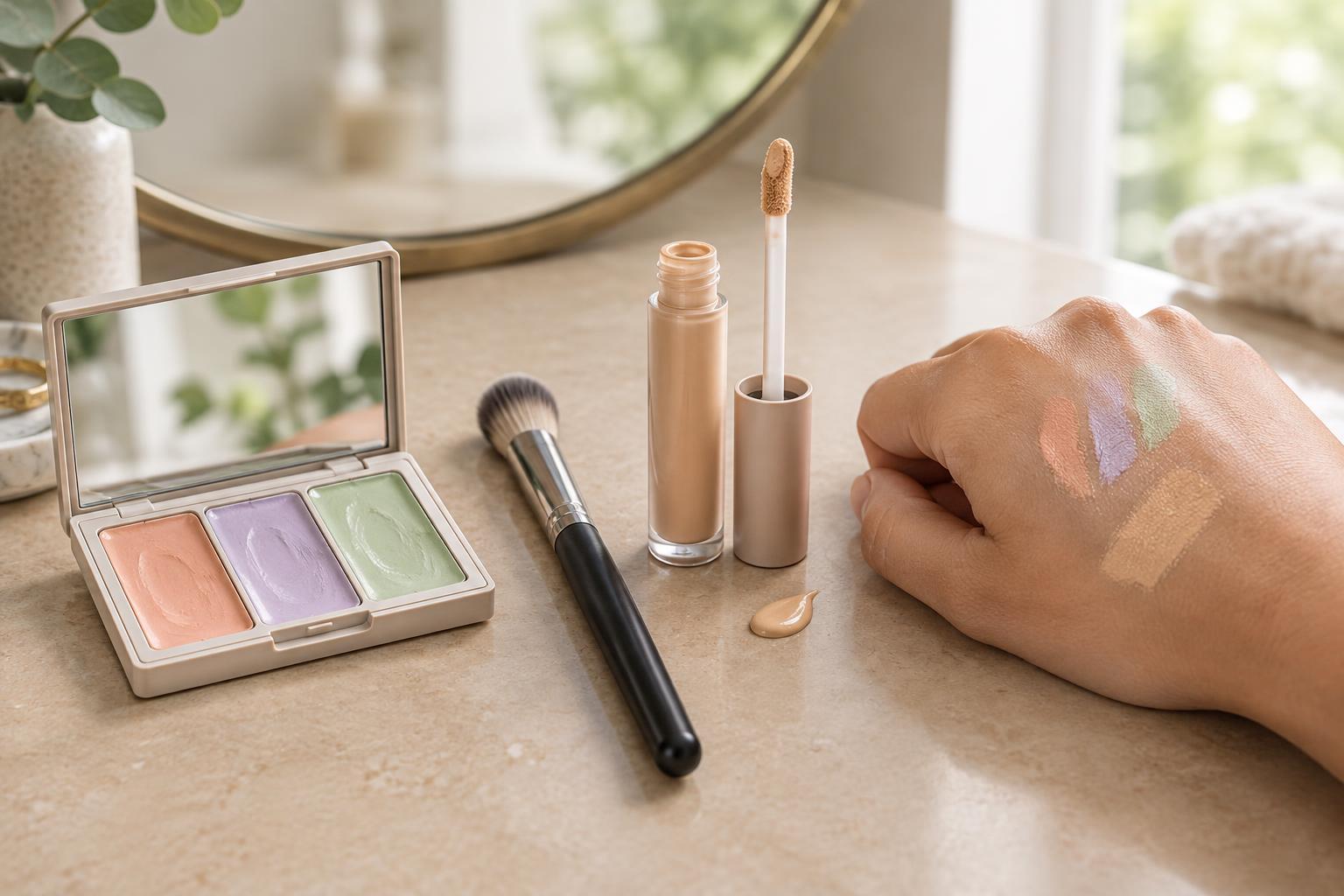
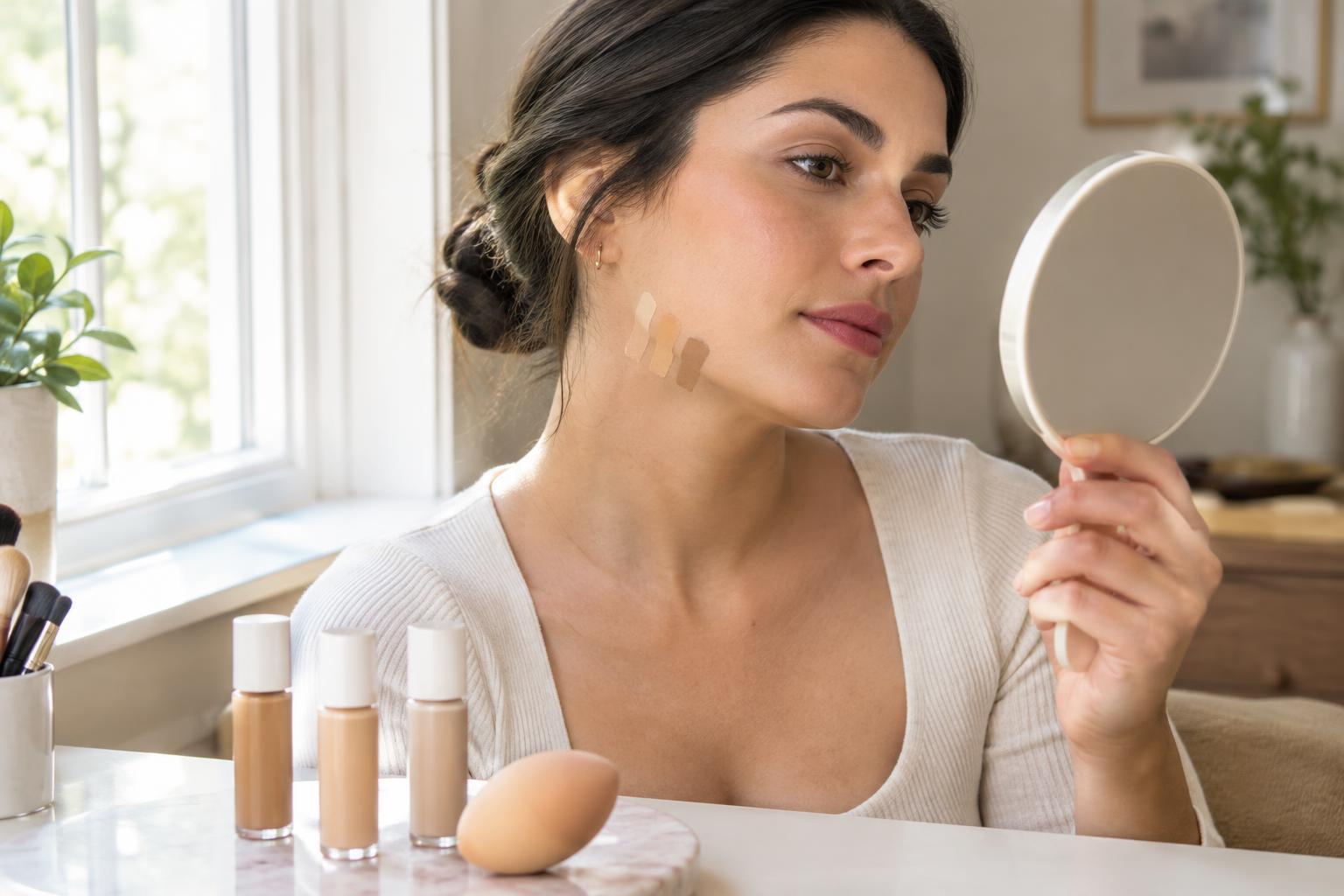
Choose a concealer that suits your preferred coverage and finish. A fluid, flexible formula is often easier to spread in a thin layer than a very thick one. If your concealer is much lighter than your skin, it may make shadows look gray or draw attention to the area. A shade close to your skin tone is a useful starting point; you can use a slightly brighter shade sparingly if you like that effect. Test the color where you plan to wear it, because a swatch on your hand may look different.
Prepare the skin, then let it settle
Concealer tends to look heavier when it sits over too much skincare or catches on dry patches. Begin with a comfortable amount of your usual under-eye moisturizer, if you use one. Give it a little time to settle, then gently press away any obvious excess with a clean fingertip or tissue. The aim is skin that feels comfortable but not slippery.
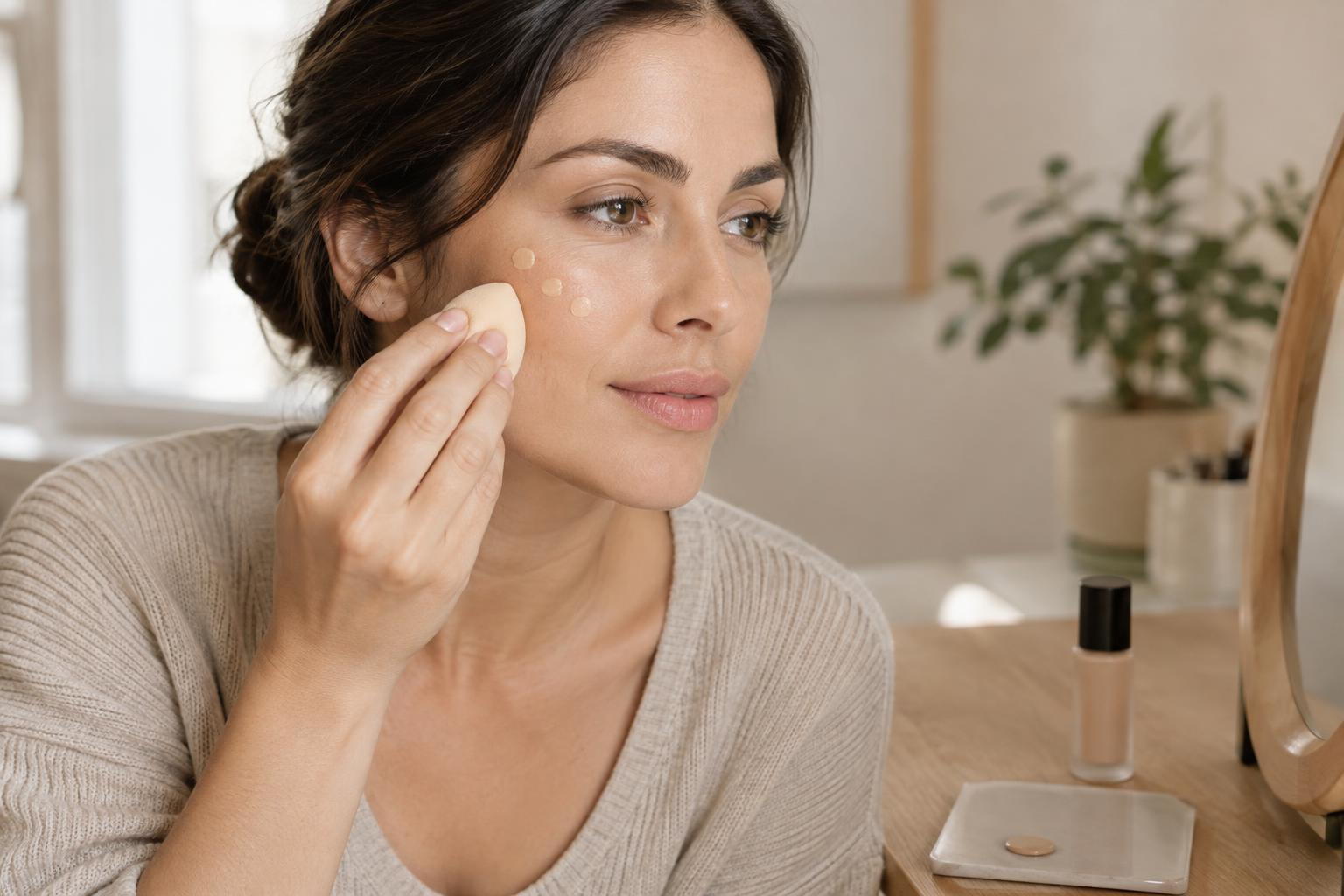
If you wear foundation or tinted moisturizer, apply it first and check how much under-eye coverage you still want. Your base may already have evened out part of the area. Adding concealer only afterward can help you avoid stacking two full layers in the same place. You can also skip foundation under the eyes altogether if you prefer to keep that area especially light.
Place less product, then blend outward
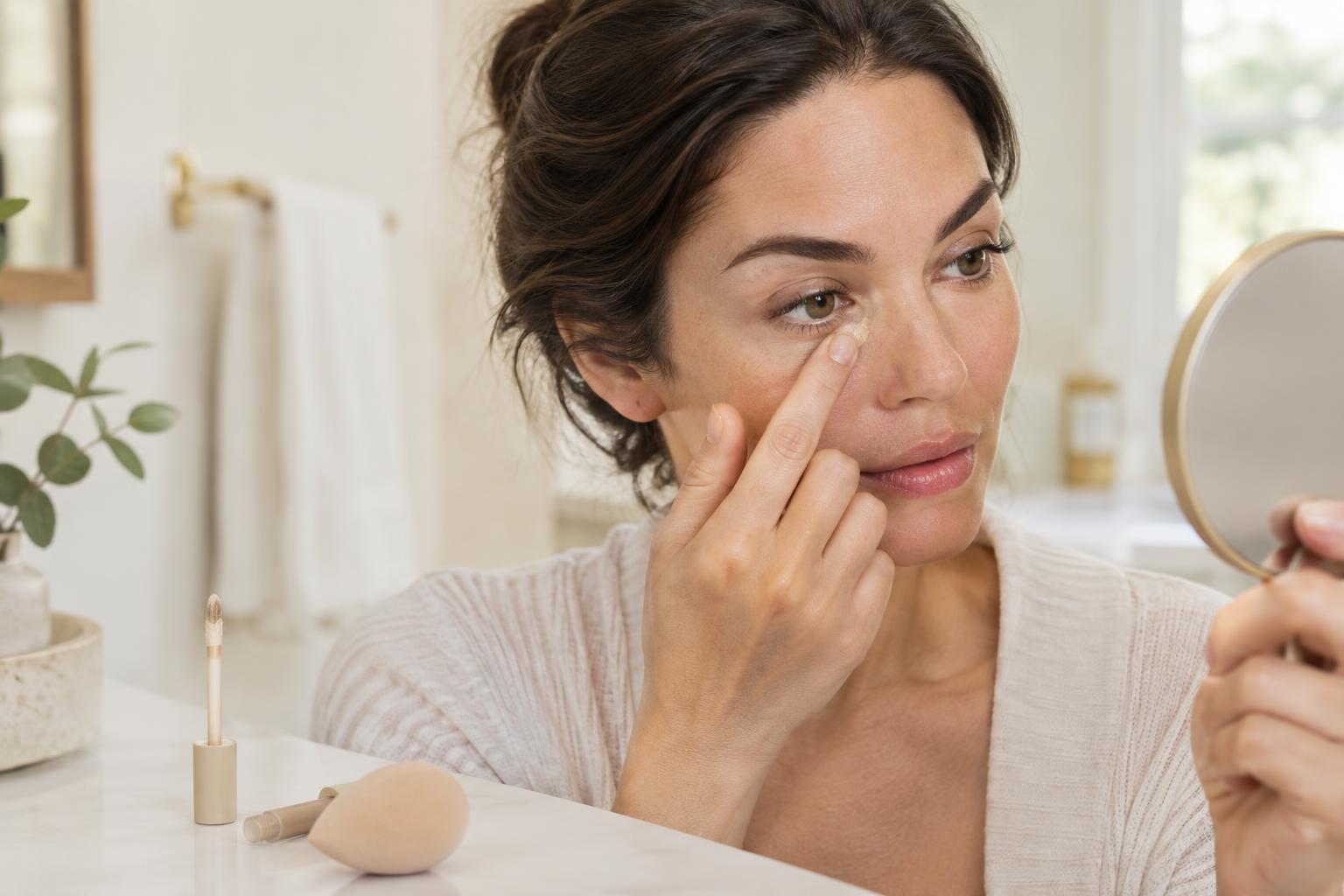
Put a tiny dot of concealer near the inner under-eye area or directly on the shadow you want to soften. Resist drawing a large triangle beneath the eye unless that is the fuller-coverage look you want. It is easier to add another small dot than to remove an oversized first application.
Blend by gently tapping with a clean fingertip, a small sponge or a compact concealer brush. Keep most of the product where you need coverage and soften only the edges into the surrounding skin. A fingertip can help warm and spread some formulas; a damp, well-squeezed sponge can pick up excess as it blends. If you use a brush, short tapping motions generally give you more control than sweeping the product across a large area.
Pause and look at the result from a normal conversational distance before adding more. If a particular shadow still bothers you, apply a second very thin layer only there. This targeted approach usually looks lighter than applying one thick layer everywhere.
Set only what needs setting
Concealer can collect in the natural folds beneath the eyes, especially before it has settled. After blending, wait a moment, then lightly tap out any visible lines with a fingertip or sponge. If your concealer stays comfortable and in place without powder, you may not need to set it.
If you prefer powder, use a small amount on a soft, small brush or puff. Press it gently onto the areas that tend to crease rather than coating the entire under-eye area. Start with less than you think you need; you can add a touch more if the finish still feels tacky. Heavy powder can make a thin concealer layer look dry or more noticeable, so check the result in natural-looking light before adding more.
Adjust the technique when the finish looks heavy
If your concealer looks thick right away, try using less product or a smaller placement area next time. If it looks patchy, check whether your skincare has settled and whether your base products blend comfortably together. If darkness remains visible, adding more concealer everywhere may not help; place a little extra only on the deepest-looking shadow instead.
A smooth-looking result is not the same as texture-free skin. Fine lines and natural shadows can remain visible, even with careful makeup. For an everyday finish, the most useful final check is whether the under-eye area looks balanced with the rest of your face. Stop when it does, rather than continuing to layer product simply because you can still see skin.