What changes between cream and powder blush?
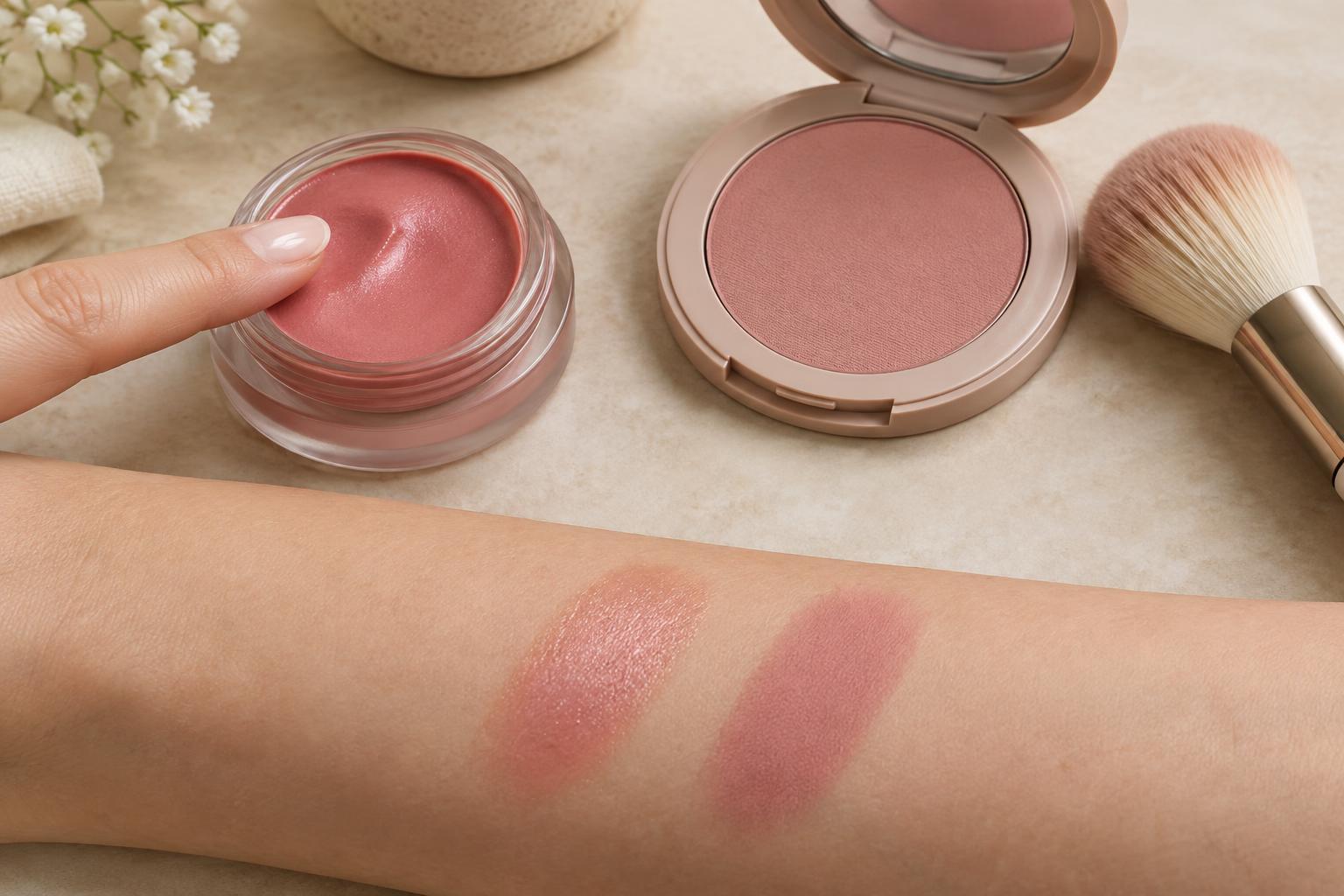
The main difference is texture. Cream blush starts as a pliable product that you can tap and move across the skin. Powder blush is a dry product that a brush picks up and distributes in a thin layer. Either can give you a soft wash or noticeable color, depending on the formula, shade, and amount you use.
Cream blush often leaves a skin-like or slightly luminous finish, while powder often gives a softer, more diffused look. Those are tendencies, not rules: a cream can dry down to a matte finish, and a powder can contain shimmer. Look at the product’s stated finish rather than assuming its texture tells the whole story. Your base makeup also matters. Blush over bare skin may look different from the same blush over foundation or setting powder.
Match the application to your base
Cream blush is usually easiest to blend before you set your face with powder. If you wear liquid foundation or concealer, let it settle briefly, then tap blush on rather than dragging it across the base. For a light application, pick up a little product with clean fingers, a sponge, or a dense brush. Tap it onto the cheeks and soften the edges with the same tool or a clean one.
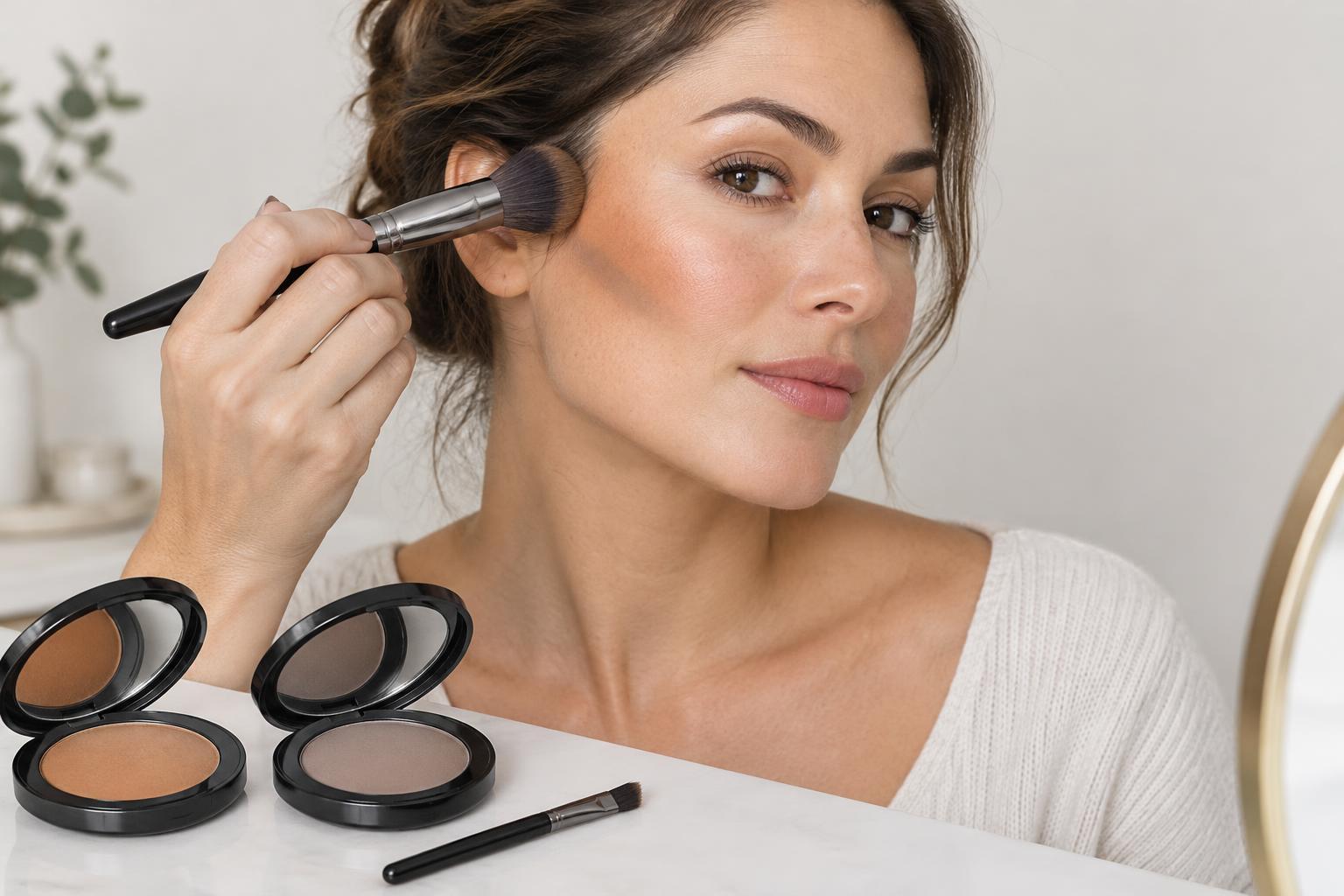
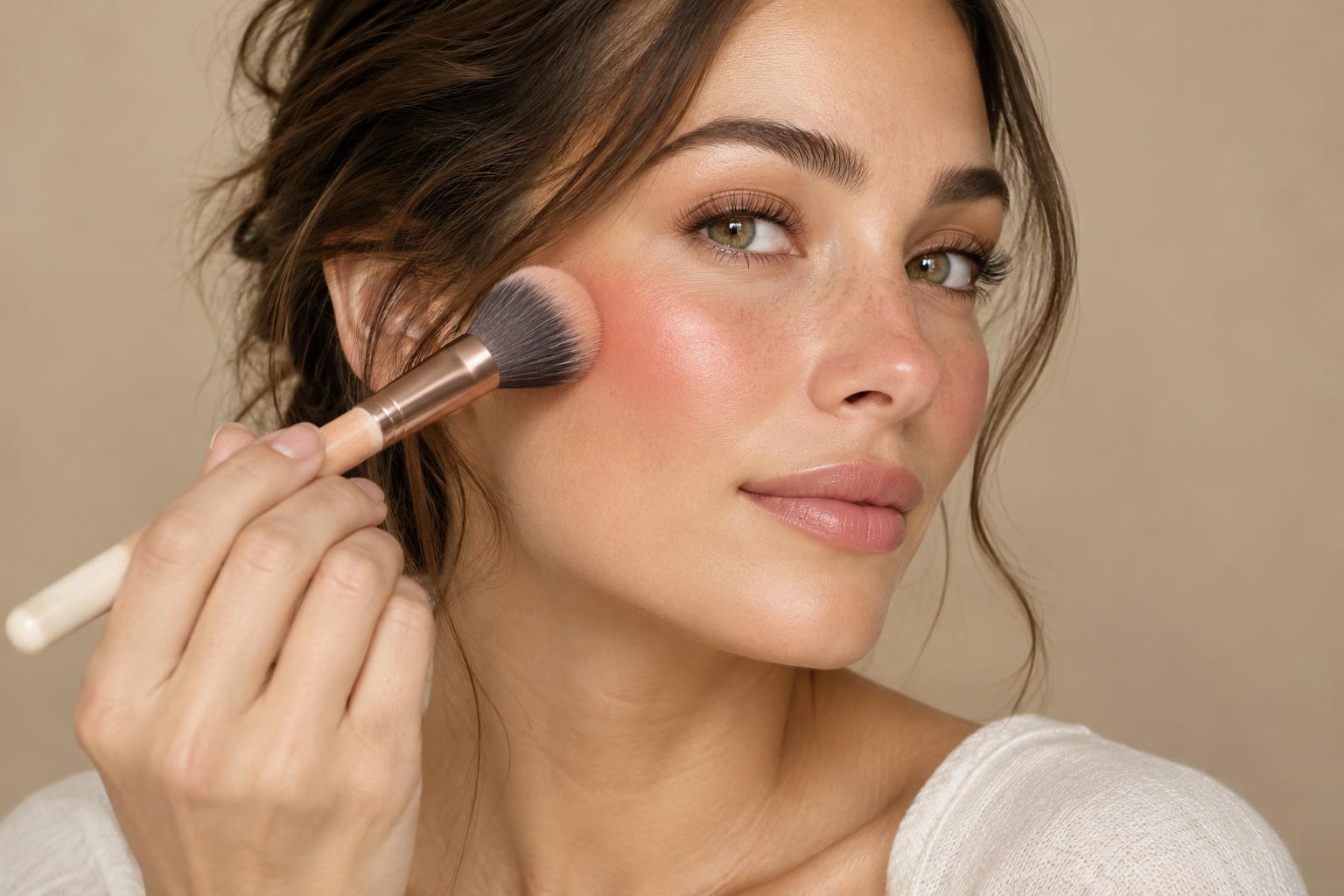
Powder blush generally goes on more evenly over a dry surface. If your foundation still feels tacky, a light layer of setting powder where the blush will sit can help the brush move smoothly. Use a fluffy brush for a diffused effect or a smaller brush for more precise placement. Pick up a modest amount, tap away any excess, and build the color in thin passes. Starting with less gives you more control with either texture.
Choose placement before you blend
Placement affects the overall look as much as formula does. For a familiar starting point, apply color to the area of the cheeks that becomes most prominent when you smile, then blend slightly outward. Keep the strongest color where you want attention, rather than spreading an equal amount across the entire cheek. You can shift the placement higher or farther outward if that suits the shape and effect you prefer.
With cream, begin with a small tap of color and blend its edges before adding more. The product may spread farther than it first appears to. With powder, set the brush down lightly where you want the most color, then use short, gentle motions to disperse it. In either case, step back from the mirror between layers. What looks subtle up close can be more noticeable from a normal viewing distance.
Adjust the finish without changing your routine
If you like cream blush but want less shine, choose a less luminous formula or lightly set the finished application with a small amount of translucent powder. If you like powder blush but want a softer transition, use a clean brush to blend its edges into the surrounding makeup. A subtle highlight can add sheen where you want it without changing the blush itself.
You can also layer cream and powder blush. Apply and blend the cream first, allow it to settle, and add a light veil of powder blush on top. The shades do not need to be identical, but similar tones are easier to combine without changing the color unexpectedly. Keep each layer thin: layering works best when the first application is not already at full intensity.
Fix common application problems
If cream blush lifts your foundation, try using less product and tapping with lighter pressure. Applying it before foundation is another option; a sheer base over the top can soften strong color. If powder blush looks patchy, check whether the surface underneath is still damp or tacky. Let it settle, or apply a little setting powder before trying again on another day.
For too much blush, resist adding more products immediately. First, soften the edges with a clean sponge or brush. A small amount of your usual foundation or face powder can then mute the center of the color if needed. Neither formula is automatically the better choice: cream suits someone who enjoys tapping and blending, while powder suits someone who prefers building color with a brush. The most useful choice is the one that fits the finish you want and the steps you already like doing.