Start with the tip, not the handle
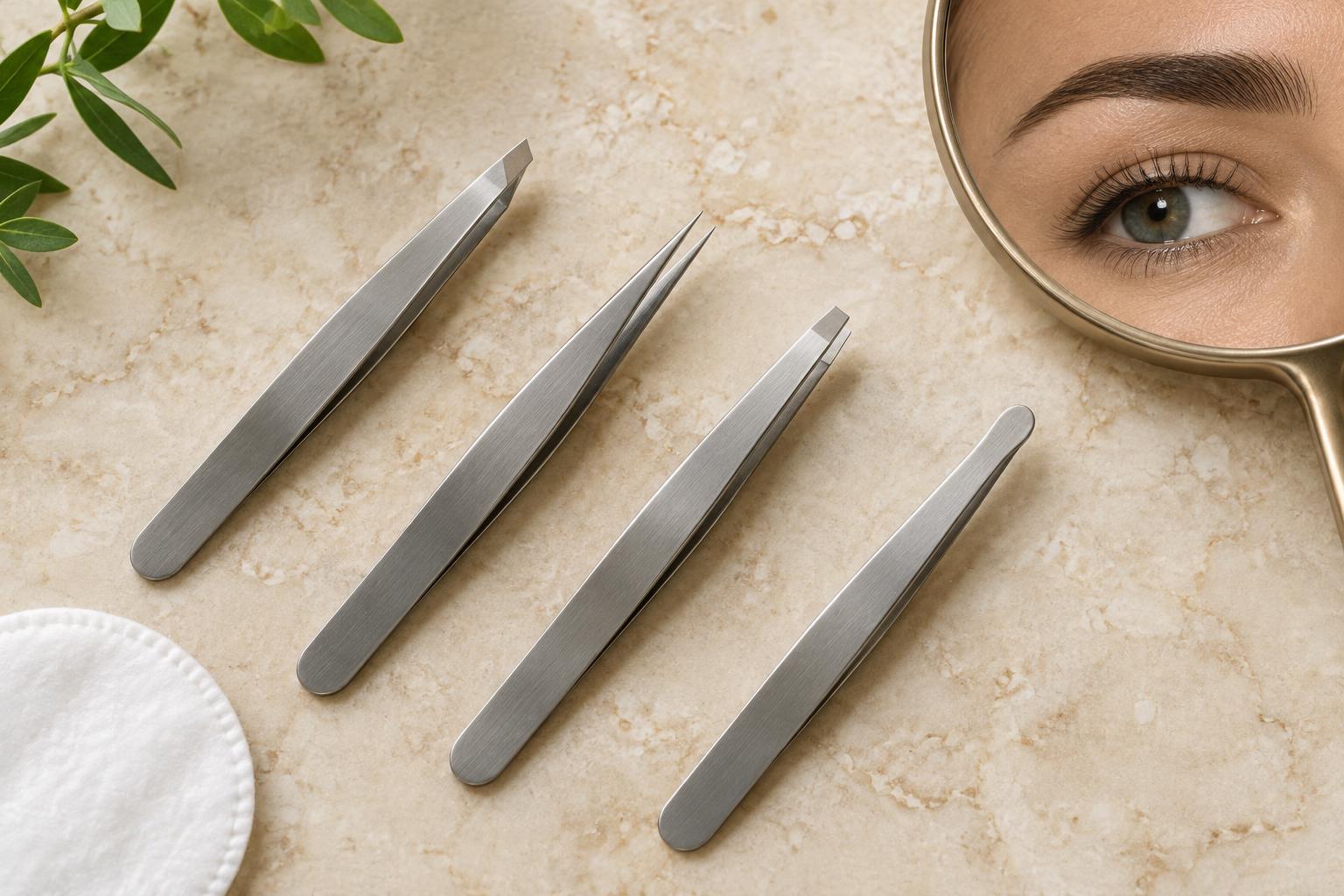
Tweezers may look nearly identical in a drawer, but the shape of their tips changes how they meet a hair. A broad edge can grip more than one hair at once, while a narrow point helps isolate a single hair. Neither is automatically better: the useful choice depends on the task, your comfort and how much precision you need.
Before comparing shapes, check that the two tips meet evenly when you close them. Gaps or edges that slide past each other can make a pair frustrating to use, whatever its shape. A comfortable grip matters too. If you have to squeeze hard or hold your hand at an awkward angle, it is easier to lose sight of the hair you meant to grasp.
Slanted tips: the versatile everyday option
Slanted tweezers have an angled edge that can lie fairly flat against the skin. Use the longer edge to grasp a visible hair in an open area, then turn the tool slightly to use the angled corner for more exact work. This makes them a practical starting point for routine eyebrow tidying and other small grooming jobs.
The angled edge offers a useful balance of grip and visibility, but it can catch neighboring hairs if you rush. Work with good light, brush brow hairs into place first and pick up one hair at a time near its base. Step back from the mirror between passes. That pause helps you judge the overall shape rather than continuing to remove hairs simply because you can see them up close.
Pointed tips: for an isolated, visible hair
Pointed tweezers meet at a narrow tip, giving you a clear view when you need to grasp one fine or short hair among others. They can be useful around a detailed brow shape or for picking up a tiny false lash or nail embellishment during a beauty routine. Their precision is the main advantage; speed is not.
A pointed pair calls for a light touch. Keep the tips parallel to the surface as you approach a hair, and avoid pressing or digging into the skin. If a hair is below the surface or cannot be grasped easily, leave it alone rather than trying to reach it with the point. For broad areas or quick cleanup, a slanted pair is usually less fiddly.
Straight and rounded tips: broader contact, different control
Straight-tip tweezers have a flat edge across the end. That wider contact can make them handy for grasping a clearly visible hair or holding small beauty items such as lash segments during placement. Some people also like them for tidying an open area where exact corner work is less important. Along a carefully shaped brow line, however, the full edge may grab more than intended.
Rounded or softly curved tips have a less sharp profile than pointed styles. They can feel approachable for general handling tasks, such as lifting a small sticker or repositioning an accessory, and may suit someone who dislikes a sharp-looking tip near the face. They are not automatically gentler in use: pressure and technique still matter. Because their contact area varies by design, check that a rounded pair can reliably hold the items you want it to handle.
Choose a small routine, then care for the tool
For a simple grooming kit, a well-aligned slanted pair will cover many everyday needs. Add a pointed pair only if you regularly need to isolate individual fine hairs or handle tiny beauty details. If you mainly use tweezers to place accessories, compare straight and rounded styles based on what feels secure in your hand. You do not need every shape to build a useful kit.
When removing a hair, grasp it close to the skin and pull steadily in the direction it grows rather than tugging repeatedly. Stop if the area feels irritated, and avoid using tweezers on broken skin. Clean the tips after use according to the tool’s care instructions, dry them thoroughly and store them where the edges will not be knocked out of alignment. A few careful habits will do more for precision than buying a specialized tip for every task.