Start with the finish you want
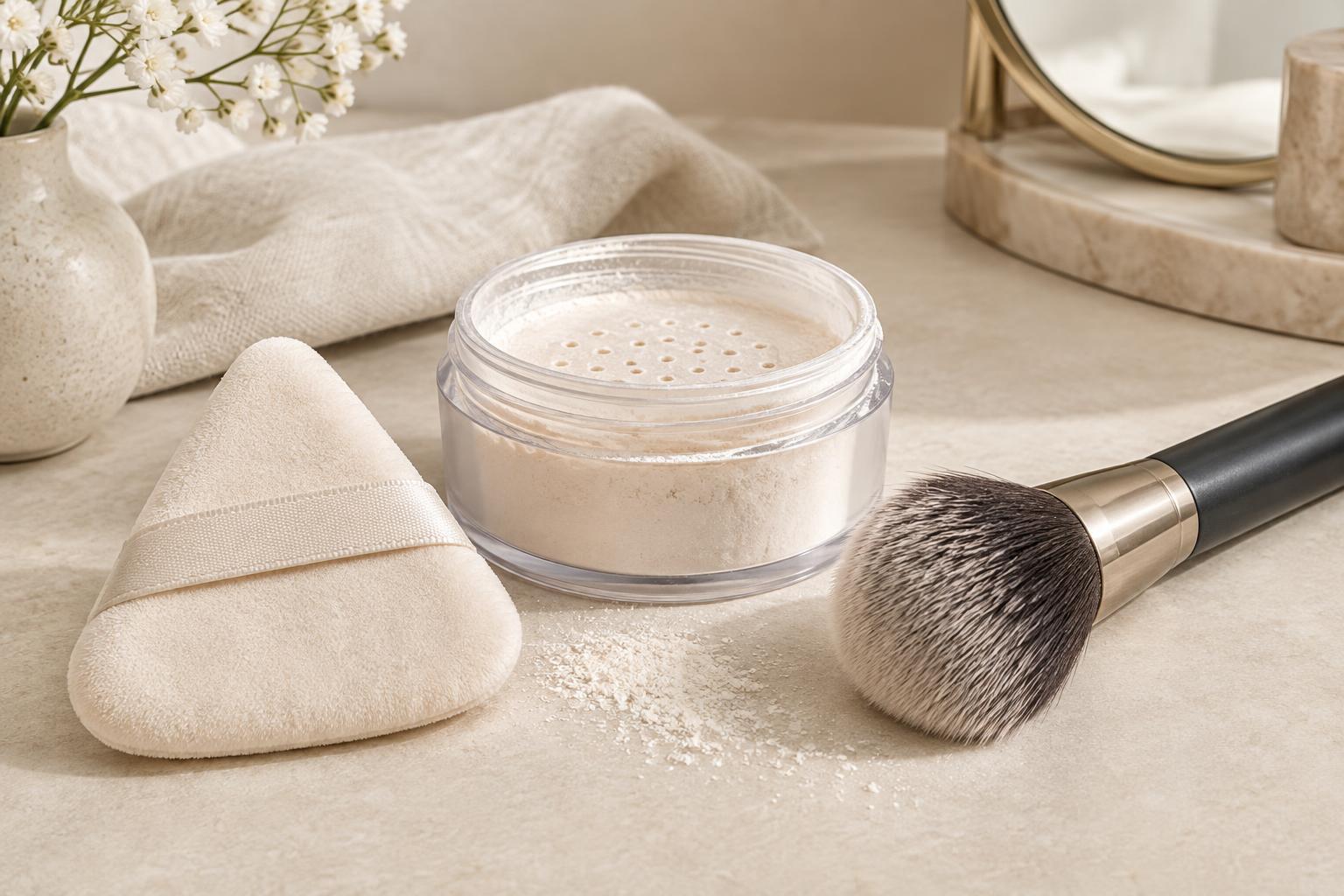
Setting powder can help reduce shine and make makeup feel less tacky, but the tool affects how much powder reaches the skin and where it lands. A puff is well suited to pressing powder onto a specific area. A brush is useful for spreading a lighter layer over a wider area. Neither is automatically better: the right choice depends on your makeup, the powder you use and how much of your natural skin finish you want to keep.
If you want to set the sides of the nose or the center of the forehead without powdering the whole face, a puff gives you control. If you want a soft veil across the cheeks and jaw, a fluffy brush may be easier to use. You can also combine them: press powder where makeup tends to shift, then use a clean brush to soften any visible excess.
What a powder puff does best
A powder puff has a flat surface that lets you press rather than sweep. That motion can be helpful over freshly applied concealer or foundation because it is less likely to drag the makeup underneath. Small velour-style puffs, especially those with a pointed edge, make it easier to reach around the nose and under the eyes. Larger puffs cover more space but may be less precise.
Start with less powder than you think you need. Pick up a small amount, then tap the puff against the back of your hand or fold it gently to distribute the powder across its surface. Press lightly onto the area you want to set. If powder collects in lines or looks pale, use a clean side of the puff to press away the excess. Repeatedly adding powder is more likely to create a thick-looking layer than to improve the finish.
A puff can also be convenient for touch-ups, particularly with pressed powder. Before adding more, blot visible oil with a clean tissue or blotting paper so the new powder has a smoother surface to sit on. Avoid leaving a used puff directly against the powder in its compact if you can; a separate pouch helps keep both cleaner.
When a brush makes more sense
A brush is a good choice when you want to set makeup without making every area look equally matte. A large, loosely packed brush spreads a small amount of powder quickly. A smaller, softer brush gives more control around the nose and under the eyes. Dense brushes tend to pick up and place more product, so use a lighter hand if your goal is a barely noticeable layer.
For loose powder, dip the brush lightly and tap off the excess before it touches your face. Sweep or gently roll it over areas that need setting, rather than scrubbing back and forth over foundation. For pressed powder, a few light passes across the pan are usually enough to begin. Check the result in ordinary light before adding another layer; powder that seems subtle while you apply it can become more apparent after several passes.
Brushes are also useful for blending the edges of a targeted puff application. If the center of your face is matte but your cheeks are more luminous, a clean brush can soften the transition without depositing much additional powder.
Match the tool to the area and formula
Loose powder is easy to pick up in generous amounts, so either tool benefits from tapping off or redistributing the excess. A puff may make it simpler to press loose powder into small areas, while a brush can disperse it more broadly. Pressed powder is portable and works with both tools: a puff offers a targeted touch-up, and a brush generally gives a lighter application.
For the under-eye area, use a small amount regardless of the tool. Too much powder can emphasize the look of fine texture or catch on concealer that has settled into lines. Gently smooth the concealer first, then set only where needed. On areas with visible dryness or texture, you may prefer a light brush application—or no powder at all. Setting every inch of your face is optional.
Keep the routine simple and the tools clean
If you are choosing just one tool, think about your most common task. Choose a puff if you mainly set concealer, control shine in a few places or touch up with a compact. Choose a soft brush if you usually want a light, quick application across larger areas. You do not need a specialized tool for every part of the face; adjusting the amount of powder and your hand pressure can make a meaningful difference.
Clean reusable puffs and brushes according to their care instructions, and let them dry completely before storing them. Replace a puff that no longer cleans well or has lost its shape. A clean tool applies powder more evenly and makes it easier to judge whether you need more product. Whichever tool you pick, begin with a thin layer, look at the finish, and add powder only where it helps.