Start with the two meanings of “shape”
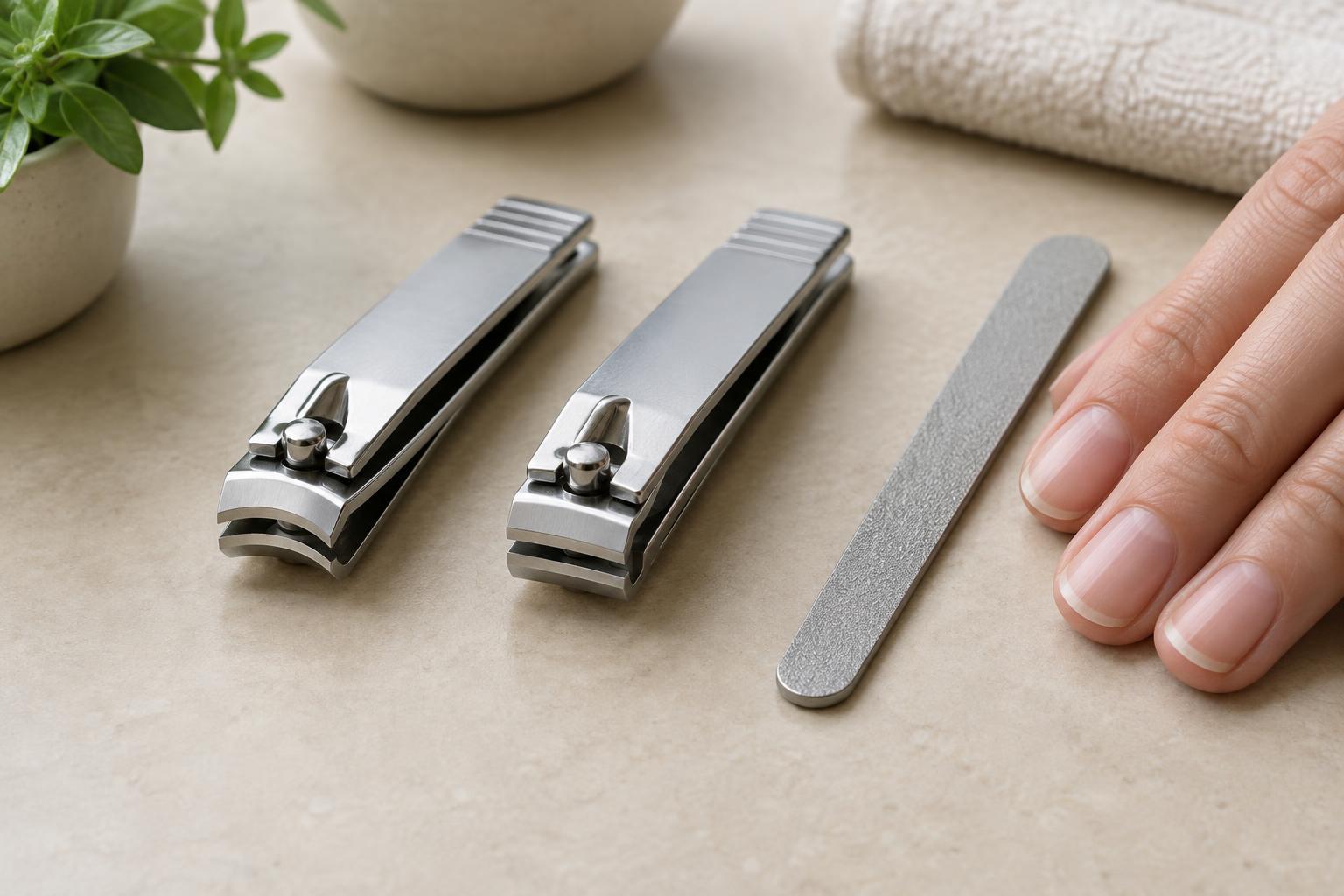
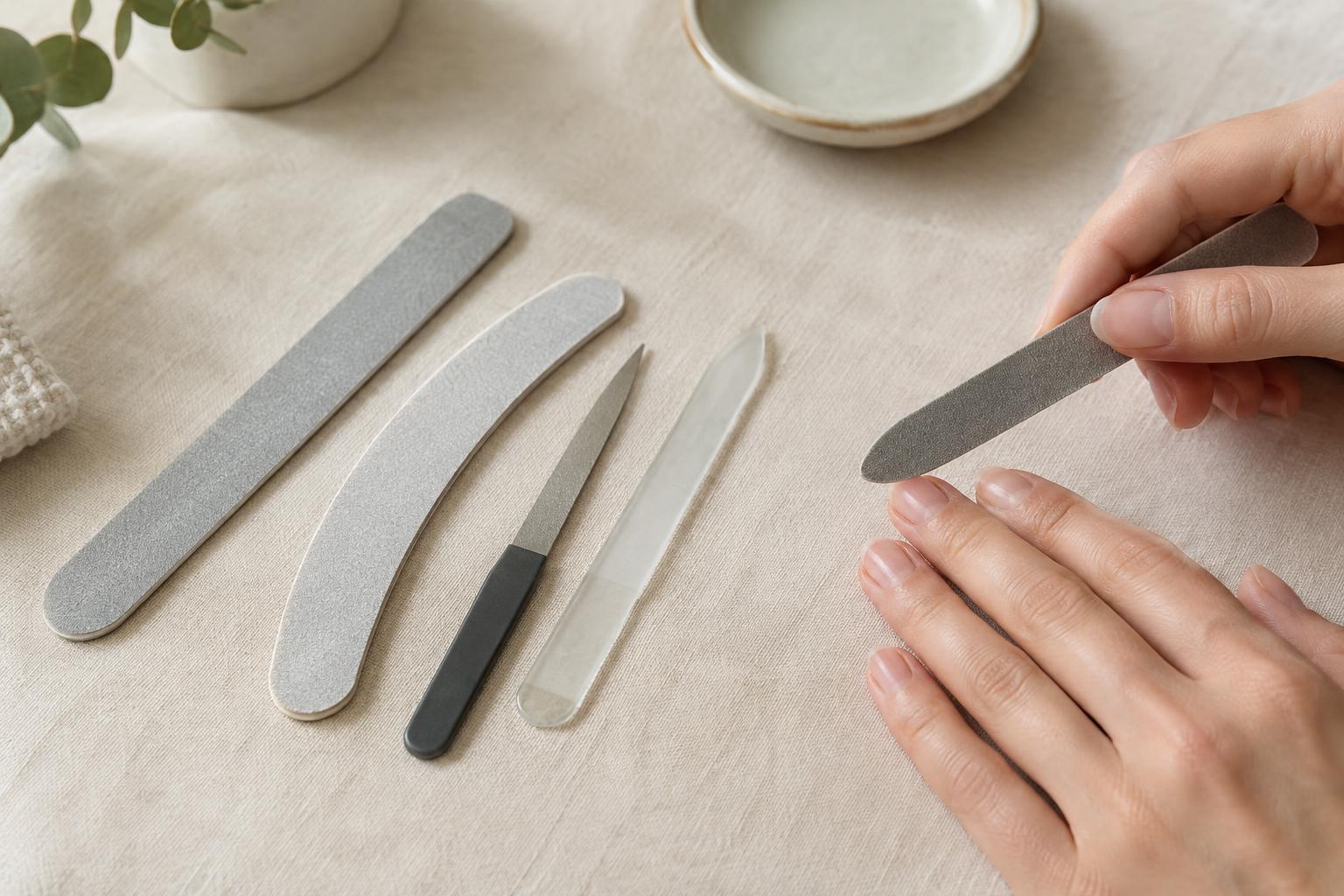
When shopping for a nail file, “shape” can mean the outline of the tool or the shape you want to give your nails. Keeping those ideas separate makes the choices easier. A straight file is a simple option for shortening the free edge—the part of the nail that extends past your fingertip. A curved file can feel easier to position around corners, while a tapered file may help you reach a narrow area with more control.
The tool’s outline does not determine your finished nail shape. You can use a straight file to make a rounded nail or a curved file to make a squarer one. What matters more is choosing a file you can hold steadily and using its working surface where you can see what you are doing. If you are new to filing, a familiar straight or gently curved file is usually a practical place to start.
What grit numbers tell you
Grit describes how coarse or fine a file’s abrasive surface is. A lower grit number means a coarser surface that removes material more quickly; a higher number means a finer surface that works more gently. A file marked 180/240 has a different grit on each side. Because labeling and the feel of materials can vary, treat the number as a guide rather than a promise that every file will behave exactly alike.
For everyday shaping of natural nails, a fine file is a sensible choice, especially if your nails are thin or prone to catching. A 240-grit surface is a common starting point; a 180-grit surface may feel useful for taking down length, but it removes more with each pass. Very coarse files are generally intended for artificial nail materials rather than routine filing of natural nails. When in doubt, begin with the finer side and see whether it gives you enough control.
A buffer is not quite the same tool as a shaping file. Its finer surfaces are used to smooth the nail surface or refine an edge, not to remove much length. Buffing repeatedly can wear down the surface of a natural nail, so it is best to use a light touch and only when you have a reason to do it.
Choose a material that suits your routine
Emery boards are lightweight and easy to find, often with different grits on each side. Their abrasive coating eventually wears down, so replace one when filing starts to feel slow or uneven. Foam-backed files have some give and may be comfortable to hold, though that flexibility can make it harder to keep a crisp straight edge if you press firmly.
Glass files typically have a fine etched surface and can be a convenient reusable choice for natural nails. They still need gentle handling: protect them from hard knocks, and check for chips before use. Metal files vary in texture and may feel too aggressive for some natural nails. Whatever material you choose, a clean, intact file that lets you work lightly is more useful than an elaborate collection of tools.
File for control, not speed
Decide on your nail shape before you begin. A softly rounded or squoval shape—a square edge with softened corners—is often straightforward to maintain because there are no sharp points to refine. Start with nails that are dry and easy to see. If you need to remove a lot of length, trim a little first rather than trying to file it all away.
Hold your hand steady and make short, light strokes along the free edge. Work gradually from one side toward the center, then repeat on the other side, checking the shape between passes. Try not to dig the file into the sides of the nail to chase perfect symmetry. If an edge feels rough, switch to a finer surface and give it a few gentle passes. Stop once the edge feels smooth; extra filing is unlikely to improve a shape you already like.
Keep a small, useful kit
You do not need a file in every shape or grit. For many beginners, one comfortable fine-grit file for shaping and, if desired, a separate gentle buffer are enough. If you regularly wear artificial enhancements, keep any coarser file for that material rather than using it interchangeably on your natural nails.
Brush residue off your file after use and follow its care instructions for cleaning; not every material handles water the same way. Store it where the abrasive surface will not become damaged or dirty. The best file is ultimately one that makes it easy to take your time, see the edge clearly, and stop before you remove too much.