Choose a spot that suits the outfit and the pin
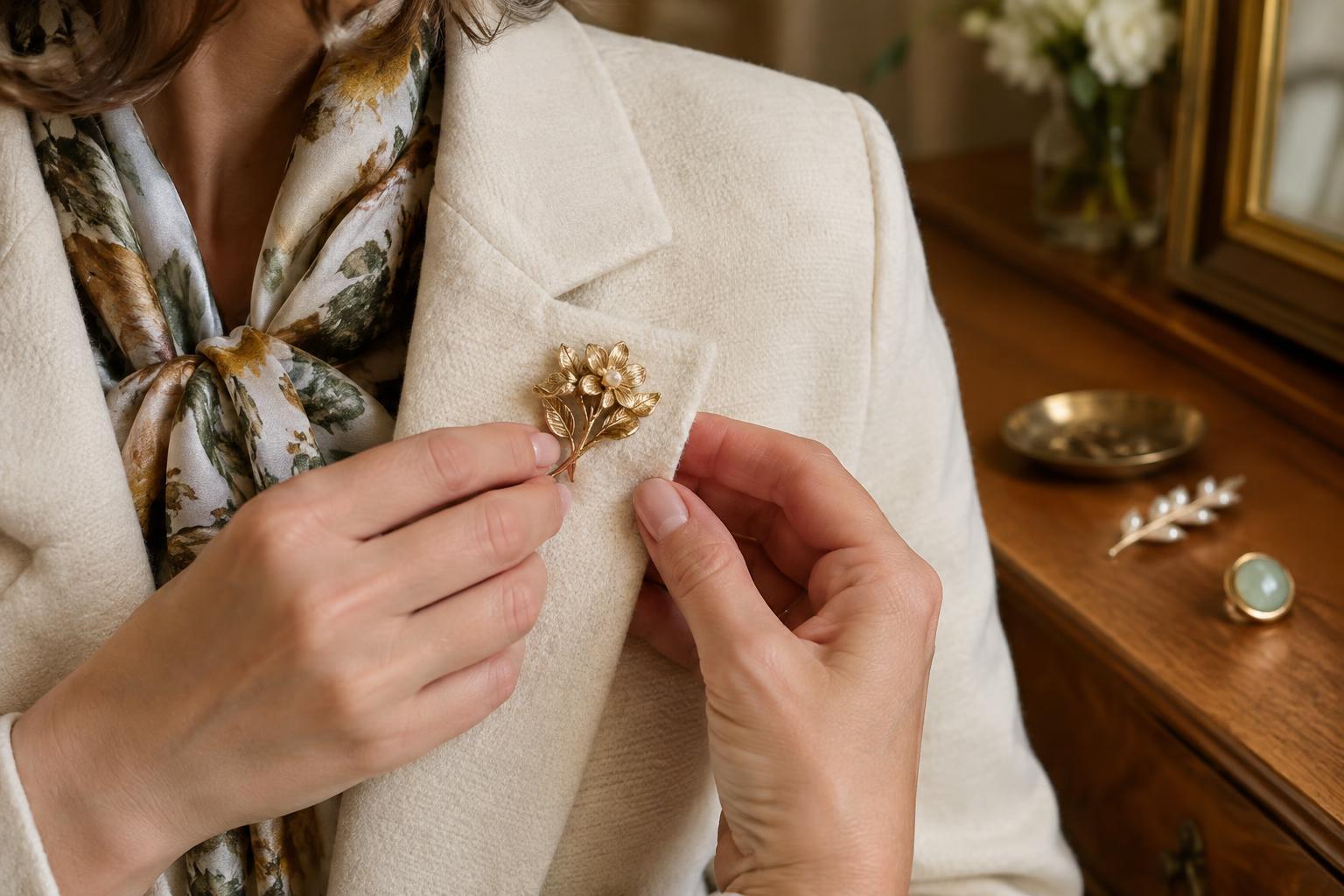
A jacket lapel is a straightforward place to start: it gives a brooch a visible position and often has enough structure to support it. Try placing the pin where the lapel lies flat rather than near a fold that moves when you walk. On a shirt or dress, the upper chest or shoulder can work well, provided the fabric does not pull under the pin’s weight.
A small pin can sit neatly on a collar point, pocket edge or hat band. A larger brooch usually needs more open space around it so it does not compete with seams, buttons or a busy print. Before fastening it, hold it against a few spots and check the outfit in a mirror. A position that looks balanced while you are standing may shift when you sit, carry a bag or put on a coat.
Keep everyday movement in mind. A pin at the shoulder may catch a bag strap, while one near the waist may meet a seat belt or desk edge. Choose a spot that is visible but unlikely to rub against something repeatedly.
Match the pin’s weight to the fabric
The heavier the brooch, the more support it needs. Firm jacket fabric, a substantial woven shirt or a structured bag flap may hold a larger piece better than a thin knit or lightweight blouse. If the fabric sags when you hold the pin in place, move it to a sturdier area or choose a lighter accessory.
On a loosely knitted sweater, a pin can stretch a stitch even if it goes through easily. On tightly woven or delicate fabric, the pin may leave a visible hole. Test a discreet area if you are unsure, and avoid forcing the point through resistant material. For a fragile garment, consider wearing the brooch on an outer layer instead. A scarf with a dense weave can also offer a place to pin, but make sure the accessory does not pull the scarf out of shape.
If a brooch has more than one fastening point, use them as intended to distribute its weight. For a single-pin style on suitable fabric, catching a small amount of a sturdy inner layer can sometimes add support, as long as it does not make the garment bunch.
Fasten it carefully to prevent snags
Check the pin before it touches your clothes. The point should be smooth, and the clasp should close fully without wobbling or opening unexpectedly. A bent point, rough edge or loose setting can catch threads. Set aside a damaged piece until it can be repaired rather than trying to wear it carefully around the problem.
Lay the garment flat when possible, or steady the fabric with one hand if you are already wearing it. Open the clasp, guide the pin through a small, even section of material, then bring it back out without pulling the cloth tight. Close the clasp and give the brooch a gentle check to confirm it is secure. Avoid repeatedly pinning the same exact spot if you notice the fabric starting to show wear.
Take extra care with scarves and loose knits. Gather only enough fabric to hold the pin securely, and check that no stray loop or thread has wrapped around the clasp. When removing the brooch, open the clasp completely and slide the point back along its entry path rather than tugging the accessory away.
Use placement to create a simple focal point
A single brooch on a lapel, near a neckline or at the edge of a scarf can make an outfit feel finished without adding another necklace. If you are wearing patterned clothing, look for a relatively quiet area where the shape of the pin remains easy to see. On a plain garment, you can place it slightly off-center for a relaxed look or closer to a seam for a more orderly effect.
A small group of pins can work on a sturdy jacket or bag, but leave enough space between them that their edges do not scrape together. Arrange them on the garment before fastening any of them. If one pin is noticeably larger, give it the strongest area of fabric and let the smaller pieces sit nearby. There is no fixed height or side that every brooch must occupy; comfort and the way the garment hangs are better guides.
Check, remove and store pins after wearing
Before leaving home, check the brooch with any layers or accessories you plan to wear. Put on your coat, lift your bag strap and move your arms to see whether anything catches. A quick second check after you have been moving can reveal a pin that has tilted or begun to pull at the fabric.
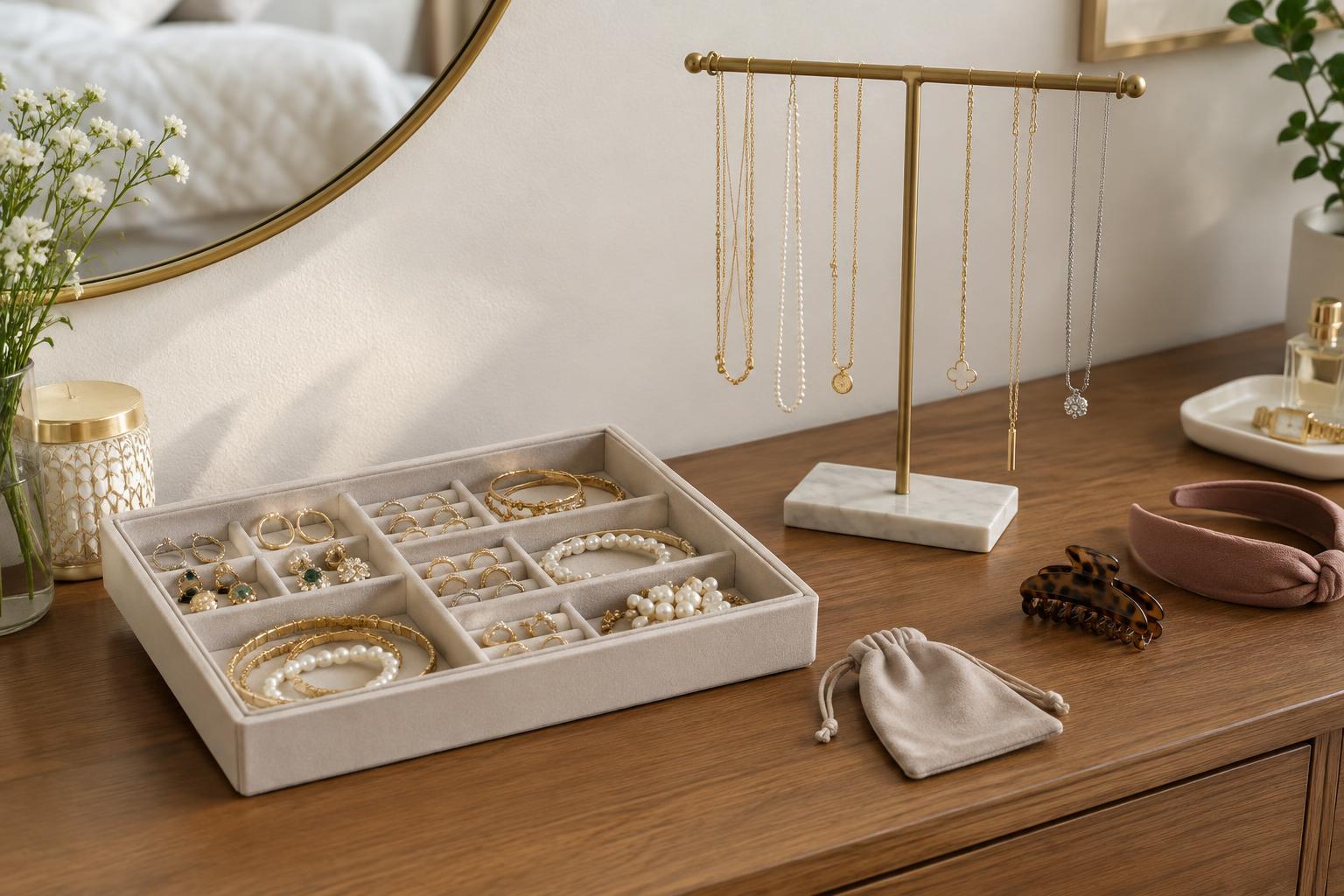
Remove a brooch before washing or storing the garment, unless the garment’s care instructions specifically allow otherwise. Close the clasp after removal so the point is covered. Keep pins where their sharp parts and decorative edges will not rub against other accessories; a small pouch or divided box can help. Taking a moment to unfasten and store a pin properly protects both the piece and the clothes you will wear it with next time.