Start with the outline of your outfit
Before choosing a hat, look at the overall shape of what you are wearing. A long, loose coat creates a different outline from a fitted jacket and straight trousers. The hat does not need to match those lines exactly, but it should look like part of the same outfit. If your clothes already have plenty of volume, a compact hat can keep the look from feeling crowded. If the outfit is simple and streamlined, a more noticeable brim can provide a focal point.
It helps to decide what you want the hat to do. Is it a quiet finishing touch, a way to add height, or the main accessory? This question is more useful than a fixed rule about which styles suit a particular face shape. Try the hat with the full outfit, including shoes and outerwear, because a brim that looks dramatic in a close-up mirror may feel balanced when you see the whole silhouette.
Choose a brim width that fits the mood
A narrow brim gives a hat a relatively contained outline. It can work well when you want a subtle accessory or when your outfit includes a high collar, scarf, or other details near the face. A medium brim is often a flexible starting point: it is visible without necessarily taking over the outfit. A wide brim draws more attention and can echo the sweep of a long skirt, relaxed trousers, or an oversized layer.
Width is only one part of the brim’s effect. A flat brim tends to make a cleaner, more graphic line, while a softly curved or flexible brim can look more relaxed. A downward-angled brim may frame the face differently from one that turns up at the edge. Check the hat from the front and side, and think about where you will wear it. A brim should feel manageable when you move through doorways, sit beside others, or carry a bag.
Use crown shape to adjust the silhouette
The crown is the part of the hat that sits over your head. Its height and shape affect the overall look even when the brim stays the same. A taller crown adds visible height and can make a simple outfit feel more defined. A lower crown keeps the hat closer to the head for a quieter effect. Neither is automatically better; compare how each relates to the neckline and shoulder shape of your clothes.
Crown details also set a tone. A rounded crown has a softer outline, while a flatter top or sharper crease creates more structure. You can use that contrast deliberately: a structured crown may sharpen a loose knit and relaxed coat, while a softer crown can ease the look of a tailored jacket. If you are unsure, try two hats with similar brims but different crowns. That makes it easier to see what the crown alone changes.
Consider hair, accessories, and color together
Your hairstyle changes how a hat sits and how much space there is around your face. Hair worn down can add width beneath the brim; tucked-back hair leaves a cleaner outline. If you often wear a bun, ponytail, or hair clip, try the hat with that style rather than assuming you will adjust your hair later. The hat should sit comfortably without needing to be forced over a clip or pulled down tightly.
Next, look at the accessories closest to the hat. Large earrings, a chunky scarf, or a statement collar may compete with a wide brim and tall crown. You do not have to remove them all, but giving one detail the leading role can make the outfit easier to read. For color, repeating a shade from your shoes, bag, or clothing creates a connection. A contrasting hat can work just as well when the rest of the outfit is restrained.
Make the final choice in a full-length mirror
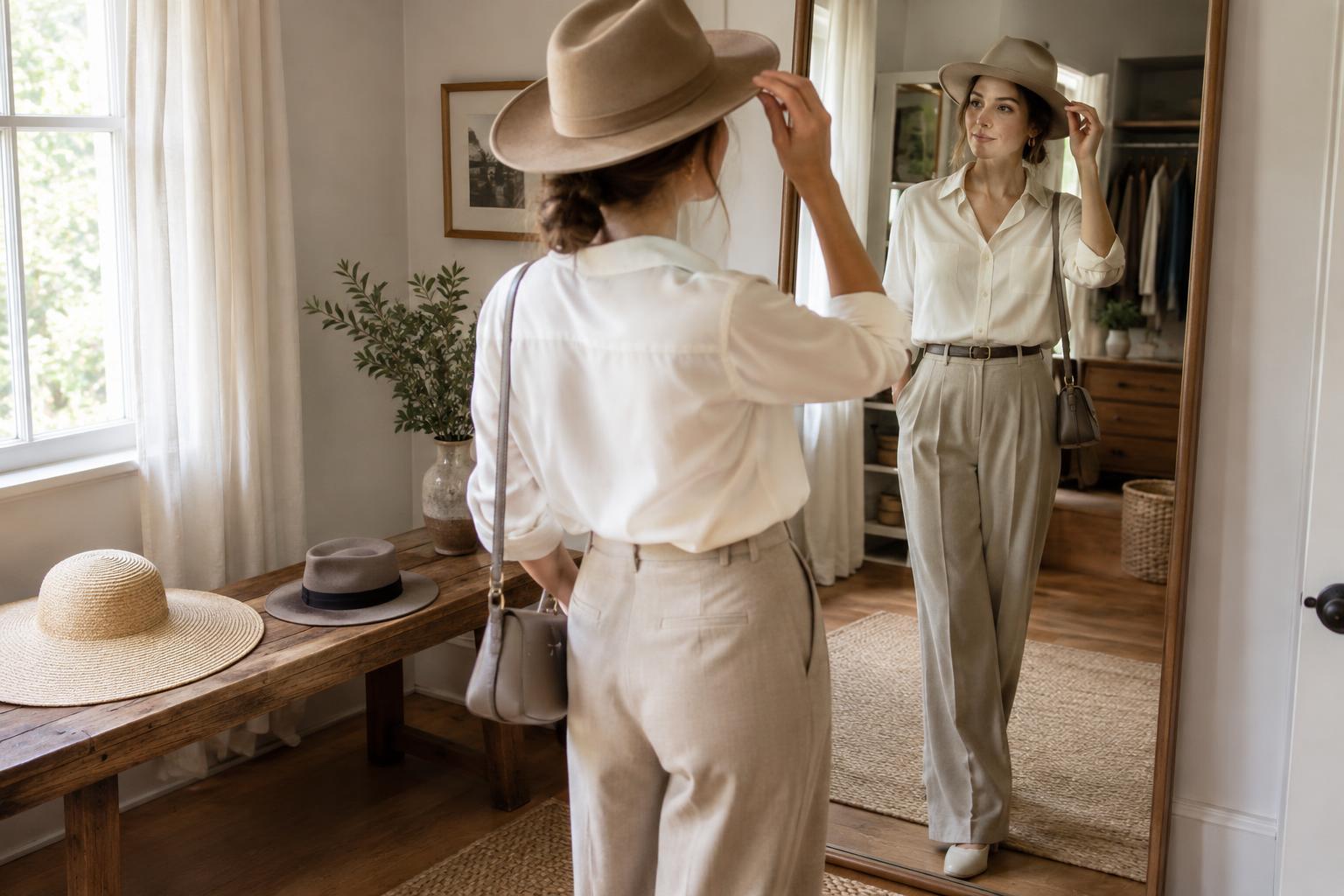
Try on the hat and step back. Check whether the brim supports the outfit’s proportions and whether the crown gives you the amount of height or structure you want. Turn sideways, sit down, and move your head naturally. A hat that looks good only while you hold it at one angle may not be the most useful choice for an ordinary day.
Finally, check the fit. The hat should rest securely without pressing uncomfortably, slipping over your eyes, or requiring constant adjustment. If two shapes look equally good, choose the one that suits your plans and feels easier to wear. Brim and crown guidelines are starting points, not rules: the strongest choice is the hat that works with your clothes and lets you get on with your day.