Start by sorting what you own
Costume jewelry brings together materials that do not always store well in one pile. A collection might include plated metal, beads, fabric, faux pearls, glass, resin, and glued-on stones. When pieces rub against one another, surfaces can scratch, chains can catch on settings, and delicate details can loosen. The goal is not a perfect display; it is to give each piece enough space that you can pick it up without pulling apart several others.
Begin by grouping your jewelry into chains, earrings, bracelets, rings, and larger statement pieces. Set aside anything with a loose clasp or stone so it does not snag other items. Notice which pieces are especially delicate or awkwardly shaped. A wide cuff needs different space from a fine necklace, and earrings with long hooks are easier to manage when their pairs stay together.
Give necklaces a way to stay separate
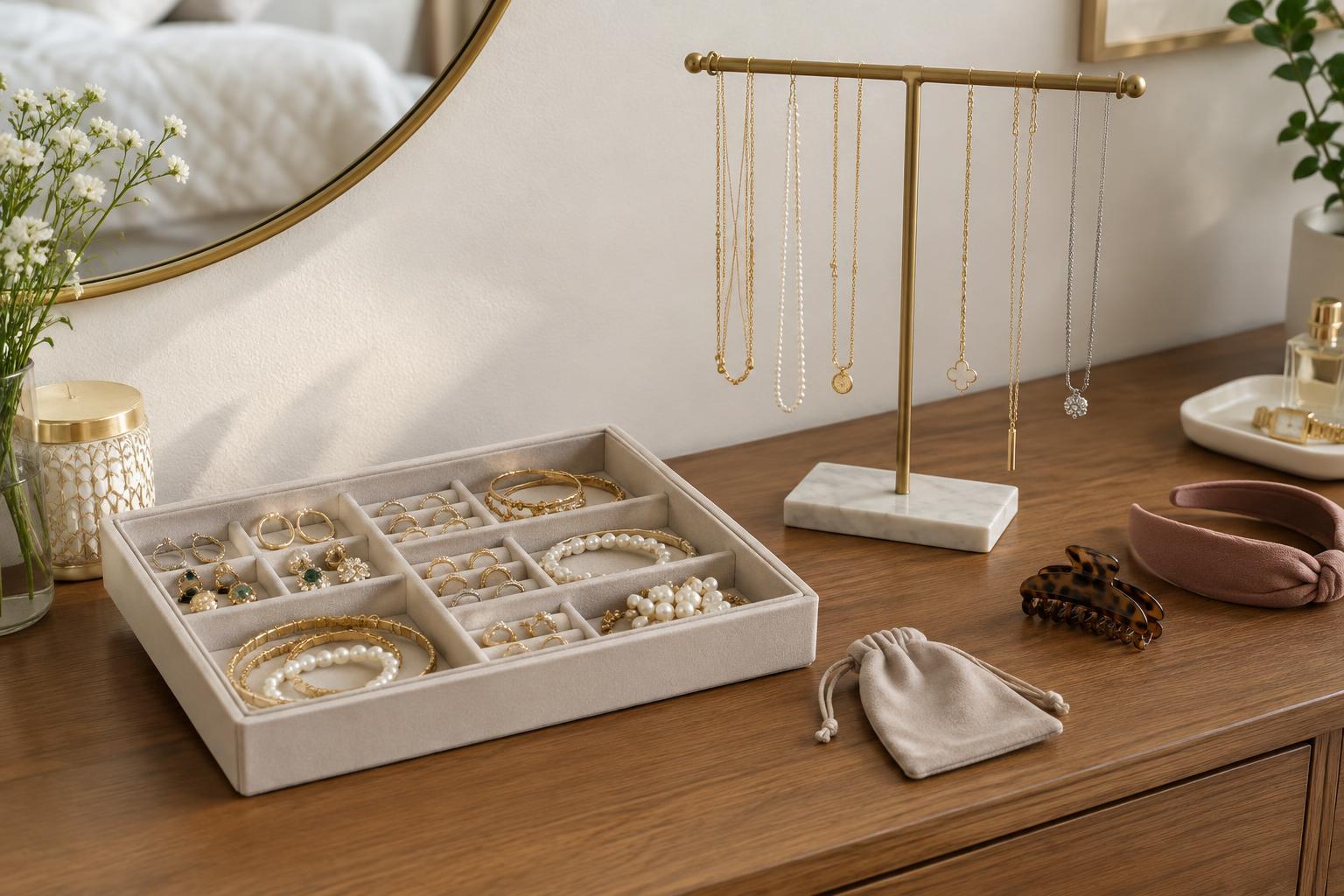
Fine chains are easiest to untangle when they never meet in the first place. Hang them individually on spaced hooks, or place each one in its own small compartment or soft pouch. If you use hooks, leave enough room that pendants do not knock against neighboring necklaces. A covered organizer or a spot away from a busy countertop may also keep hanging pieces from collecting dust or being bumped.
For drawer storage, fasten each clasp before putting the necklace away. Lay the chain in a loose curve rather than wrapping it tightly around a card or stand; tight bends can be hard on some chains. If a necklace has a pendant, position the pendant where it will not rest on a fragile part of another piece. Travel organizers with separate pockets can serve the same purpose at home when drawer space is limited.
Use compartments for smaller pieces
Shallow trays with dividers make earrings and rings visible without requiring you to sift through a box. Keep each earring pair in one section, or use an earring card if the style allows it. Small dishes are convenient for the pieces you wear often, but avoid piling several pairs together: hooks, hoops, and stone settings can catch on one another.
Bracelets can lie flat in longer compartments. Give rigid cuffs their own slots so they do not press against softer materials or decorated surfaces. Larger statement earrings and necklaces may need a wider section than their category suggests. Let the shape of the piece determine its storage space, rather than trying to fit everything into identical squares.
Soft lining can help reduce rubbing, provided it is clean and does not shed fibers onto closures or settings. If you reuse household containers, check for rough edges and make sure every piece can be removed without scraping it against the sides.
Choose a dry, gentle storage spot
Many costume pieces have finishes or components that may be affected by moisture, heat, or prolonged direct sunlight. A dry drawer or closed box in a room with fairly stable conditions is often more useful than an open display beside a sink. Storage cannot prevent every change in appearance, but it can limit unnecessary exposure between wears.
Put jewelry away after any lotion, perfume, or hair product on your hands or skin has dried, and check that the piece itself is dry. If it needs cleaning, follow any care information you have for that item; mixed materials may not tolerate the same cleaners or amount of water. Do not seal a damp piece in a pouch. For items with fabric, glue, faux pearls, or delicate coatings, a gentle approach is especially sensible.
Individual soft pouches or separate compartments can reduce contact between pieces with different finishes. Avoid assuming that one storage material suits every item: if a pouch leaves marks or catches on a setting, choose a smoother option.
Make the system easy to maintain
The best organizer is one you will use after a long day. Keep everyday pieces near where you get ready, with a designated place for each type. Store occasional accessories farther back, but not so deeply that you forget what you have. A quick glance should tell you where a necklace belongs and whether both earrings are present.
When you put a piece away, fasten its clasp, check for caught hair or threads, and return it to its own space. Every so often, look through the collection for loose parts or pieces that have become difficult to wear. This small routine helps you spot problems before a damaged item snags a neighbor. With separate spaces and a convenient return spot, keeping costume jewelry tidy becomes a manageable habit rather than a major sorting project.