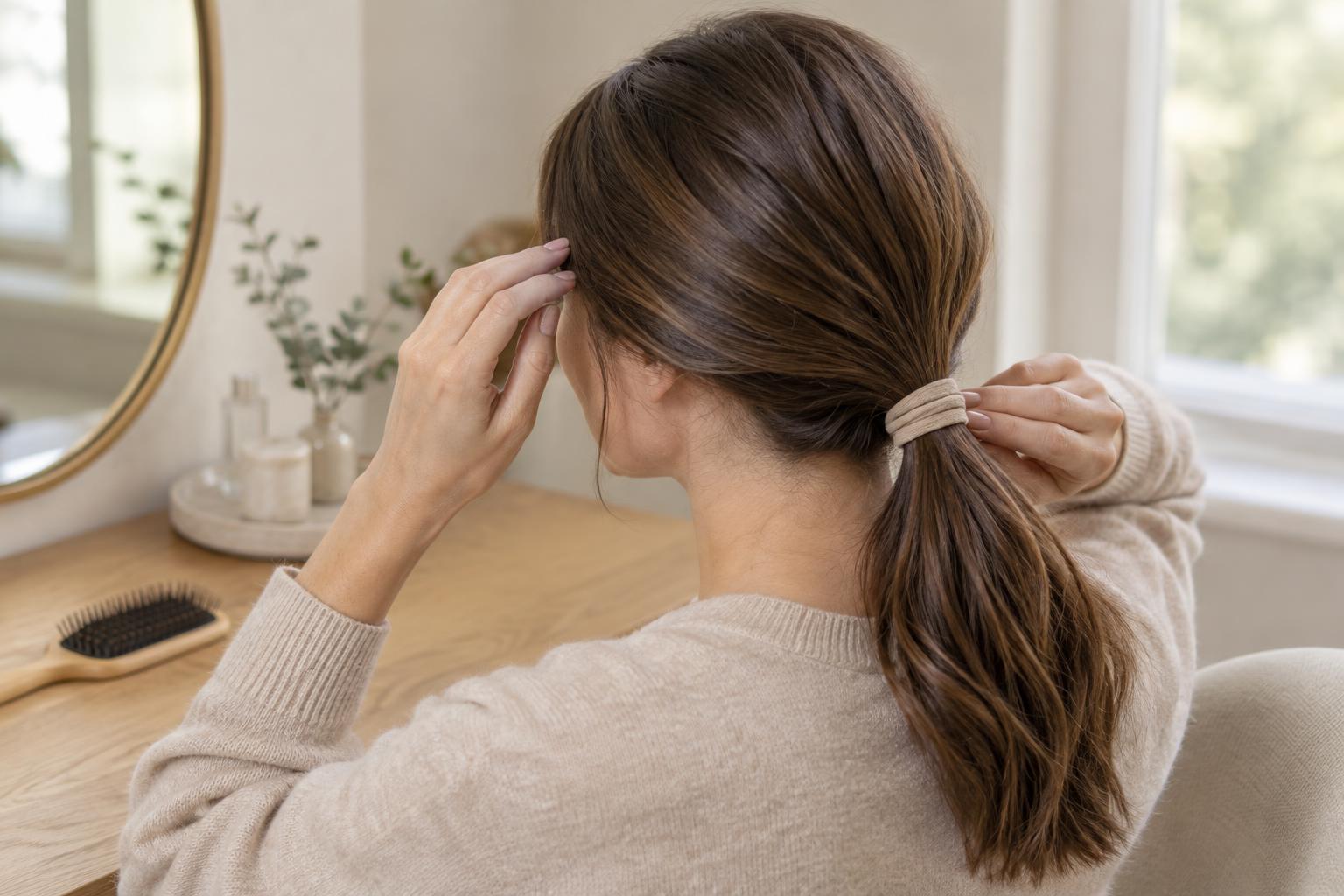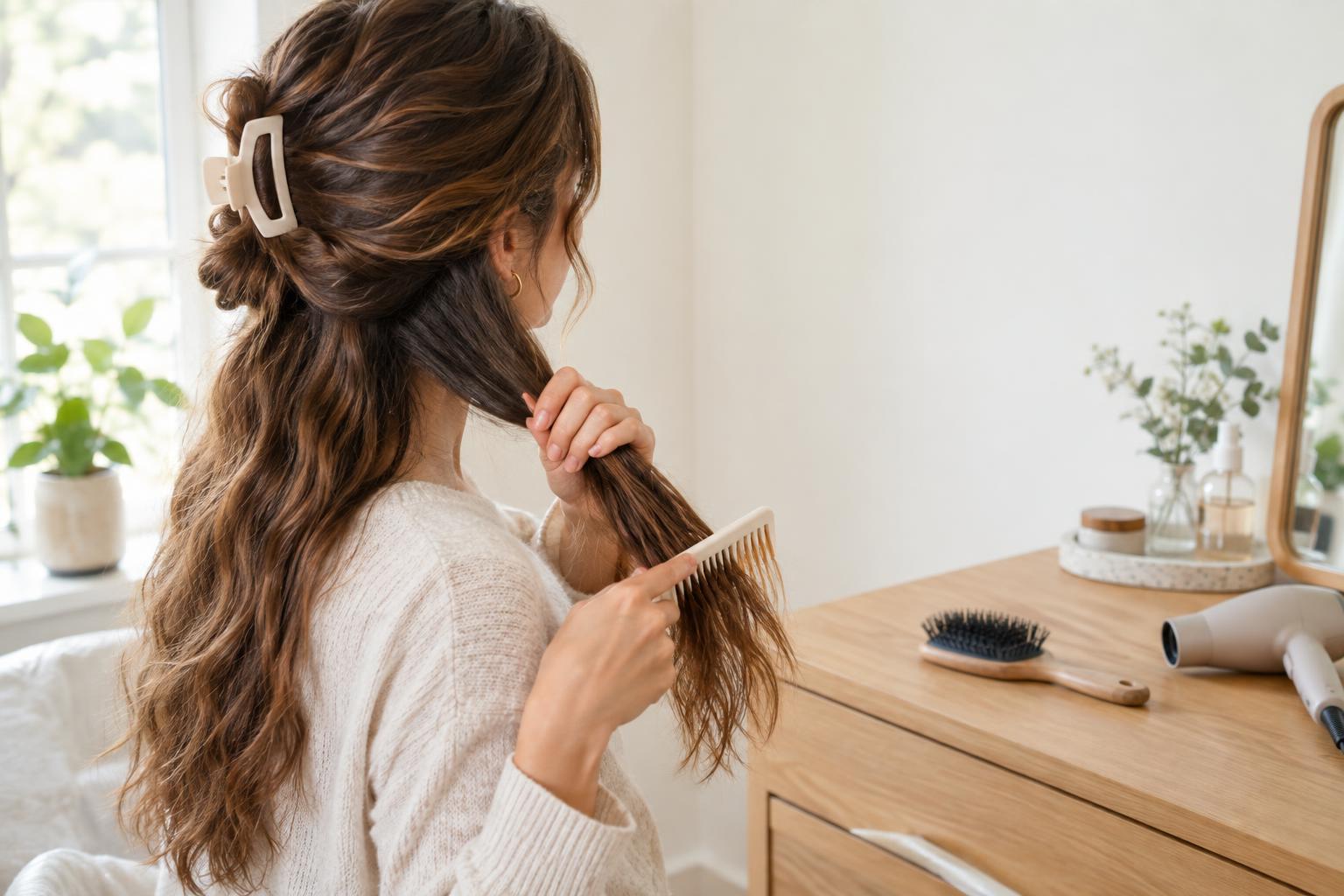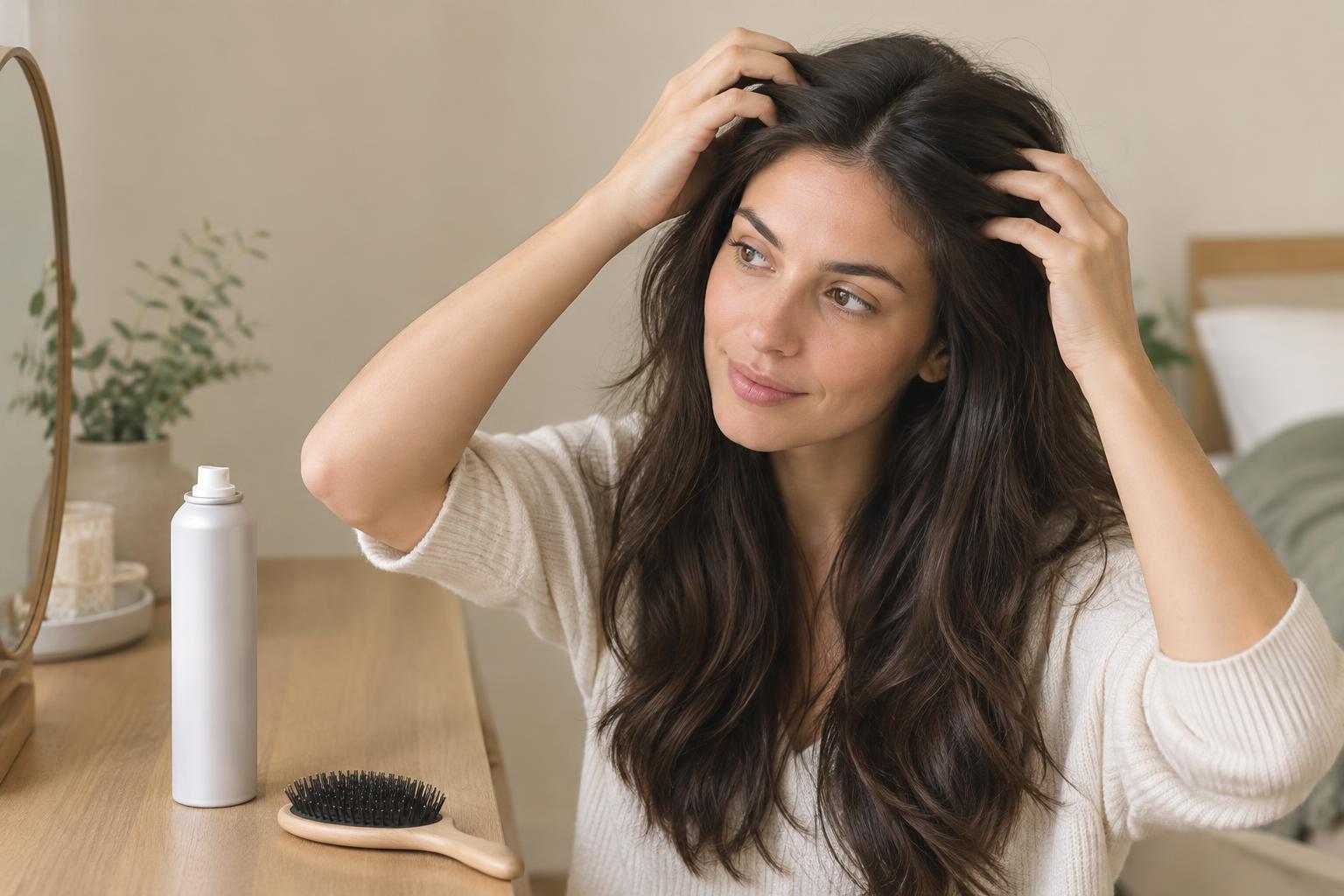
Start with the right expectation
Dry shampoo is designed to absorb some of the oil that makes roots look shiny or flat. It can help refresh the appearance of hair between washes, but it does not clean hair and scalp the way washing does. A little product may give roots more lift; adding more until they feel completely dry often makes residue more noticeable.
Visible residue is usually a matter of application and blending. A concentrated spray can leave a powdery patch, especially on dark hair. Applying dry shampoo all over the head when only a few areas need it can also make hair look dull. Work in small sections and add product only where you can see or feel excess oil.
Apply a light layer to the roots
Before applying, make sure your hair is dry and shake the container if its directions call for it. Lift a section of hair, aim at the roots, and follow the distance and application guidance on the label. For a spray, keep your hand moving rather than directing a long burst at one spot. Focus on areas that tend to look oily first, such as the part, crown, or hairline.
Use less than you think you need for the first pass. Fine hair may need only a light application to regain some lift, while thicker hair may require more sections so the product reaches the roots evenly. If you use a loose powder, dispense a little into your hand or a suitable brush before applying it. This gives you more control than pouring it directly onto your scalp.
Be careful around the hairline, where powder is easy to spot. You can lift the front sections and apply product underneath them rather than coating the visible surface. Keep sprays away from your face, use them in a ventilated space, and follow any precautions on the packaging.
Let it settle, then blend
The step that makes the biggest visual difference is giving the product a chance to sit before styling. Rather than brushing immediately, let it rest for the time suggested on the label. Then use your fingertips to gently work it through the roots. This helps break up concentrated patches and distribute the product across the oily areas.
Next, brush or comb through the sections where you applied it, choosing a tool that suits your hairstyle. If you want to preserve curls or a textured style, try gently separating and lifting the roots with your fingers instead of brushing through the lengths. Check your part and hairline in good light from more than one angle; a pale patch can be harder to notice straight on.
If you still see powder, keep blending before adding anything else. A clean brush may pick up some excess product. You can also shift your part slightly and work through any product sitting on the newly exposed roots. Avoid layering on more dry shampoo to fix a visible patch, since that generally adds to the problem.
Adjust your method for your hair and finish
On dark hair, even a small amount of light-colored powder can stand out. Careful placement, lighter applications, and thorough blending matter more than trying to cover every root at once. Some dry shampoos have tinted formulas, but a tint still needs to be applied sparingly and blended. Check the label and be mindful that tinted product may transfer to hands, clothing, or pillowcases.
Your styling goal can guide where the product goes. For a loose style, apply it mainly where roots look shiny, then fluff gently for lift. For an updo, you may want a little grip at the roots and can leave most of the lengths alone. If the hair feels stiff, chalky, or coated, skip another application and plan to wash it when convenient.
Keep the routine simple
A reliable dry shampoo routine is short: apply a small amount at oily roots, let it settle, blend thoroughly, and inspect the result before deciding whether you need more. Adding product gradually is easier than removing an obvious white patch after you have finished styling.
Dry shampoo works best as an occasional styling refresh, not as a substitute for washing. If repeated use leaves your hair feeling weighed down, a wash can give you a clean starting point. With a light hand and a few extra moments to blend, you can refresh your roots while keeping the finish looking like your hair.