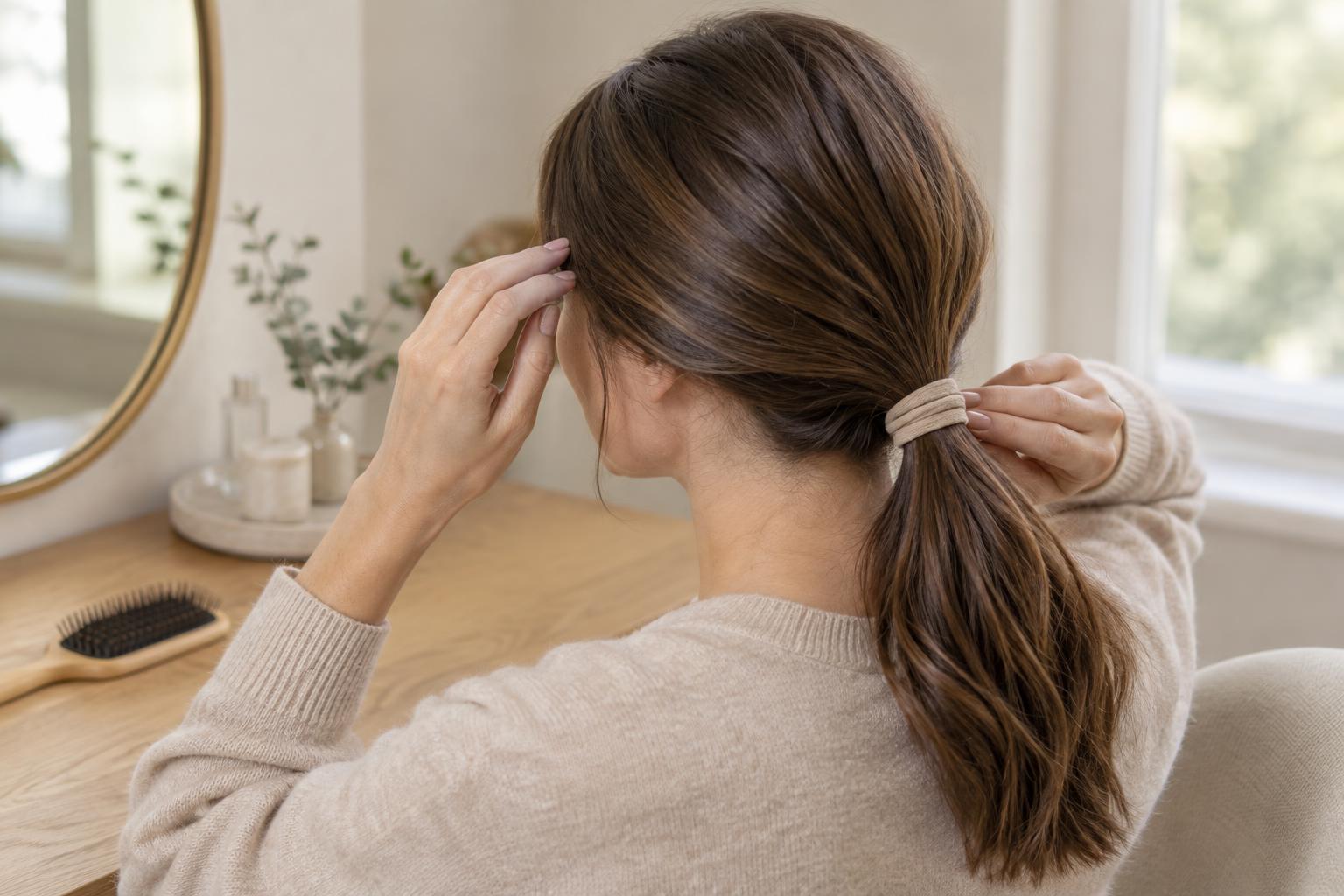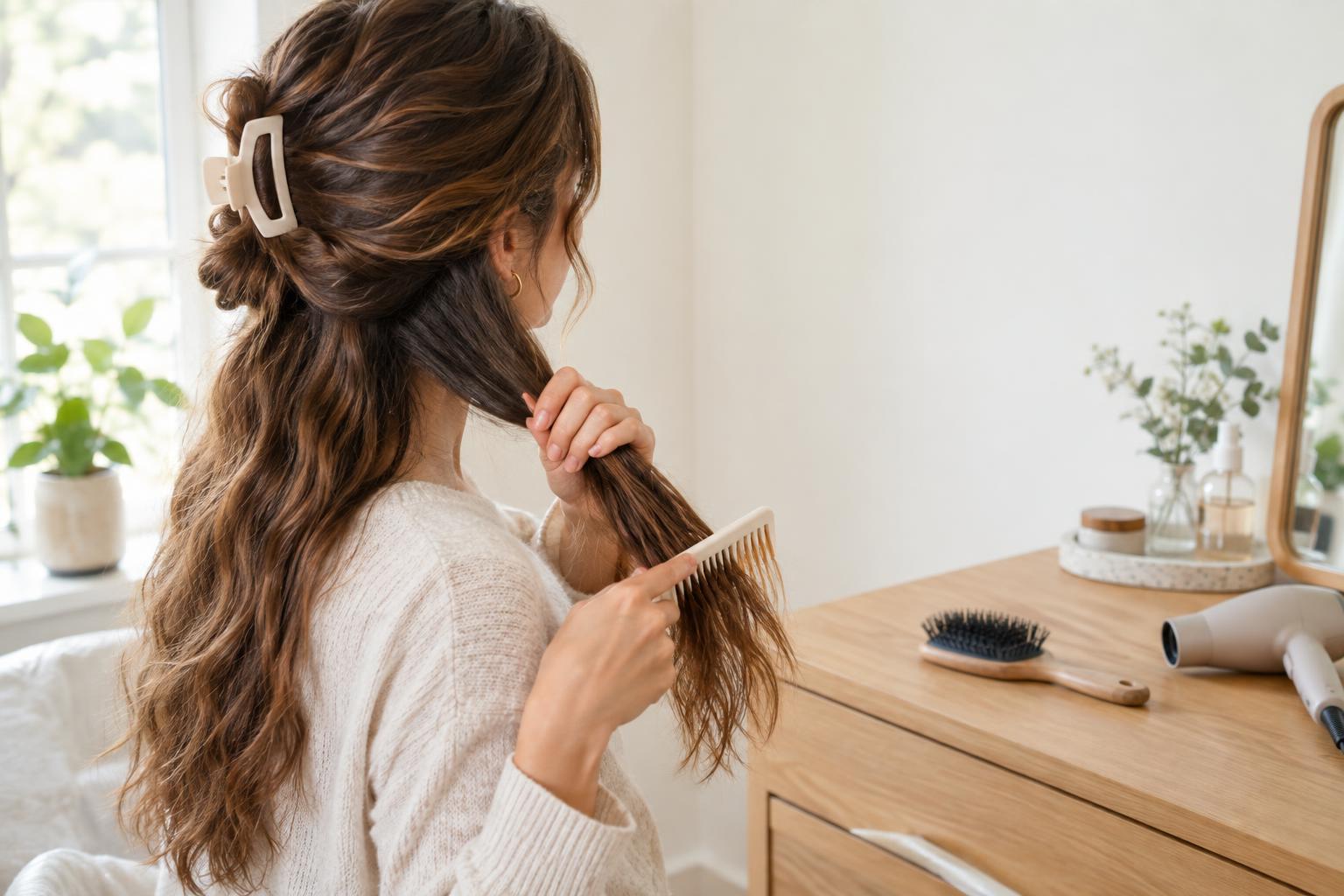
Start with the style you plan to make
Detangling is easier when it has a purpose. A smooth ponytail, a defined curl style and a loose braid do not all require the same amount of brushing. Before you begin, decide whether you need fully separated strands or simply need to remove knots while keeping your hair’s natural texture. Trying to brush every section until it looks perfectly smooth can create more work if your next step is to encourage waves or curls.
Take out clips, pins and elastics first, then use your fingers to find obvious tangles. If your hair is long or dense, divide it into manageable sections and secure the sections you are not working on. This keeps loose strands from joining a knot you have already cleared. Good lighting and a few unhurried minutes help, too: a snag is easier to address when you can see where it begins.
Choose the right starting condition and tool
There is no single best moment to detangle every hair type. Straight or loosely wavy hair may be simpler to separate when dry or slightly damp. For many people with curls or coils, detangling while damp and coated with conditioner or another product that provides slip helps preserve the curl pattern. Very wet hair can stretch easily, so use light pressure rather than assuming that water alone makes brushing gentle.
Start with your fingers for large knots, then choose a wide-tooth comb or a brush designed for detangling if you need one. The useful tool is the one you can guide through your hair without forcing it. A small amount of leave-in conditioner or detangling product may help strands slide past one another; follow the product directions and add only enough to make the section workable. More product is not a substitute for slowing down at a stubborn knot.
Work from the ends toward the roots
Begin a few inches above the ends, not at the scalp. Hold the section above the area you are combing so a snag does not pull directly on your roots. Use short, gentle strokes to clear the ends, then move your hand and tool gradually higher. Once the lower part moves freely, you can make a longer pass through the section. Repeat with the next section rather than dragging a tool through all your hair at once.
When you meet resistance, stop. Pulling harder can tighten a knot or catch neighboring strands. Set the tool down, hold the hair near the tangle and tease apart its outer edges with your fingers. If needed, add a little slip and separate a few strands at a time. You do not have to remove every tiny catch in one motion. Clearing the easier hair around it often reveals a smaller, more manageable knot.
Keep hair separated while you style
Detangling can be undone quickly if cleared sections fall back into loose, tangled hair. Twist, braid or clip each finished section out of the way until you are ready to style it. When blow-drying, work in sections that your brush can comfortably control; if hair wraps tightly around the brush, release it before continuing. When braiding or gathering hair into an updo, smooth only the portion you are about to use so you do not repeatedly handle the same strands.
If you plan to use a heated tool, finish detangling and let your hair reach the condition recommended for that tool before you start. A curling iron or straightener should not be used to press through a knot. Keep accessories in mind as well: rough fasteners and tightly wound elastics can catch strands when you remove them, making the next styling session harder.
Make the next session easier
Notice where your hair tends to snag. The nape, ends and areas that rub against clothing or accessories may need extra attention. After styling, remove accessories carefully and separate any new tangles before they become larger. If your routine includes sleeping with your hair loose, a relaxed braid or another comfortable way of containing it may reduce how much it shifts overnight.
The goal is not to make every strand perfectly straight or knot-free at all times. It is to remove enough tangles that styling feels controlled rather than forceful. If a tool repeatedly stops in the same place, return to smaller sections, more slip or finger detangling instead of adding pressure. A patient approach gives you a clearer starting point for the style you actually want.