Look before you add
The easiest way to make a touch-up look heavy is to apply fresh makeup over everything already on your face. Start by checking what has actually changed. Your forehead may look shiny while your cheeks still look fine; your concealer may have gathered in one spot while the rest of your base has stayed in place. Work on those areas rather than treating your whole face as a blank canvas.
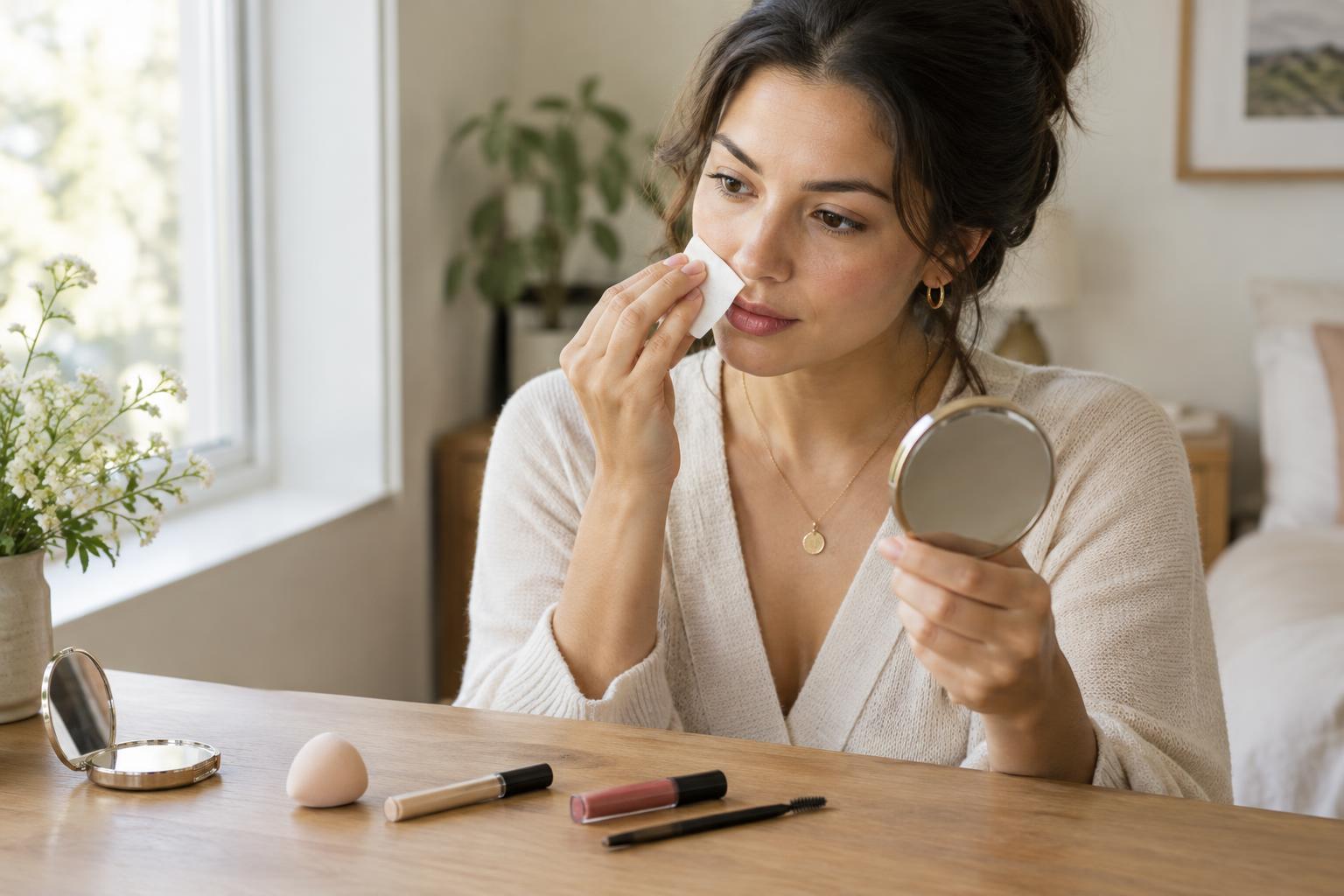
Before reaching for color or powder, remove what you do not want to keep. Blot shine with a clean tissue or blotting sheet, pressing rather than rubbing. If makeup has collected around the nose or in a crease, gently lift the excess with a clean fingertip, sponge or cotton swab. This small reset gives the next step a smoother surface and may be all the touch-up you need.
Refresh your base in thin layers
If foundation looks uneven, try softening its edges before adding more. Tap a clean, slightly damp makeup sponge over the area where the finish looks patchy. Use a light hand: the goal is to blend what remains, not move it across your face. If a bare spot is still noticeable, place a tiny amount of foundation or concealer on that spot and blend outward until its edge disappears.
Concealer can look especially thick when it is layered over an earlier application. First smooth away any product that has settled into lines. Then add only a small dot where coverage is missing, keeping it off nearby areas that still look good. Let the first tap settle before deciding whether you need another.
Use powder selectively, if at all. A light press over a shiny area can be more effective than sweeping powder across the entire face. Begin with the amount already on your brush or puff, and add more only if needed. If an area looks dry or textured, extra powder may emphasize that appearance rather than improve it.
Tidy eyes and brows instead of redrawing them
Eye makeup often needs cleanup more than reapplication. A clean cotton swab can pick up mascara marks or a smudged edge of liner. If shadow has collected in a crease, lightly pat the area to redistribute it before adding any more color. Once the existing makeup looks even, a small touch at the lash line or outer corner may be enough to restore definition.
Be cautious about layering mascara onto lashes that have fully dried, since repeated coats can make them look clumped. You can separate lashes gently with a clean lash comb instead. For brows, brush the hairs into place first. Fill only the gaps that remain visible, using short, light strokes rather than drawing over the entire brow.
Bring back color where it has faded
Blush does not usually need a full second application. Check it in ordinary light if you can, then tap a little color onto the area where it has faded and blend the edges. Cream formulas may lift or disturb the base beneath them if rubbed on vigorously, so press them on gently. With powder blush, start with a nearly empty brush; it is easier to add another light pass than to soften too much color.
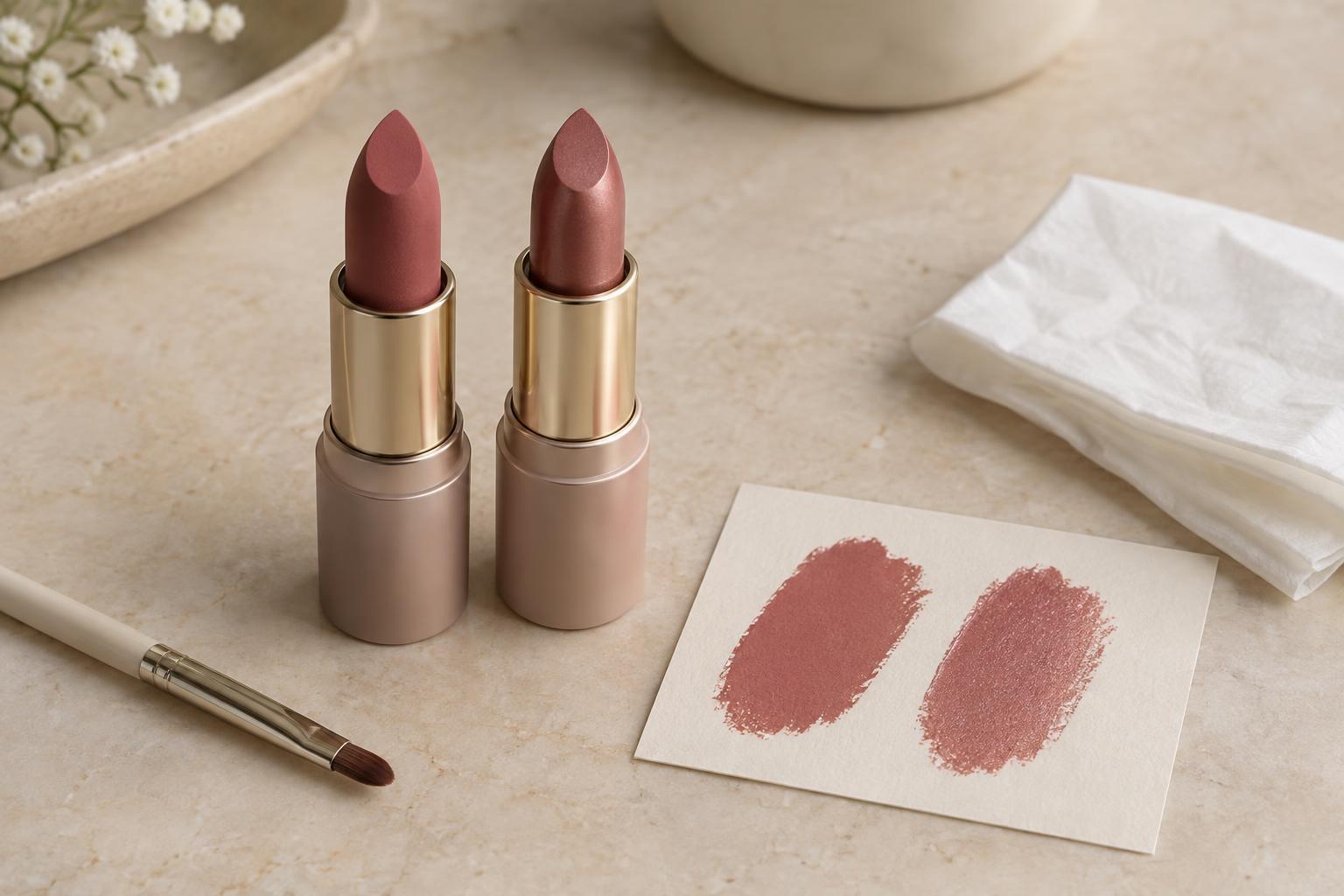
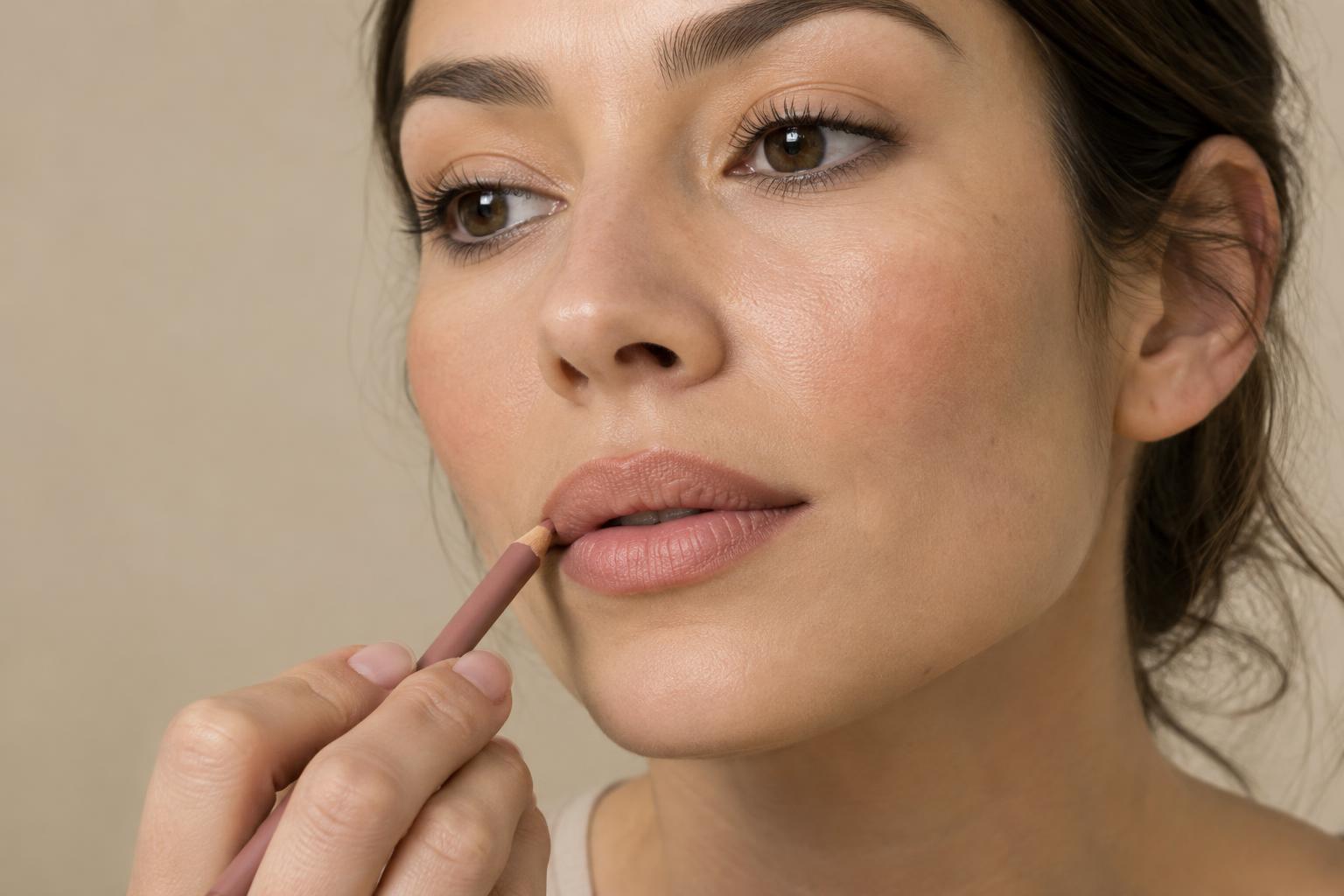
For lips, remove loose or uneven product before applying a fresh layer. Press a tissue against your lips, then add color where it has worn away. If the outline still looks neat, you may only need to fill the center. A thin coat of lipstick, balm or gloss often feels more comfortable than applying several layers over a fading one. If your lip color has moved beyond the lip line, clean that edge first rather than trying to cover it.
Keep a small, useful touch-up kit
You do not need to carry your entire makeup bag. A tissue or blotting sheet, a clean sponge or small puff, cotton swabs and the lip product you are wearing cover many common touch-ups. Add a concealer or compact powder if you regularly use one, but choose tools you can keep clean and use comfortably away from home.
A simple order helps you avoid overdoing it: blot, smooth, spot-correct, then add color. Pause between steps and look at your face as a whole. Sometimes a little less shine and a refreshed lip are enough to make your makeup feel intentional again, without another layer everywhere.