Why mixed textures can turn uneven
Cream and powder makeup can make a useful pair. Cream products are easy to blend into the skin, while powder can soften shine or add color. Patchiness usually appears when one layer lifts or grabs the layer beneath it. A brush dragged across a damp base, for example, may move foundation instead of depositing powder evenly. Too much product can also collect around dry areas or visible texture.
The goal is not to follow a rigid rule that creams must always come before powders. It is to give each product a surface it can sit on without disturbing what is already there. Start with small amounts, notice where your makeup tends to shift, and change one step at a time. That makes it easier to tell whether the issue is preparation, product quantity or application technique.
Prepare a base that feels comfortable
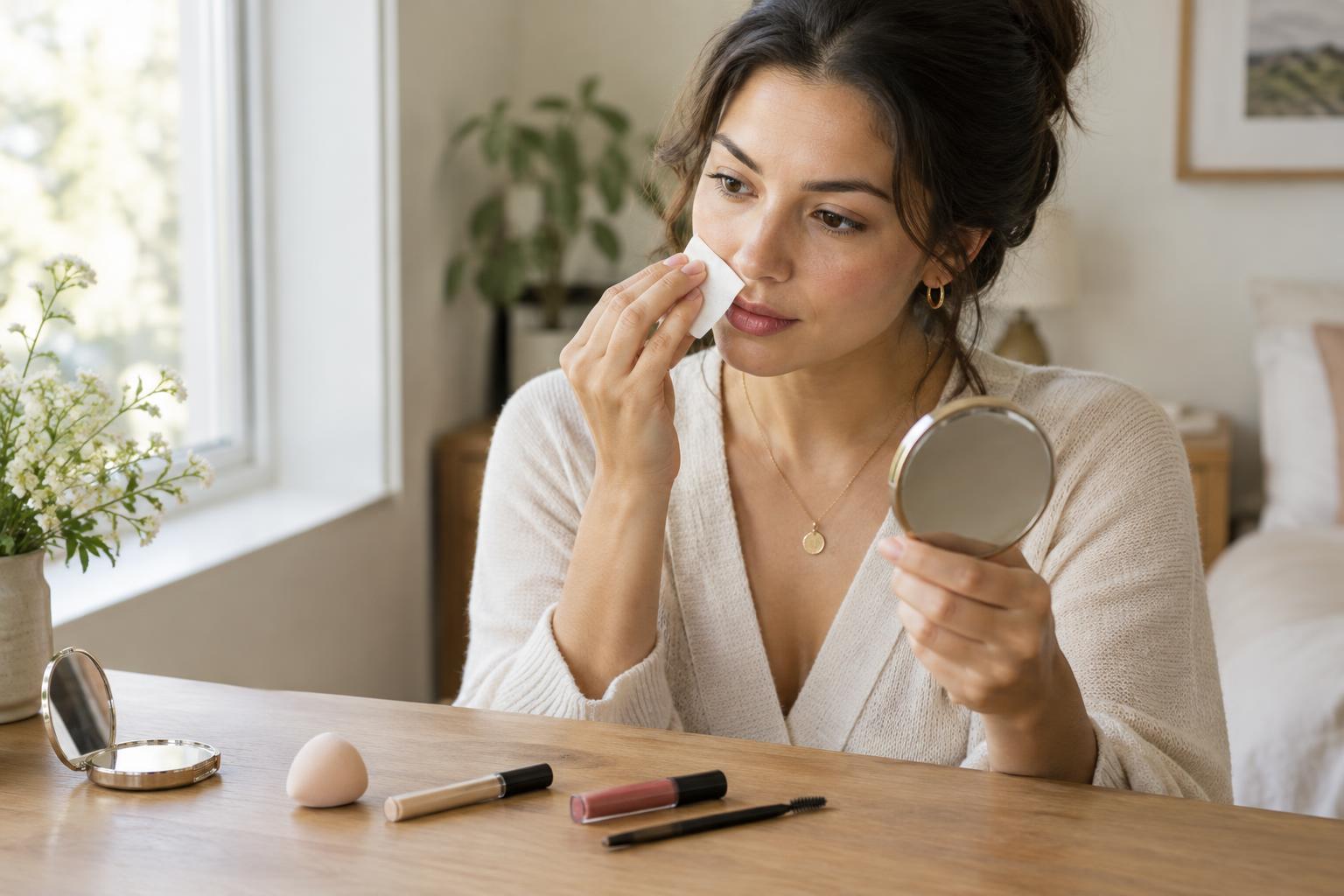
Begin with clean skin and a moisturizer that leaves it comfortable rather than slippery. If you use sunscreen, apply it as you normally would and allow it to settle before starting makeup. Rushing straight into foundation while skincare still moves around can make later layers harder to blend. If one area feels especially slick, gently blot excess product instead of rubbing the skin.
Apply foundation or skin tint in a thin layer, adding coverage only where you want it. Use the same approach with concealer: place a little, blend the edges, then decide whether you need more. Thick layers can look uneven once blush, bronzer or setting powder goes on top. If your base starts to bunch up during application, pause and press it back into place with a clean sponge or fingertips before adding another product.
Blend creams first, then place powder gently
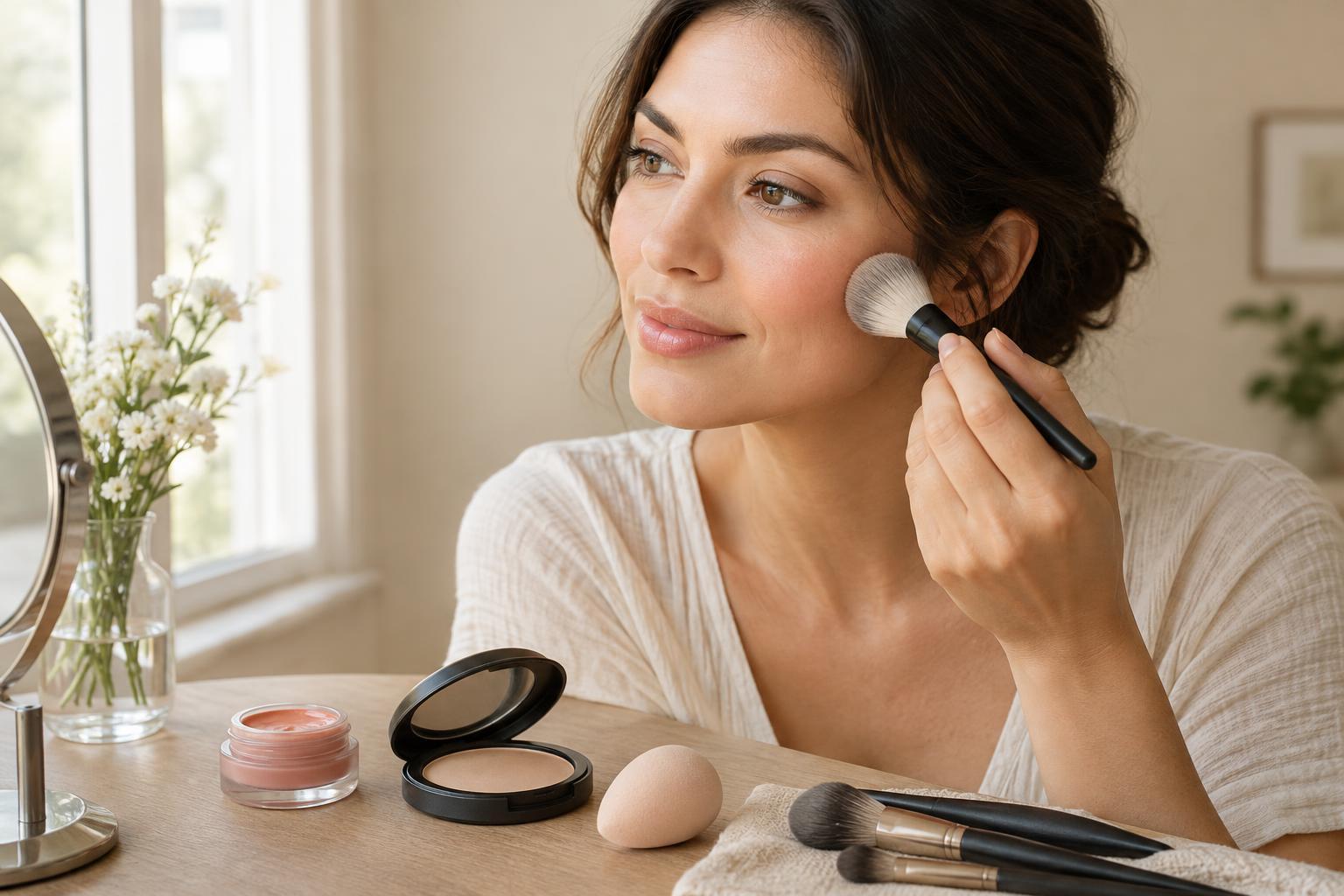
After your base, apply cream blush, bronzer or highlighter with a light hand. A small amount is easier to spread without shifting foundation. Try tapping the product on with fingers, a sponge or a brush rather than sweeping it repeatedly over the same spot. Blend the edges before moving to powder; trying to fix an uneven cream layer after setting it is often more difficult.
Before applying powder, check whether the cream layers still feel wet or tacky. Give them a moment to settle, or lightly press a clean sponge over areas that hold excess product. Load a small amount of powder onto your brush or puff and tap off the extra. Press or pat it where you need it, such as around the nose or across the center of the face. You can leave other areas less powdered if you prefer a softer finish.
Add powder color without disturbing the base
Powder blush and bronzer are more likely to catch in one spot when they meet a damp or uneven surface. If you plan to layer a powder color over a cream version, use a light touch and build gradually. You may not need a separate layer of setting powder underneath: test a small area to see whether the color applies smoothly on its own.
A fluffy brush can diffuse color, but vigorous back-and-forth blending may lift the cream beneath it. Instead, tap on a little powder, then use short, gentle motions to soften the edge. If you have already set an area and want to add cream color, avoid rubbing it directly across the powder. Tap a small amount on with a sponge or fingertips, and stop once it blends. Some combinations will not layer neatly, so using just one texture in that area is a reasonable choice.
Fix patches without adding another heavy layer
When a patch appears, identify what it needs before reaching for more powder. If color has gathered in one place, gently buff the edge with a clean brush. If the base has lifted and left a bare spot, pat on a tiny amount of foundation or concealer and blend only that area. Adding powder immediately to a sticky patch may make it more noticeable.
For touch-ups later in the day, blot excess shine before applying anything else. Then press on a small amount of powder only where needed. Keeping each correction local helps preserve the makeup that still looks good. If the same area becomes patchy every time, try fewer layers there next time, or switch the order and tools you use. An even finish often comes from lighter application, not from adding more products.