Start with the right amount of moisture
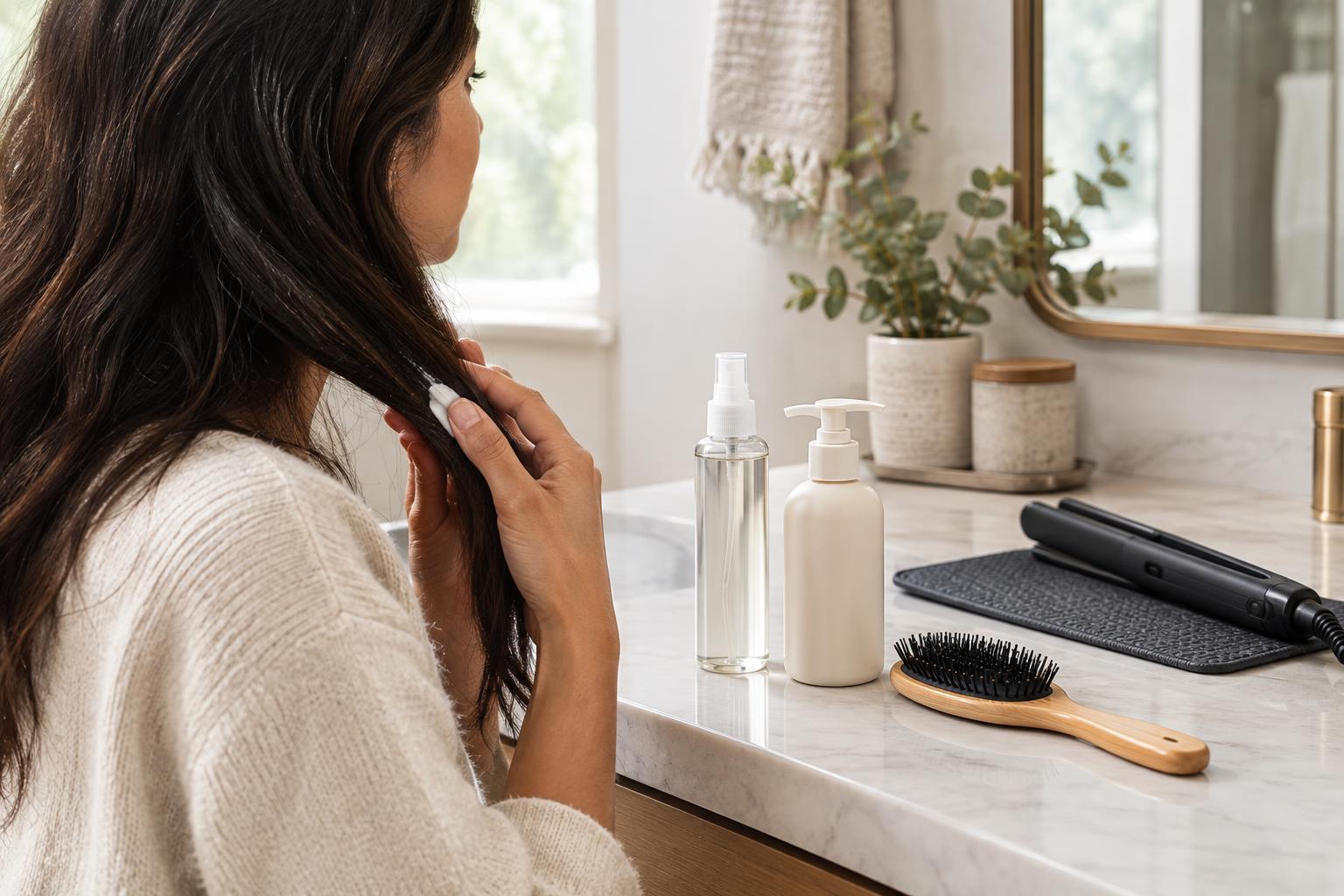
Heatless curls work by holding hair in a new shape while it dries. Start with hair that is slightly damp, not dripping wet. If you have just washed it, let it air-dry partway first. If your hair is already dry, lightly mist it with water, concentrating on the lengths. Hair that is too wet may still feel damp when you take it down, allowing the shape to fall quickly.
Detangle gently before you begin, then make your usual part. A small amount of lightweight styling product can help with hold if you normally use one, but avoid applying so much that the hair feels coated. Keep a comb, soft hair ties and a few clips nearby. The sections do not have to be perfectly even, though similar-sized sections tend to give a more consistent result.
Use braids for relaxed, textured waves
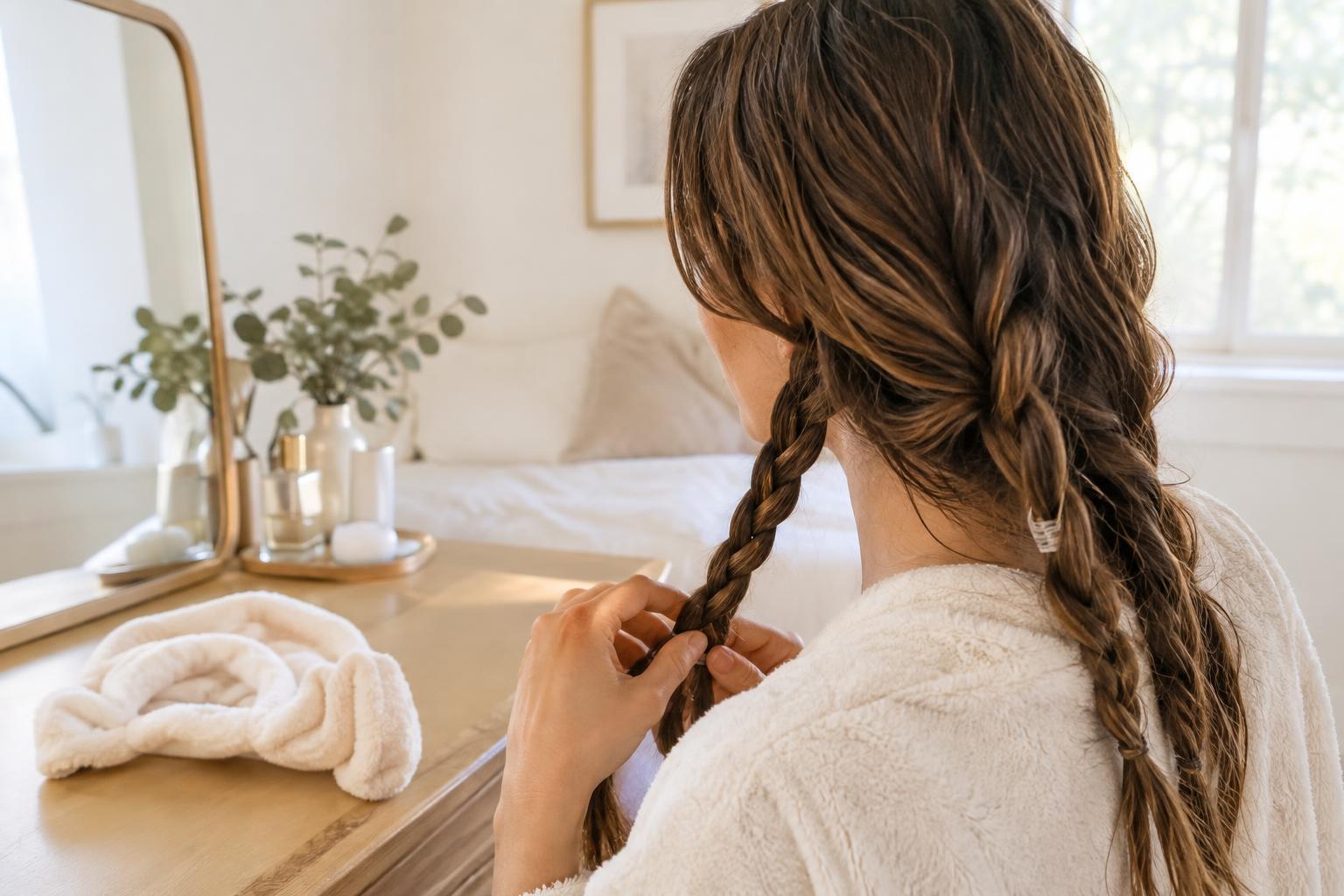
Braids are a straightforward choice for medium to long hair. Divide your hair into two sections for broad, loose waves, or make several smaller braids for a more defined, crimped texture. Braid each section from near the roots toward the ends, keeping the tension comfortable rather than pulling tightly at the scalp. Secure the ends with soft ties that will not leave a strong crease.
For a softer finish, begin each braid a little lower and leave less tension through the lengths. For more texture near the top, start higher and keep the sections fairly neat. The last inch or two can be tricky to braid; if you leave it straight, expect straighter ends. You can instead wrap the tips into a small loop before securing them, taking care not to bend them sharply.
Try twists for a softer curl pattern
Twists create a different shape from braids: often a looser, more rounded bend rather than a zigzag wave. Split the hair into two to four sections. Twist each section away from your face, then coil it into a loose bun and secure it with a soft tie or clip. Alternatively, divide one section into two strands and wrap them around each other before securing the end.
The size of the section matters more than making every twist identical. Larger sections generally produce a wider bend; smaller ones can give more definition. If a bun feels bulky or pulls while you rest, reposition it or choose two-strand twists that lie flatter. Comfortable tension is especially important around the hairline, where it is easy to pull too firmly.
Wrap hair around a robe tie for flowing curls
A soft robe tie can act as a long, flexible curling form. Place a clean tie over the top of your head like a headband, with equal lengths hanging on both sides, and clip it in place temporarily. Working on one side, take a front section of hair and wrap it away from your face around the tie. Add a little more hair with each pass until you reach the ends, then secure the wrapped hair and tie together with a soft scrunchie. Repeat on the other side.
This method suits hair long enough to wrap around the tie several times. Use a soft, smooth tie without rough seams, and keep the wrap snug enough to stay put but not tight against your scalp. Arrange the wrapped lengths where they feel comfortable. If the tie is long, secure or tuck away any loose ends so they do not get caught while you rest.
Let it dry, then release with a light touch
Whichever method you choose, wait until your hair is completely dry before taking it down. Drying time varies with hair thickness, the amount of moisture you started with and the size of your sections. If the hair still feels cool or damp inside a braid or twist, give it more time. For an overnight set, choose a method that feels comfortable and does not tug when you change position.
Remove ties and clips gently, then unwind rather than pulling the hair free. Separate the curls with your fingers for volume, starting with just a few pieces; you can always separate more. Brushing will usually soften the pattern into waves or fluff, which may be exactly the look you want. If the result is tighter than expected, let it settle before restyling. Next time, use larger sections or start with drier hair; for more definition, try smaller sections and allow ample drying time.