The main difference is the clamp
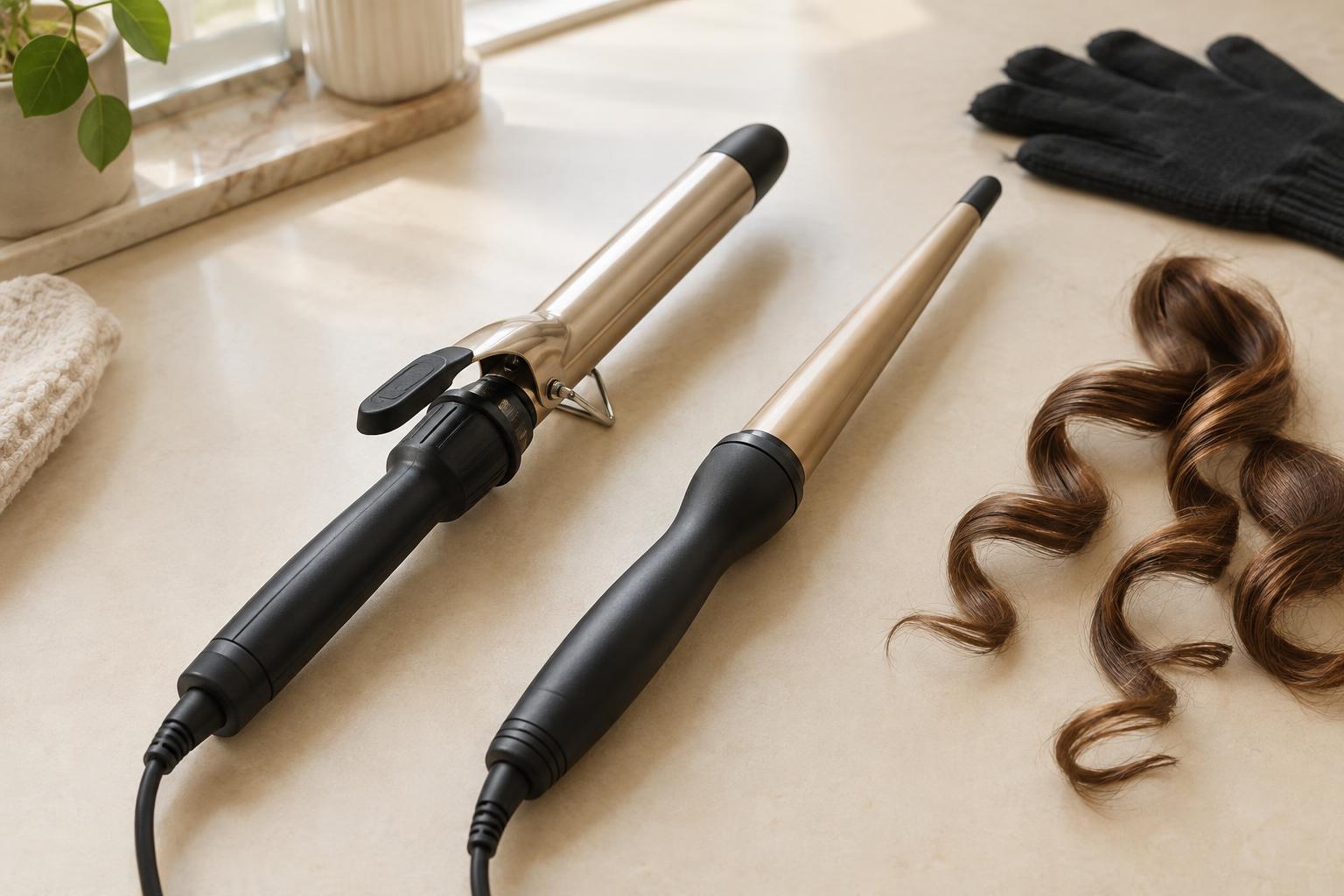
A curling iron usually has a hinged clamp that holds a section of hair against the heated barrel. You can place the ends under the clamp and roll the iron upward, or begin partway down a section for a looser bend. The clamp helps keep hair in place, which can make an iron easier to handle when you want consistent curls.
A curling wand has no clamp. You hold the handle and wrap a section of hair around the barrel by hand, usually leaving the tips free or carefully holding them near the cool end. Many wands come with a heat-resistant glove, but the barrel remains hot and exposed. A wand gives you more freedom to vary how tightly you wrap each section; it also takes practice to use without touching the hot surface.
Neither tool automatically makes a particular kind of curl. Barrel width, barrel shape, section size and your wrapping technique all matter. A wide barrel generally makes a broader bend than a narrow one. A tapered wand can create a curl that changes size along its length, while a straight barrel offers a more even shape.
When a curling iron may be the better choice
Choose a curling iron when you want a repeatable pattern, defined ends or a polished set of curls. The clamp can help keep shorter layers or slippery sections together as you work. It is also useful if holding the ends of your hair close to a hot wand feels awkward.
Pay attention to how you position the hair under the clamp. If a section folds over itself or gets pinched sharply, it may leave a visible crease. Work with a section that sits smoothly against the barrel, and avoid pulling hard while the clamp is closed. For a softer finish, curl sections consistently, let them cool, then gently separate them with your fingers or a brush.
When a curling wand may be the better choice
A wand is a useful option for relaxed waves, varied curls and styles with less uniformity. You can wrap hair flat for a smoother-looking curl or twist the section slightly as you wrap for a more textured result. Leaving the last bit of each section off the barrel can give the ends a straighter appearance.
The trade-off is control near your hands, ears and scalp. A wand may feel less convenient for very short sections because there is less hair to hold and wrap. Start with sections you can manage comfortably, and use the glove if your tool includes one. Do not treat the glove as permission to grip the hot barrel; follow the instructions supplied with your tool.
Match the tool to your hair and the look you want
If you are deciding between tools, think first about the finished shape. For tidy, similar curls or ends that curl all the way through, try an iron. For loose waves with some variation, try a wand. If you already own one, you may be able to create both looks by changing your section size and technique rather than buying another tool.
Hair length and layering affect handling, too. Longer sections provide more hair to wrap around a wand, while a clamp may help manage shorter layers. Thick or dense hair can be easier to style in smaller sections so heat reaches the hair you intend to shape. Fine or delicate hair may need less heat exposure; use a setting appropriate for your hair and the tool’s directions rather than assuming hotter is better.
Also consider barrel size before you shop. A very large barrel may be difficult to wrap with short hair, while a very narrow one may produce a tighter curl than you want. If possible, compare the barrel width with the length of the sections you plan to style.
A simple approach to styling safely
Start with dry, detangled hair unless your tool’s instructions explicitly say otherwise. If you use a heat-protectant product, apply it as directed and allow your hair to dry before styling; it does not eliminate the risk of heat damage. Set the tool on a heat-safe surface, begin at a suitable lower setting and adjust only if needed.
Work in manageable sections, keeping the hot barrel away from your scalp and skin. With an iron, lay the hair smoothly under the clamp. With a wand, wrap carefully without touching the barrel. Hold each section only as long as needed to shape it, then release it without tugging. Let curls cool before brushing or arranging them so you can judge their shape.
The best tool is the one that helps you make the style you want while remaining comfortable to control. Practice with an unplugged, cool tool first if the wrapping motion is unfamiliar. Once you understand how your hair sits on the barrel, small changes in section size and direction can make either tool more versatile.