What a heat protectant can—and cannot—do
Heat protectants are styling products designed to help limit the effects of heat on hair. They do not make hair immune to damage, so the product is only one part of a gentler routine. Tool temperature, how long heat stays on one section, and how often you style also matter. Start with a heat setting that works for your hair rather than automatically choosing the highest one.
The most useful first step is to read the product directions. Some formulas are intended for damp hair before blow-drying; others can be used on dry hair before a curling iron or straightener. A product labeled for blow-drying is not necessarily meant for every hot tool. Follow any stated temperature guidance and drying instructions instead of assuming all protectants work the same way.
Choose a spray when you want a lighter feel
A spray may suit you if your hair is fine, becomes weighed down easily, or needs a product you can distribute through many sections without a creamy finish. Sprays can also be convenient when refreshing protection before styling dry hair, provided the label specifically allows dry-hair use. Mist does not automatically mean even coverage, though: the outside of the hair can receive most of the product while inner layers are missed.
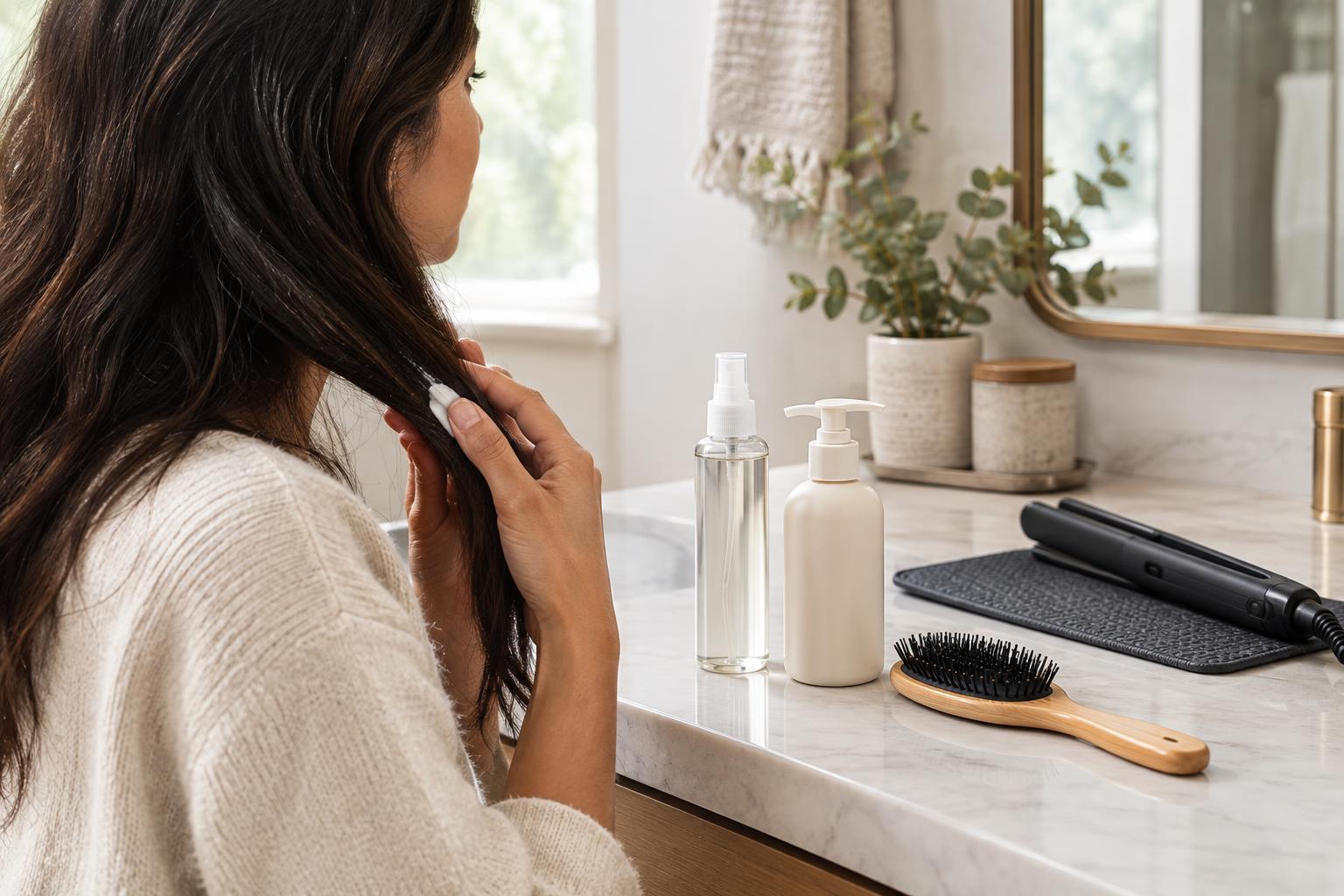
For more consistent application, divide your hair into manageable sections. Hold the bottle at the distance suggested on its label, spray each section lightly, and comb through if the directions allow it. Pay attention to the lengths and ends, which often receive repeated passes from a brush or tool. If your hair feels damp after spraying, let it dry as directed before using a straightener or curling iron. Do not clamp a hot tool onto wet product or wet hair.
Choose a cream when you want more slip or control
A cream may be a comfortable choice for hair that is thick, coarse, curly, or prone to looking puffy after blow-drying. The richer texture can make it easier to feel where you have applied it, and some creams also serve as smoothing or styling products. That extra feel is not always an advantage: too much cream can leave fine hair flat or make the roots look heavy.
Unless the directions say otherwise, apply a cream to damp hair before blow-drying. Begin with a small amount, spread it between your palms, then work it through the mid-lengths and ends. Add a little more only where needed, and comb or brush through gently to distribute it. Keep the product away from the roots if volume is your goal. If you plan to use a straightener or curling iron afterward, check whether the cream is also intended for that step; if not, choose a suitable dry-hair protectant for the second tool.
Match the formula to your routine, not just your hair type
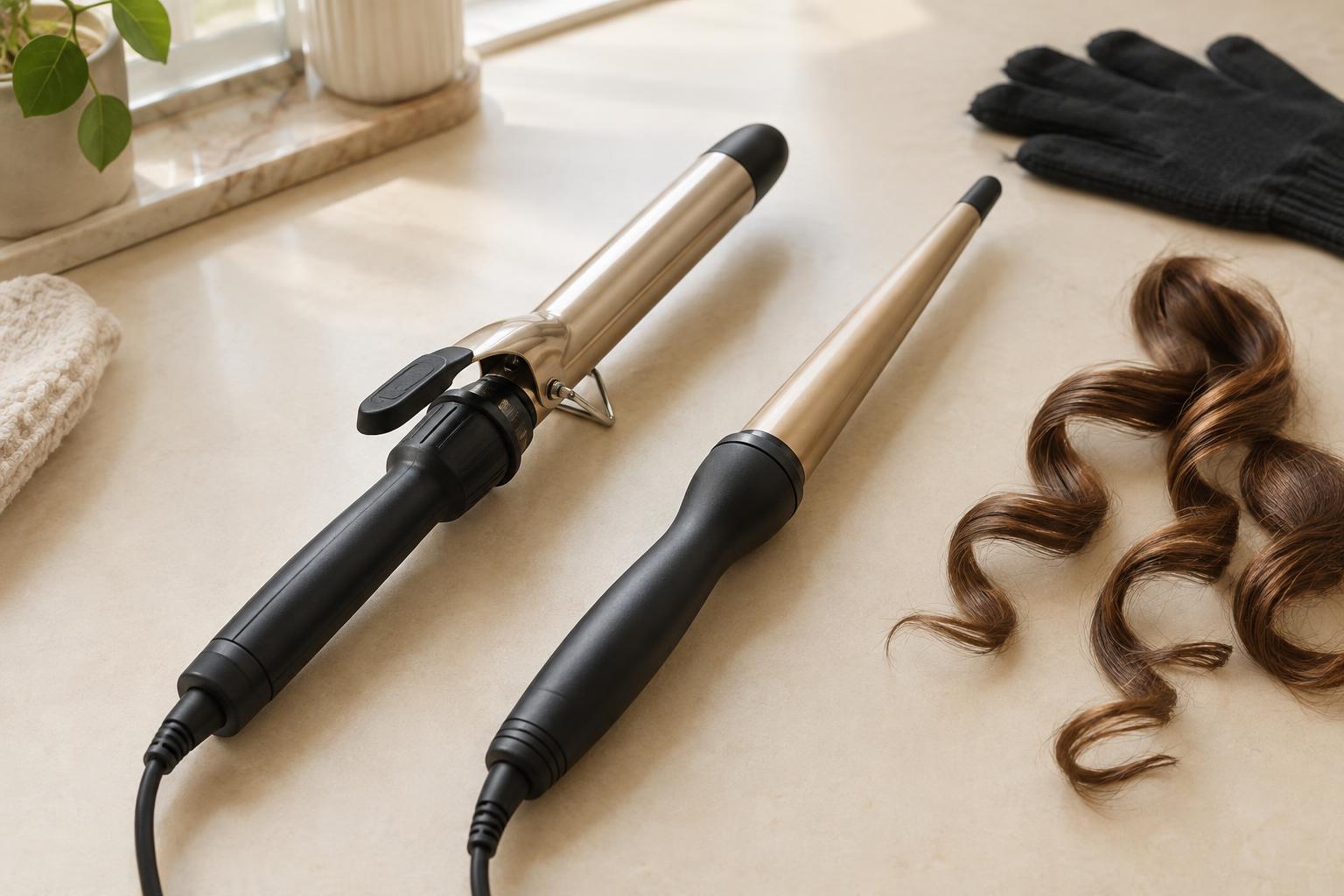
Think about when and how you use heat. For an occasional blow-dry, a damp-hair cream may combine styling control with heat protection in one step. For frequent section-by-section work with a curling iron, a spray approved for dry hair may be easier to apply before styling. If you use both a dryer and a hot tool, you may prefer one product whose directions cover both steps, or two products suited to their separate uses.
Your preferred finish matters, too. A light spray can preserve movement, while a cream may offer a more polished feel. Neither texture is universally better, and the amount that works will vary with hair length and density. If a product leaves strands stiff, sticky, greasy, or difficult to style, try using less and distributing it more carefully before deciding whether the formula suits you.
Build a careful heat-styling sequence
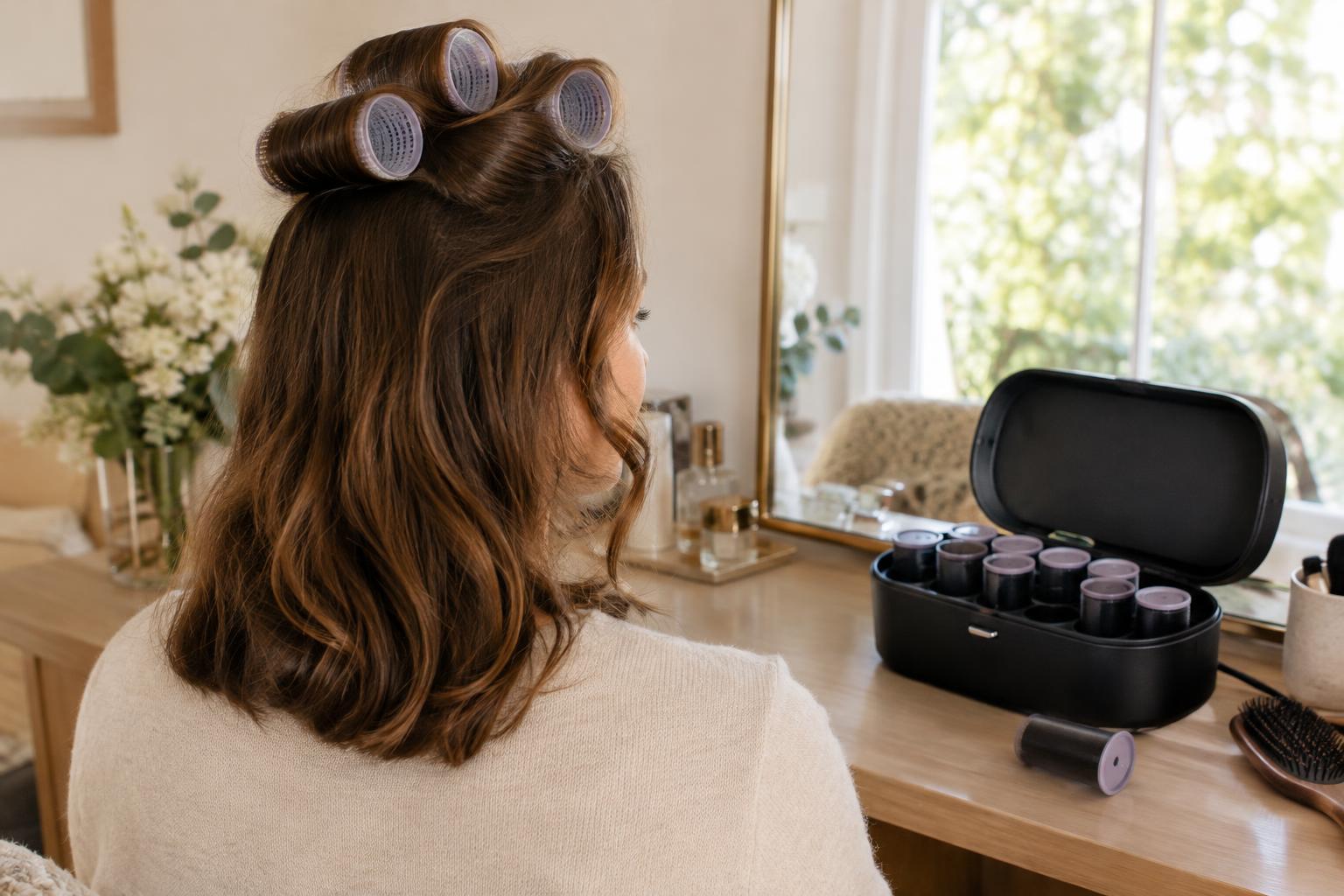
For a blow-dry, gently remove excess water with a towel, apply your damp-hair protectant as directed, and distribute it through the sections you intend to style. Keep the dryer moving rather than concentrating heat in one spot. Before switching to a straightener or curling iron, make sure your hair is fully dry and that any product you use at this stage is labeled for use before that tool.
Work in sections small enough to style without repeated passes, and pause if the hair feels unusually hot or difficult to manage. Adding more product is not a substitute for adjusting your technique. On days when you do not need a heat-styled finish, air-drying or a no-heat style gives you another option. A good protectant is the one you can apply evenly and use according to its directions while keeping your overall routine manageable.