Start with the outfit, not the accessories
Matching shoes and a bag can make getting dressed feel straightforward, but it is not the only way to create a cohesive look. A more flexible approach is to treat both pieces as parts of the whole outfit. Before choosing either one, notice what your clothes are doing: Are they mostly neutral or colorful? Relaxed or polished? Simple or full of pattern? The answers give you a starting point for accessories that belong together without being identical.
If your outfit is quiet, you have room for a distinctive shoe, bag, or both. If your clothing already has several colors or strong details, accessories in restrained shades may give the look some breathing space. Think of coordination as a conversation rather than a duplicate: the shoes and bag can respond to the same outfit in different ways.
Use color relationships instead of exact matches
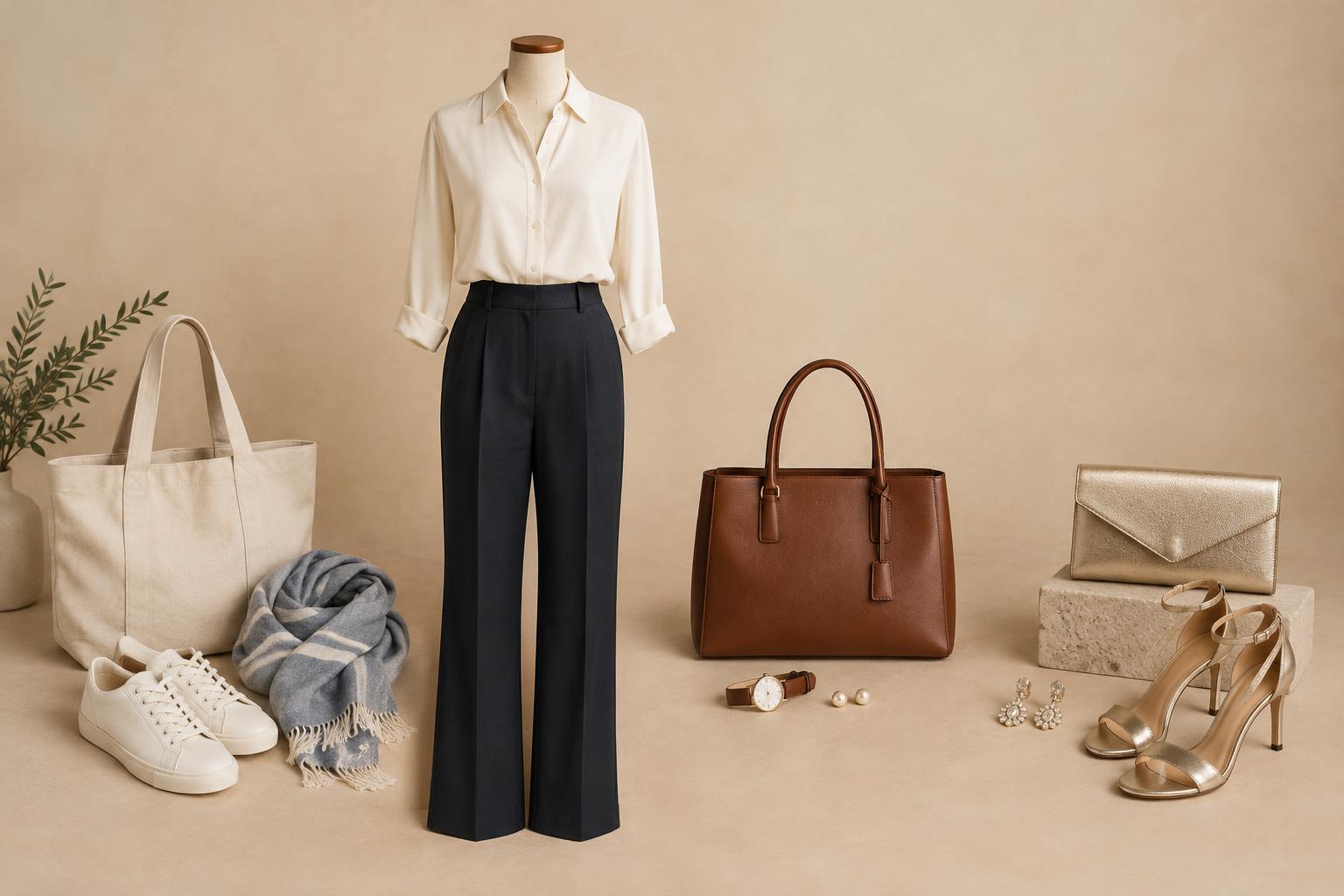
The easiest nonmatching pairing often combines two neutrals. Black shoes with a tan bag, brown shoes with a cream bag, or white sneakers with a navy tote can all feel deliberate. Look at the outfit as well as the accessories: a tan bag might echo a beige jacket, while black shoes connect to dark trousers. Each piece has a reason to be there, even though the two do not match each other.
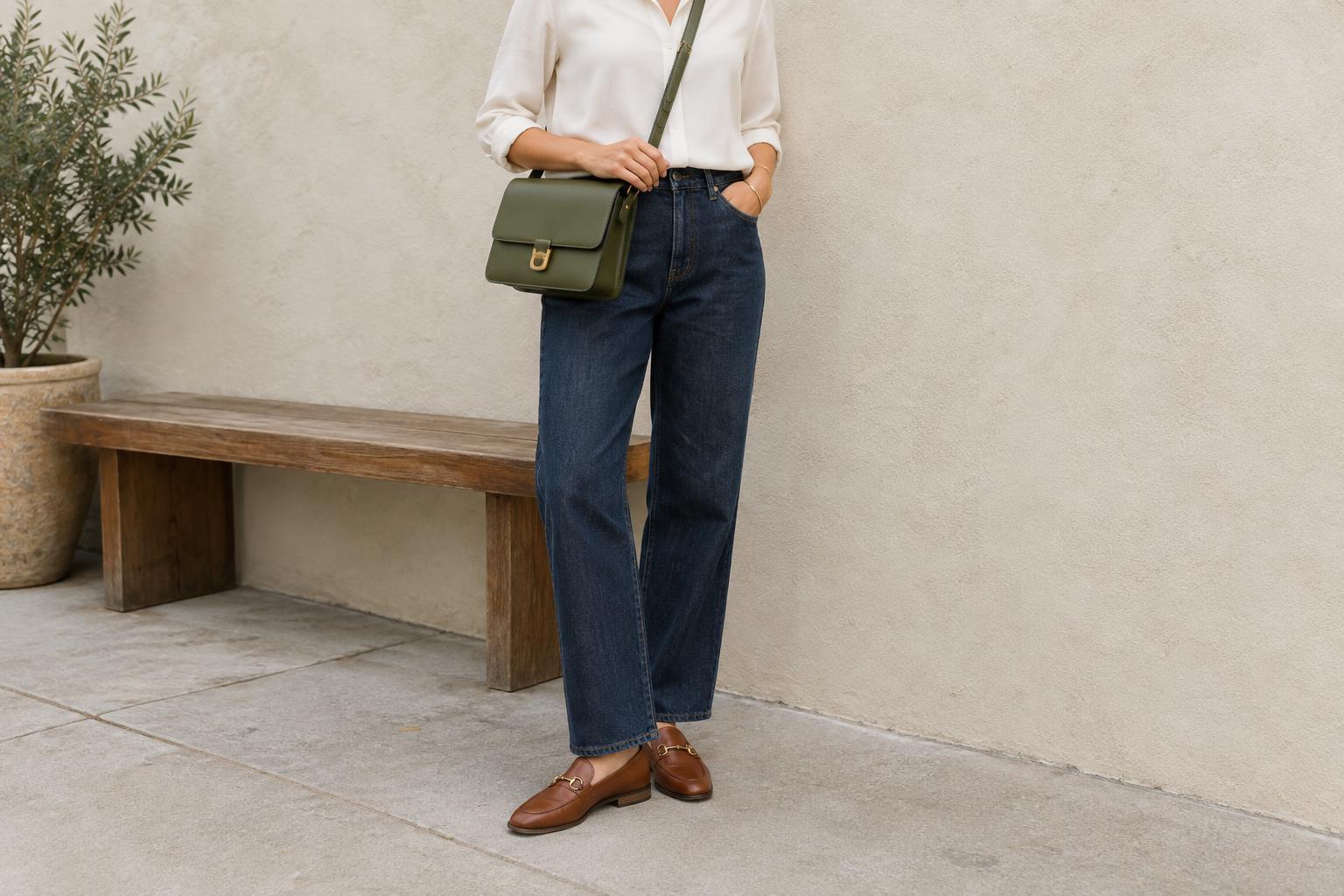
For more color, try choosing one accessory that relates to a shade already in your clothes and letting the other stay neutral. A green bag can pick up a green detail in a print while brown or black shoes keep the outfit grounded. You can also pair colors that differ in depth, such as pale blue and deep navy. Exact shades are less important than an overall balance that looks pleasing to you.
Keep their level of formality in mind
Shoes and bags usually look connected when they suit roughly the same kind of occasion. A structured bag and sleek loafers can support a polished outfit without sharing a color. For a relaxed day, canvas sneakers and a soft crossbody bag may feel more natural. This does not mean both pieces must be equally dressy; it means neither has to look as though it belongs to an entirely different plan.
Contrast can be useful when it is intentional. A refined bag can sharpen a simple jeans-and-sneakers outfit, and flat shoes can make a dress feel more casual. If a combination seems off, ask which accessory feels out of place with the clothes or the day ahead. Changing the shape or finish of one piece may help more than finding a closer color match.
Let texture, shape, or a small detail connect them
When colors differ, other features can create a visual link. A woven bag and simple sandals both suggest an easy, warm-weather mood. Smooth leather shoes and a clean-lined bag can share a polished feel, even in contrasting shades. You do not need to match materials precisely; a similar sense of softness, structure, or shine is often enough.
Small details can also tie a pairing together. A metal buckle on the shoes might relate to the bag’s hardware, or a dark bag strap might echo dark soles. Treat these as optional clues, not rules. Mixed metals, varied textures, and different shapes can work well together. If you are unsure, try repeating just one feature and leaving the rest varied.
Try a quick pairing check before you leave
Start with whichever accessory matters most that day. If you need comfortable walking shoes, choose those first, then find a bag that suits the outfit and what you need to carry. If you want to use a colorful bag, choose shoes that give it room to stand out. This keeps the choice practical instead of turning it into a search for a perfect set.
Finally, look at the full outfit rather than examining the shoes and bag side by side. Check whether their colors feel balanced, whether both suit the occasion, and whether at least one detail makes the pairing feel intentional. If the look seems busy, simplify one accessory. If it feels too uniform, introduce a different color or texture. The goal is not a formula you must follow, but an outfit that feels considered and comfortable to wear.