Start with clean lashes and a manageable wand
Mascara tends to look more even when lashes are free of leftover makeup, face cream, or excess oil. If you have just applied skincare, give it a moment to settle before working near your eyes. You can curl your lashes first if you like a lifted shape; use a lash curler gently on bare lashes, before mascara makes them less flexible.
When you pull out the wand, check how much product is on it. A heavy blob at the tip can land on a few lashes at once, so wipe that buildup on the inner edge of the tube or a clean tissue. Avoid pumping the wand in and out to gather more product. The goal is a brush that carries enough mascara to coat the lashes, not so much that it deposits a thick layer in one pass.
Place the wand at the roots
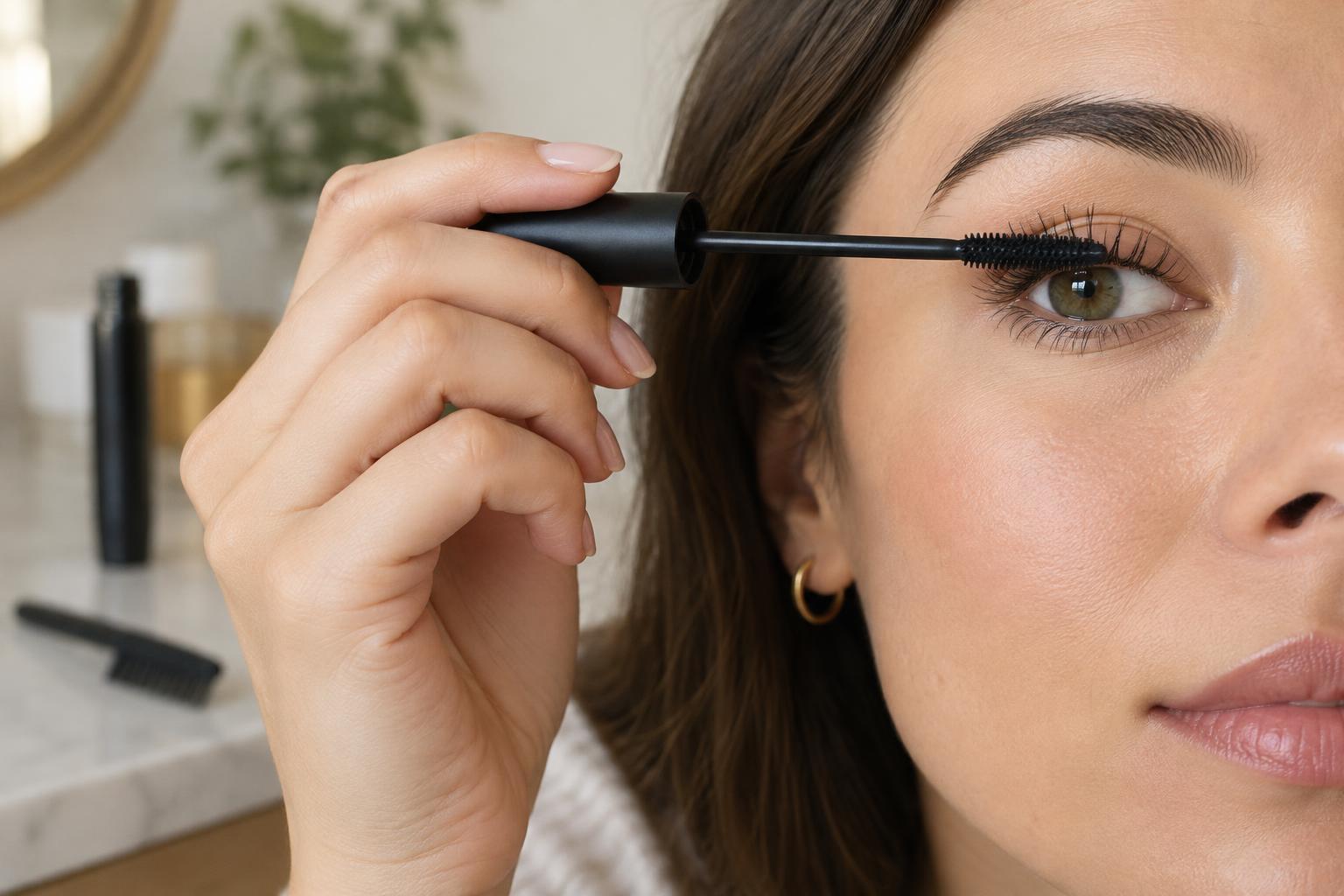
For the upper lashes, bring the brush close to the lash line and pause briefly at the roots. You can look slightly downward into a mirror to make the base of the lashes easier to see. Keep the wand against the lashes rather than pressing it into your eyelid. This first contact matters: if you begin halfway up, the tips may get coated repeatedly while the roots remain bare.
Move the wand with a small side-to-side wiggle at the roots, then draw it upward toward the tips in one smooth motion. The wiggle helps the bristles reach between lashes; the upward sweep spreads the product along their length. Work in small groups from the inner to the outer corner instead of trying to coat every lash in one stroke. If a lash is missed, target it separately rather than sweeping more product over the whole eye.
Use a lighter touch toward the tips
Lash tips are fine and can stick together when they collect too much mascara. As the wand travels upward, ease your pressure and let the bristles comb through the ends. A slow, controlled pass is usually easier to manage than several quick strokes. For more definition at the outer corner, angle the wand toward your temple on those lashes while keeping the same light touch.
If you want more coverage, add a second thin coat while the first is still workable, before it becomes fully dry and stiff. Start at the roots again, but use less product on the brush and avoid repeatedly coating the tips. More coats are not always more flattering: once lashes begin to join together or look heavy, stop adding mascara and switch to separating them.
Separate clumps before adding anything else
If two or three lashes stick together, use the clean bristles of the wand to gently comb through them while the mascara is still pliable. A clean lash comb or spoolie can also help. Comb outward through the lashes with a light hand rather than tugging at the roots. Remove excess mascara from the tool between passes so you do not put the buildup straight back on your lashes.
A blob on a lash tip is easier to address directly than by brushing over the entire lash line again. Touch it with a clean spoolie and draw it away. If mascara has dried into a firm clump, pulling at it can be uncomfortable; it is better to leave it for removal than to force the lashes apart. For your next application, wipe more product off the wand and make fewer passes over that area.
Finish the lower lashes and keep the routine simple
Lower lashes generally need less product. After coating the upper lashes, use what remains on the wand, or wipe it once more. Hold the brush horizontally for a soft sweep, or turn it vertically to touch individual lashes with the tip. Look straight ahead and use short, careful movements to reduce marks beneath the eyes. If you do make a mark, let it dry before lifting it away gently with a clean cotton swab; rubbing wet mascara can spread it.
A tidy application is easier when the mascara itself is in good condition. Keep the tube closed between uses, do not share it, and replace it if the texture changes noticeably or it develops an unusual smell. If a formula consistently makes your lashes stick together, a brush with more space between its bristles or a lighter application may suit your preferred finish better. The most useful routine is the one you can repeat: a modest amount of product, a steady root-to-tip sweep, and a quick check for separation.