Mistake 1: Starting on an uneven or slippery lid
Eyeshadow can be difficult to blend when the surface beneath it feels inconsistent. A damp or tacky base may grab powder in one spot, while a very slippery lid can make color move around instead of staying where you place it. Neither problem calls for harder brushing. Before applying shadow, give any skincare time to settle, then check how your chosen base feels. If you use eye primer or concealer, apply a thin layer rather than letting it collect in the crease.
For a soft, diffused look, try lightly setting the area where you plan to blend with a small amount of translucent powder or a shadow close to your skin tone. Keep the mobile lid less powdered if you want a lid shade to appear more vivid. There is no single base that suits every formula, so adjust one step at a time. If shadow keeps sticking in patches, even out the base before adding more pigment.
Mistake 2: Picking up too much shadow at once
A heavily loaded brush can leave a dark mark at its first point of contact. Trying to spread that mark across the eye often creates a larger, uneven shape. Instead, pick up a small amount of shadow and tap off visible excess. Place the brush where you want the color to be deepest, then move it gently toward the area you want to keep lighter. Building two thin layers gives you more control than trying to blend one thick layer.
If you have already applied too much, pause before adding another shade. Use a clean, soft brush to work around the outer edge with light pressure. If the mark is still too strong, a small amount of your base shade can soften it. Avoid scrubbing back and forth: that can spread the color farther than intended and make it harder to keep a clear shape.
Mistake 3: Blending every shade together
Blending should soften the meeting point between colors, not erase the difference between them. When a light lid shade, a medium crease shade and a deeper outer-corner shade are all swept over the same area, the result may look muddy. Give each color a job. Keep the lightest shade mainly on the lid, place the medium shade along the upper edge of the crease, and concentrate the deepest shade in a smaller area if you want extra definition.
After placing the colors, blend only where their edges meet. A few short, controlled motions are often enough. Wipe your brush between shades or switch to a clean one so you do not carry dark pigment into lighter areas. If the look has become flat, restore the intended contrast by pressing a little of the lid shade back onto the center of the lid rather than blending the whole eye again.
Mistake 4: Using the wrong brush or too much pressure
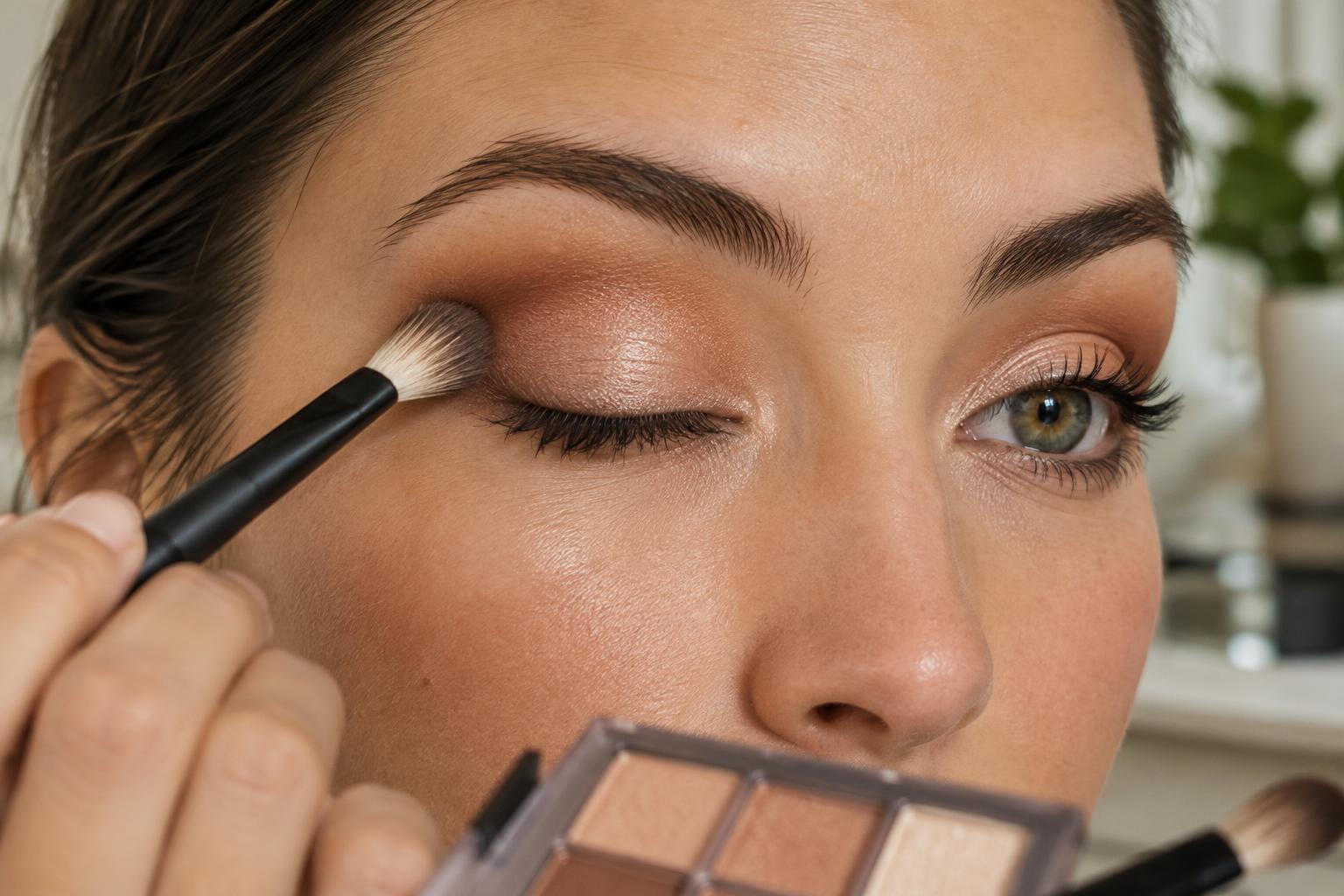
A large, fluffy brush can create a soft edge, but it may also scatter shadow beyond the shape you intended. A small, dense brush places color precisely, yet it can leave a sharp boundary if used for the entire look. Try using a smaller brush to place deeper shades and a soft blending brush to finish their edges. The brush should suit the space you are working in; a smaller eye area may be easier to control with a smaller brush.
Hold the brush farther back on the handle and use a light touch. Small circular motions can soften a concentrated spot, while short back-and-forth motions can smooth a crease edge. You do not need to keep blending until the color disappears. If the shape starts to spread too high or too far outward, stop and check it with your eyes open before making another pass.
Mistake 5: Trying to fix everything with more blending
Sometimes the issue is placement rather than an unfinished edge. If shadow extends farther than you wanted, repeatedly brushing it may only enlarge the area. Let the color settle, then use a clean brush to soften the boundary. For a more defined outer edge, carefully tidy the surrounding area with a small amount of your usual base product on a detail brush. Use a little at a time so you do not create a new, heavy line.
Shimmer also needs a different approach from matte crease color. Broad blending can carry reflective particles above the lid. If that happens, gently remove stray particles from the surrounding area, then press shimmer onto the lid with a clean fingertip or a flat brush instead of sweeping it across the eye. Finish by looking straight ahead and comparing both eyes. The goal is a shape that looks balanced when your eyes are open, not two perfectly identical blends up close.