Start with dry, detangled hair
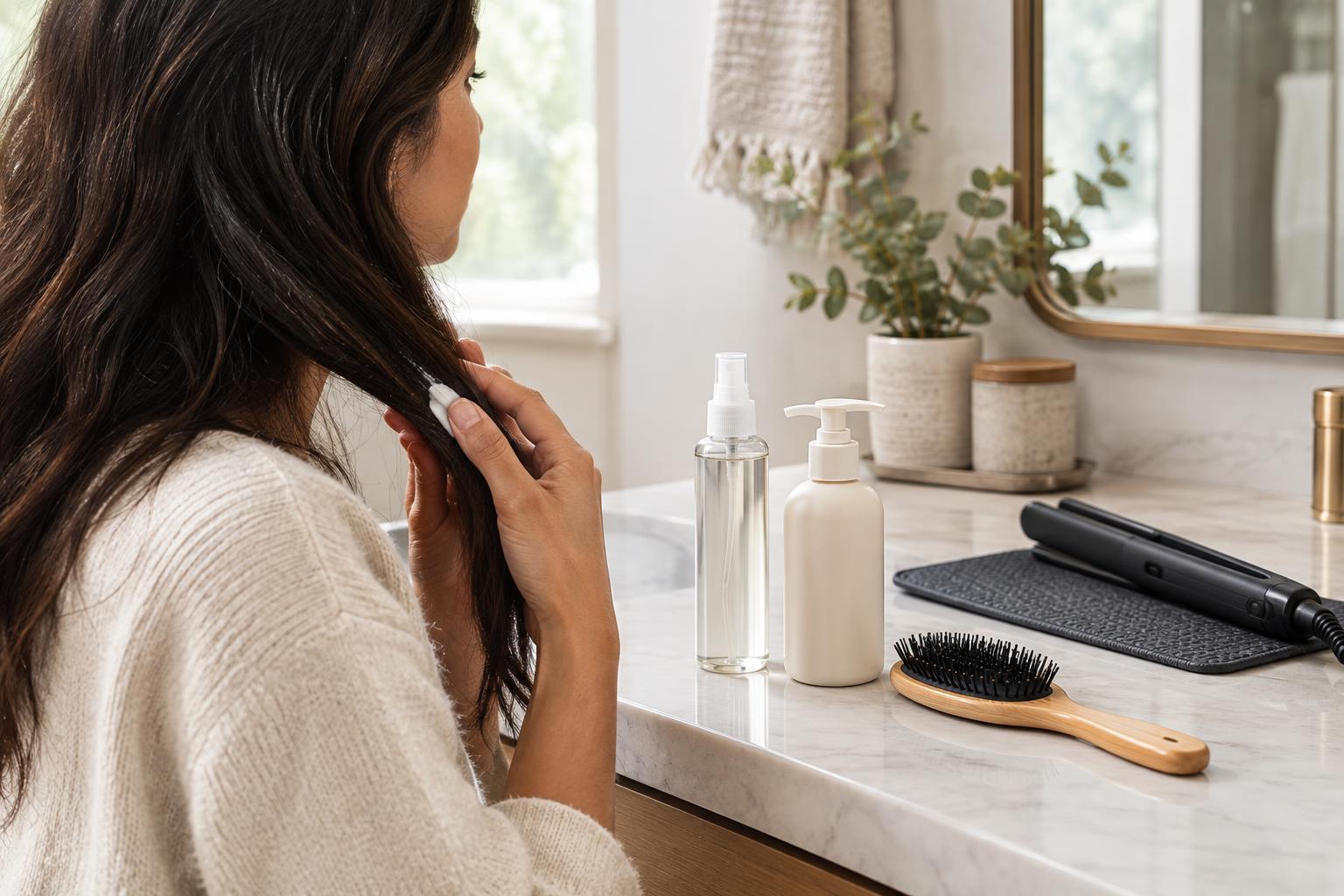
A flat iron works best as a finishing tool, not a substitute for a blow-dryer. Make sure hair is fully dry before using a standard flat iron unless its instructions specifically say it is designed for damp hair. Comb or brush through tangles first so the plates can move steadily rather than catching on knots. If your hair tends to puff up during styling, drying it in roughly the direction you want it to lie can make the ironing step easier.
Apply a heat-protectant product according to its label, paying attention to whether it belongs on damp or dry hair. It can be a useful part of a heat-styling routine, but it does not make hair immune to damage. Let any product applied to dry hair settle as directed before bringing hot plates near it. Keep heavy creams and oils modest, especially near the roots, where they may leave a smooth style looking flat.
Divide hair into a lower layer and an upper layer, then clip the upper layer out of the way. You can create more layers if your hair is dense. The goal is to take sections narrow enough that the hair sits evenly between the plates without spilling out at the sides.
Choose a controlled heat setting
Start at a lower setting and increase it only if you need to. Fine, fragile, or previously lightened hair may call for a gentler approach than thick, resistant hair, but there is no single ideal temperature for everyone. Your tool’s instructions and your hair’s response are more useful than copying someone else’s setting. If you notice a burnt smell, excessive snagging, or a rougher feel after styling, stop and reassess the heat and technique.
Check that the plates are clean and close evenly before you begin. Product buildup can make the iron drag. Place the tool on a heat-safe surface while it warms, and keep the hot plates away from your scalp, ears, fingers, and any loose cords. It is easier to stay in control when you work in front of a mirror with enough room to move your arm.
Use steady passes for a smooth finish
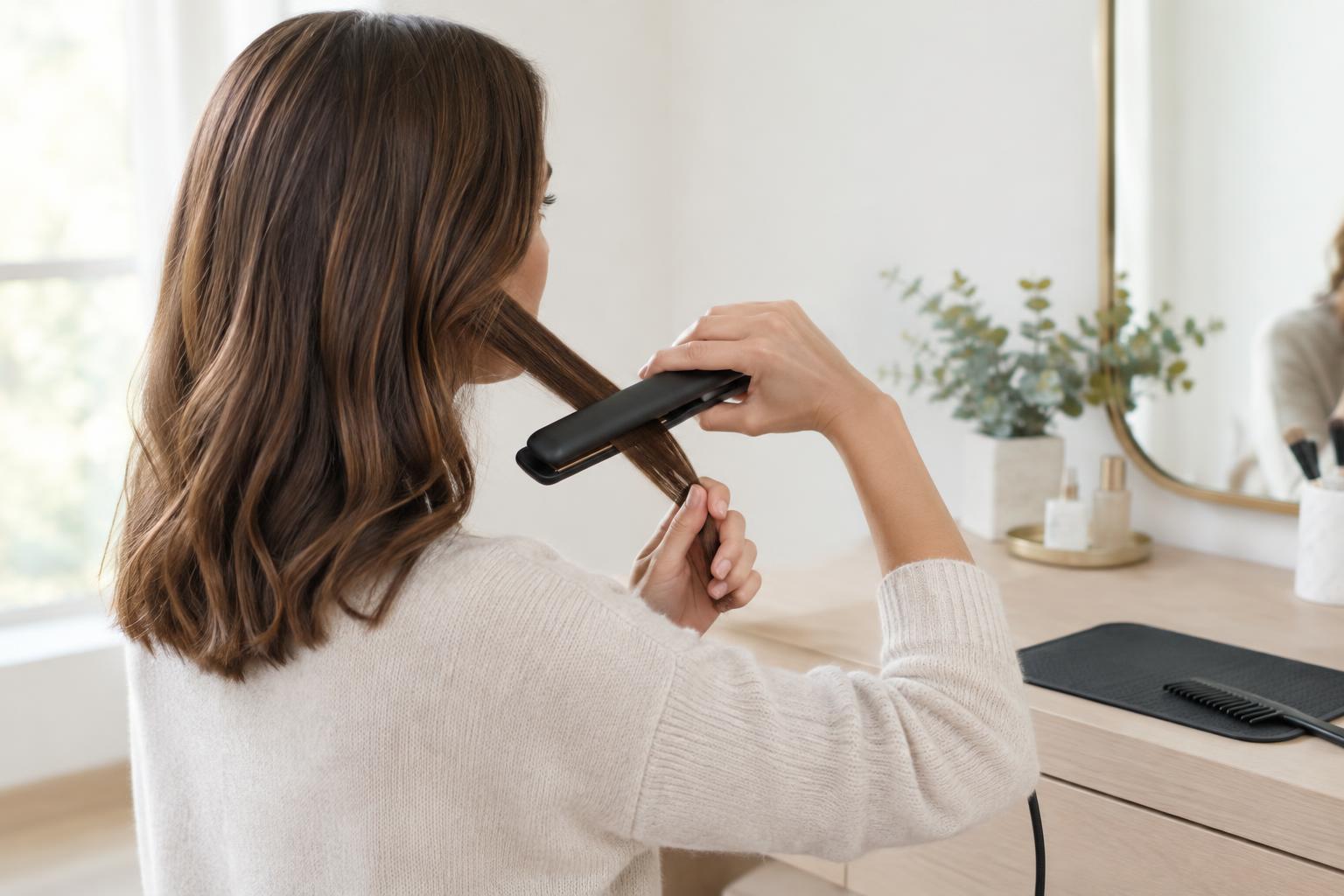
Take one small section and comb it so the strands line up. Position the iron a short distance from the roots, close the plates with gentle pressure, and glide toward the ends at a steady pace. Avoid clamping hard or stopping in one place. If a section needs another pass, let it cool briefly before deciding whether to repeat it; repeatedly ironing the same hair can add unnecessary heat.
For a straight style that does not look rigid, follow the natural direction of each section. Near the ends, turn your wrist slightly inward or outward rather than pulling the iron straight down every time. Work through the lower layers first, then release the upper layers. Around the face, use smaller sections and slower, deliberate movements so you can keep the hot tool clear of your skin.
Turn the iron for soft bends
The difference between a straight section and a bend is mainly the angle of the iron. Begin a little below the roots, close the plates lightly, and rotate your wrist about a half turn as you glide down the section. Keep moving so the hair curves through the plates rather than sitting against one hot spot. Try the motion with the iron switched off first if it feels unfamiliar.
For a relaxed, undone effect, start bends around the middle of the hair and leave the last short length of each section straighter. Alternate the direction of neighboring bends if you want more separation, or turn them the same way for a tidier shape. You do not need to make every section identical. Let each bend cool before combing through it with your fingers, since handling it immediately may pull out the shape.
Finish lightly and put the tool away safely
Once the hair has cooled, look for areas that need a small adjustment rather than making another full pass over everything. A light finishing product can help with flyaways or add hold if you like that look; begin with a small amount and add more only if needed. If the ends look too sharply turned, gently loosen them with your fingers instead of automatically reheating them.
Switch off and unplug the flat iron when you are done. Leave it on a heat-safe surface until it has cooled fully, then wipe the plates as the manufacturer directs and store it without tightly winding the cord around the tool. A simple routine of dry hair, manageable sections, moderate heat, and steady movement makes it easier to get either a smooth finish or soft bends without overworking the same strands.