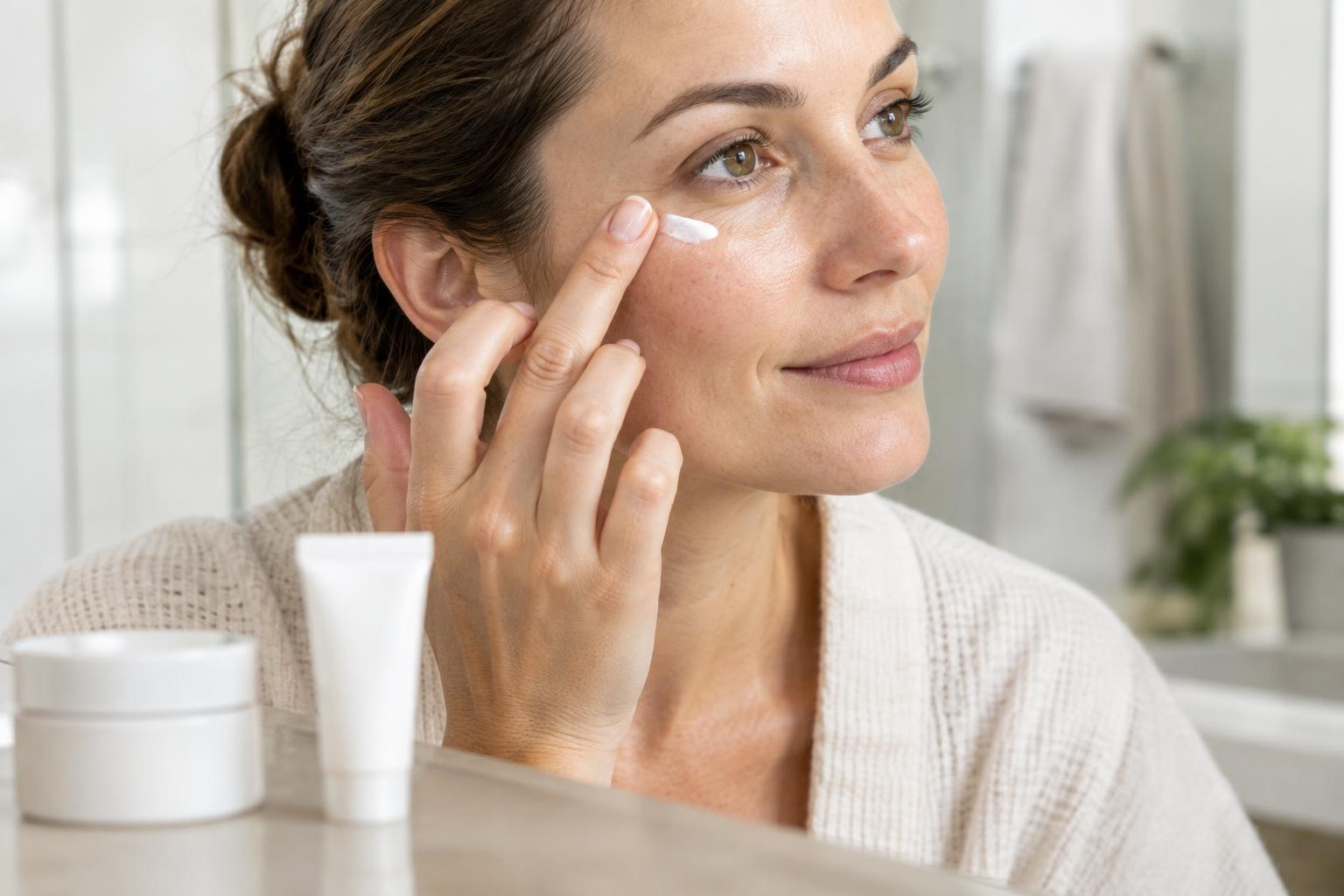
What makes an eye cream different?
An eye cream is a moisturizer intended for the skin around the eyes. It may have a lighter or richer texture than a face cream, come in a smaller package or be designed to spread easily in a small area. Those differences can make it pleasant to use, but the name on the jar does not make it an essential step. A face moisturizer you already like may also feel comfortable around your eyes.
When comparing products, focus on texture and directions rather than assuming one category is always better. A rich balm might feel too heavy under makeup, while a lightweight lotion might not feel substantial enough if the area often feels dry. Some eye products contain ingredients also found in face products, such as glycerin or other moisturizing ingredients. You do not need a separate jar simply because the packaging calls one product an eye cream.
Decide what you want the product to do
If your main goal is everyday comfort, start by considering whether your current face moisturizer meets that need. Try using a small amount around the orbital bone, the bony area surrounding the eye, if the product directions allow it. If it feels comfortable and sits well under any makeup you wear, you may already have a workable eye-area routine.
A separate product can be useful when your face cream feels too rich near your eyes, when you prefer a different texture beneath concealer or when you want a small tube that is easy to dispense neatly. Think of it as a preference-driven purchase rather than a missing piece of skincare. Promises about eliminating dark circles, puffiness or fine lines deserve measured expectations: these features can have several contributing factors, and a moisturizer may chiefly make the skin look and feel less dry.
Apply products gently and leave room for comfort
Use clean hands and begin with a small amount of product. Dab it around the orbital bone, then spread it gently without pulling at the skin. Keep it out of your eyes and avoid placing it right along the lash line unless the product specifically directs you to use it there. Products can shift after application, so using more than you need may increase the chance of discomfort without improving the finish.
Read the instructions for each formula, especially if it contains ingredients meant to exfoliate or otherwise change the feel of your skin. A product that works well across your cheeks may not feel comfortable close to your eyes. If a formula stings or makes the area feel persistently uncomfortable, stop using it there rather than trying to make it work. Avoid putting skincare on the inner rim of the eyelids.
Keep the routine simple
Eye-area care does not require a long sequence of dedicated products. A gentle cleanse, a moisturizer that feels comfortable and daytime sun protection are a practical foundation. If you use sunscreen near the eyes, choose one whose directions permit that use and apply it carefully to keep it out of your eyes. Sunglasses and a brimmed hat can also make time outdoors more comfortable without adding another skincare layer.
If you decide to buy an eye cream, introduce it by itself so you can tell whether you like its texture and how it feels. Notice whether it works alongside your moisturizer, sunscreen and makeup rather than judging it by the package’s promises. The best choice may be a dedicated eye product, your regular moisturizer or no extra cream at all. A routine that feels comfortable and is easy to repeat is more useful than one with a separate product for every part of the face.