Start with a small plan
You do not need a large palette to make eyeshadow look intentional. For a first attempt, choose two or three shades that work together: a light shade close to your skin tone, a medium shade for gentle depth and, if you like, a darker shade for the outer corner. Matte shades make it easy to see where you are blending; a shimmer can be added to the lid once the basic shape feels comfortable.
Think of your eyelid in zones. The mobile lid is the area that moves when you blink. The crease sits around the fold above it, although the fold may be subtle or hidden on some eyes. The outer corner is the edge nearest your temple. These zones are guides rather than strict boundaries: you can adjust placement so the color remains visible when your eyes are open.
Prepare your lids and choose your tools
Begin with clean, dry lids. If you use an eyeshadow primer, apply a thin layer and let it settle according to its directions. A small amount of concealer can also create a more even-looking starting point, but too much may make powder harder to blend. You can skip both and apply shadow directly if that works better for you.
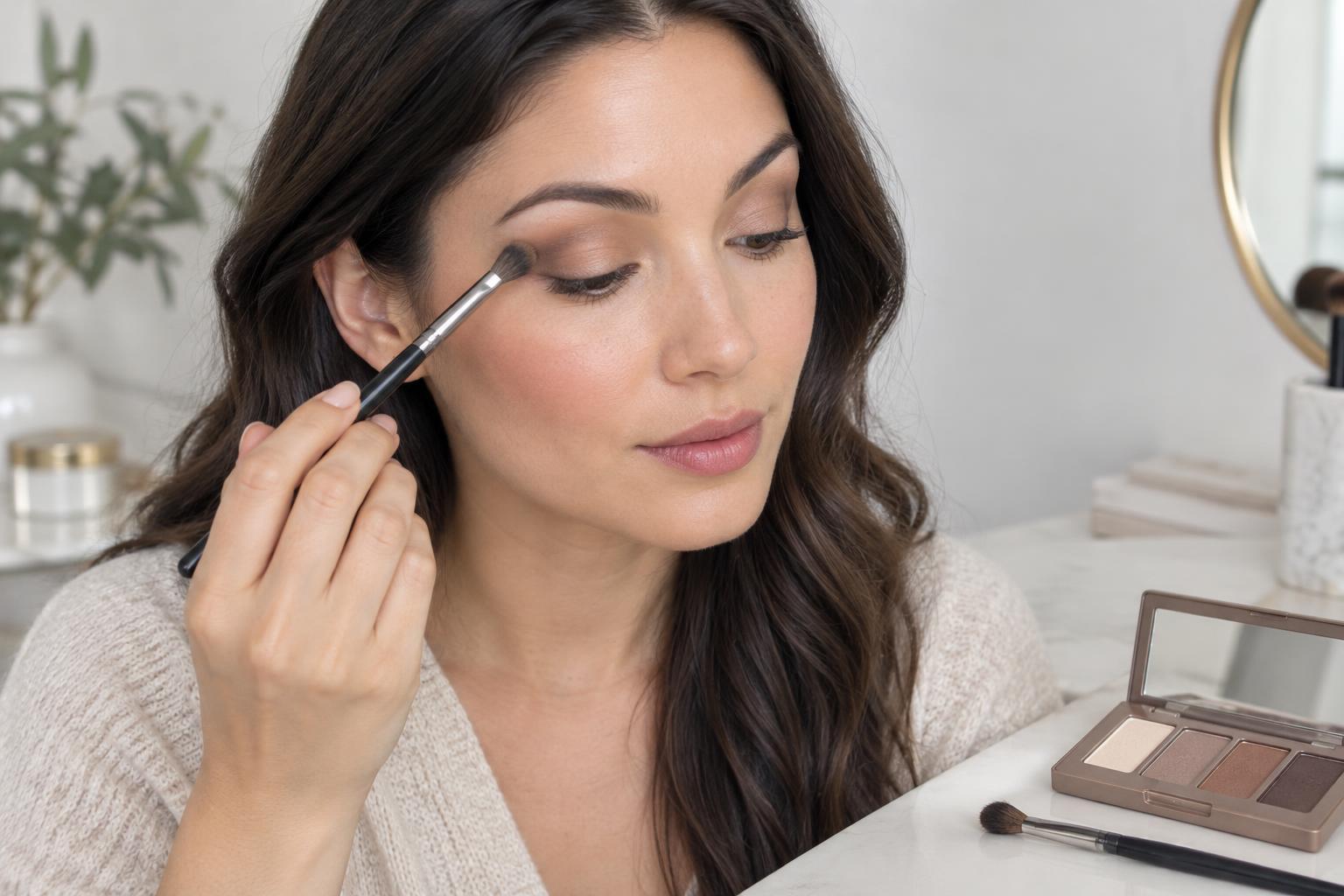
Two brushes are enough for the look in this guide. Use a small, flatter brush to place color precisely and a soft, fluffy brush to blur its edges. Keep the blending brush mostly free of product at first so it softens a line without carrying a darker shade across the whole lid. Tap excess powder off the brush before it touches your eye; starting with less makes the result easier to control.
Place color where it has a purpose
Sweep the light shade across the lid, or use it just below the brow and at the inner corner for a subtle highlight. With the medium shade, make a soft arc along or slightly above your natural crease. Looking straight ahead into a mirror helps you check that the color is visible. If your lid fold hides shadow, placing this shade a little higher may make the shape easier to see; there is no need to force it into a crease line.
For more definition, press the darker shade onto the outer third of the lid with the flat brush. Start near the upper lash line, then carry what remains on the brush slightly upward and inward. Leave the center and inner lid lighter so the shades have room to transition. You can stop here for a soft daytime look, or press shimmer onto the center of the lid with a clean brush or fingertip. Keep it away from your eye rather than working close to the waterline.
Blend the edges, not the entire look
Blending means softening the boundary between shades, not mixing every color into one. Hold the fluffy brush lightly and move it in small circles or short back-and-forth strokes along the edge of the medium shade. Then use the same light pressure where the medium and dark shades meet. Work on one edge for a few strokes, pause and look straight ahead before adding more.
If a dark patch looks too strong, first try a clean brush to soften its perimeter. If it still needs adjustment, add a little medium shade next to it rather than layering more dark shadow. To avoid a muddy result, wipe the brush when switching between very different colors. You can also return a touch of the light shade to the center of the lid if blending has covered it.
Check the shape and make small corrections
Step back from the mirror and check both eyes open, then closed. The shapes do not have to be identical, but you may want the outer edges to end at a similar height. A clean cotton swab can tidy a sharp edge or lift a little misplaced color. If powder has fallen beneath your eyes, sweep it away gently with a clean brush rather than rubbing it into your base makeup.
For practice, change only one part of the look at a time: try a softer crease, a smaller outer corner or a different lid finish. That makes it easier to notice what suits your eye shape and the amount of definition you enjoy wearing. A successful beginner eyeshadow look is not about perfect symmetry or complicated techniques; it is about placing color deliberately and stopping when the edges look soft enough to you.