Why one moisturizer can do several jobs
A moisturizer is more than a product that adds water to your face. It may help skin feel smoother, reduce the loss of water already in the skin and make dry areas feel more comfortable. Formulators often use three ingredient roles to achieve those effects: humectants, emollients and occlusives. Understanding the roles can make a label less mysterious, but they are not three rigid ingredient categories. One ingredient may contribute to more than one effect.
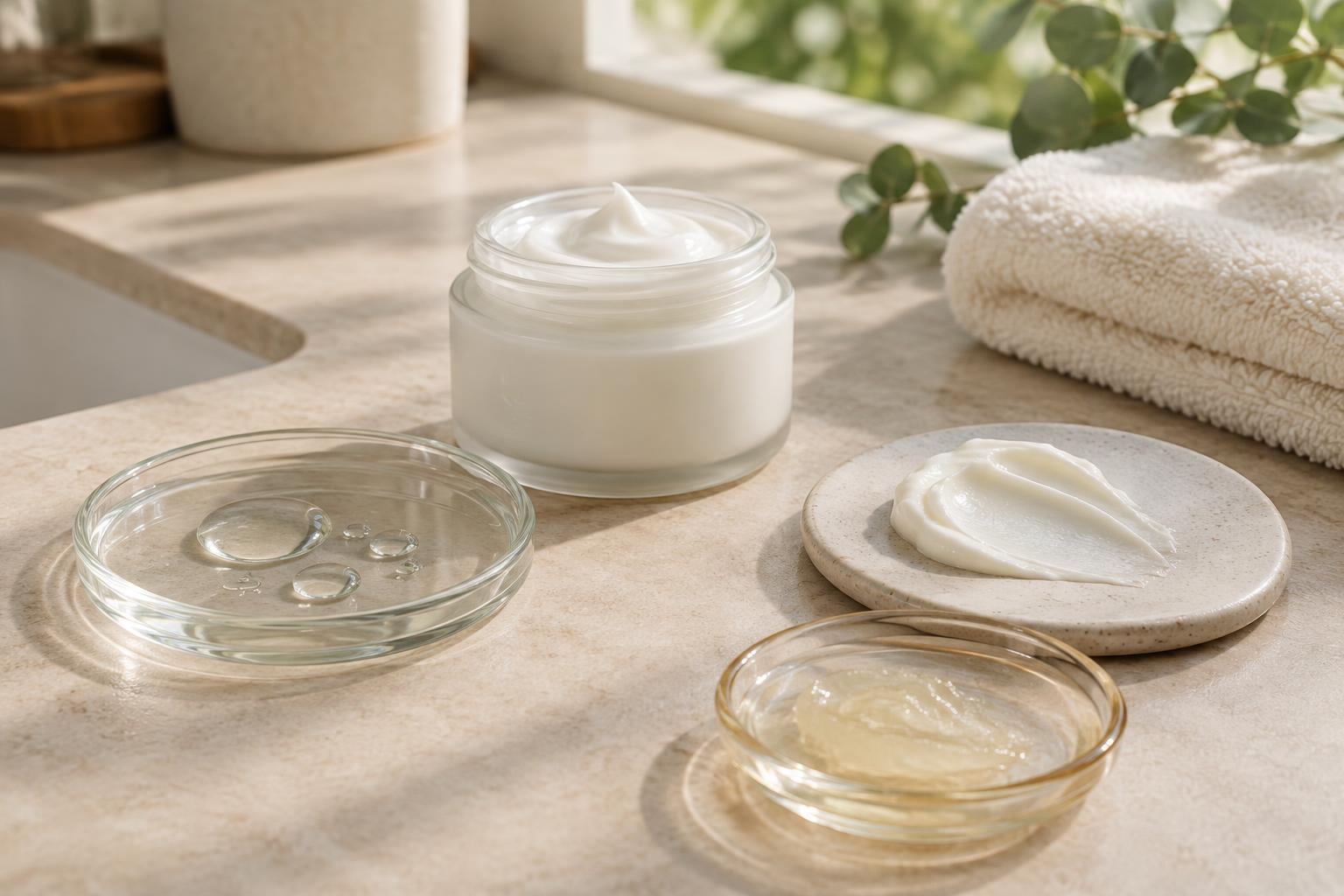
Think of the three roles as a guide to how a formula behaves. A light gel may rely heavily on humectants, while a rich balm may contain more noticeable emollient and occlusive ingredients. Many everyday lotions sit somewhere between those textures. The finished formula, the amount you apply and what feels comfortable on your skin matter more than finding a product that belongs to only one category.
Humectants attract and hold water
Humectants are ingredients that bind water. Glycerin, hyaluronic acid and sodium PCA are common examples on ingredient lists. In a moisturizer, they can help the outer layers of skin feel hydrated and temporarily look less dry. You may find them in everything from thin serums to thick creams, so a product described as “hydrating” does not have to feel heavy.
A humectant is not automatically a complete moisturizer on its own. If a simple humectant serum feels comfortable at first but your skin soon feels tight again, a lotion or cream over it may provide a more lasting sense of comfort. Applying moisturizer to skin that is slightly damp after cleansing can also be a convenient way to include some water in the routine. There is no need to leave your face dripping wet; a gentle pat dry is fine.
Emollients make skin feel smoother
Emollients soften the feel of skin and help smooth the appearance of rough, flaky patches. Examples include squalane, certain plant-derived oils, fatty alcohols such as cetyl alcohol, and various esters. Despite the word “alcohol” in their names, fatty alcohols are different from the quick-drying alcohols sometimes used to make a formula feel lighter.
Emollients also influence a moisturizer’s slip, spread and finish. They can make a cream feel plush or help a lotion glide on without tugging. If your skin feels rough even when you use a watery hydrating product, a formula with more emollient ingredients may be worth trying. Richer is not always better, though: the right texture is one you are happy to use consistently, especially if you layer sunscreen or makeup over it.
Occlusives slow water loss
Occlusives form a layer that helps reduce water loss from the skin’s surface. Petrolatum, mineral oil and dimethicone are familiar examples. That layer does not mean skin is permanently sealed; it describes a useful barrier effect that can make a moisturizer feel more protective. Some occlusives also feel smoothing, which is another reason the ingredient roles overlap.
Occlusive-heavy products are often thicker or more noticeable on the skin, although texture depends on the whole formula. You might prefer one on areas that become dry easily, such as the sides of the nose or hands, without wanting the same texture across your entire face. If a product feels too greasy or sits uncomfortably under makeup, try a smaller amount or choose a lighter lotion rather than assuming the ingredient type is wrong for you.
How to use these terms when choosing a product
Start with the problem you want your moisturizer to solve. For a light, hydrated feel, look for a comfortable lotion or gel-cream with humectants. For rough-feeling skin, consider a cream with emollients. If dryness returns quickly, a formula with a more substantial occlusive component may be useful. These are starting points, not rules: many well-rounded moisturizers include all three roles.
Read ingredient lists for clues, but judge the complete product by how it feels after regular use. Ingredient order can tell you which ingredients appear in larger amounts up to a point, not exactly how a moisturizer will perform. Introduce a new product on a small area first if your skin is easily bothered, and stop using it if it causes discomfort. In the morning, moisturizer can be one step in your routine, but it does not replace a separate sunscreen unless the product is clearly labeled and used as one.