Start with complete, even coverage
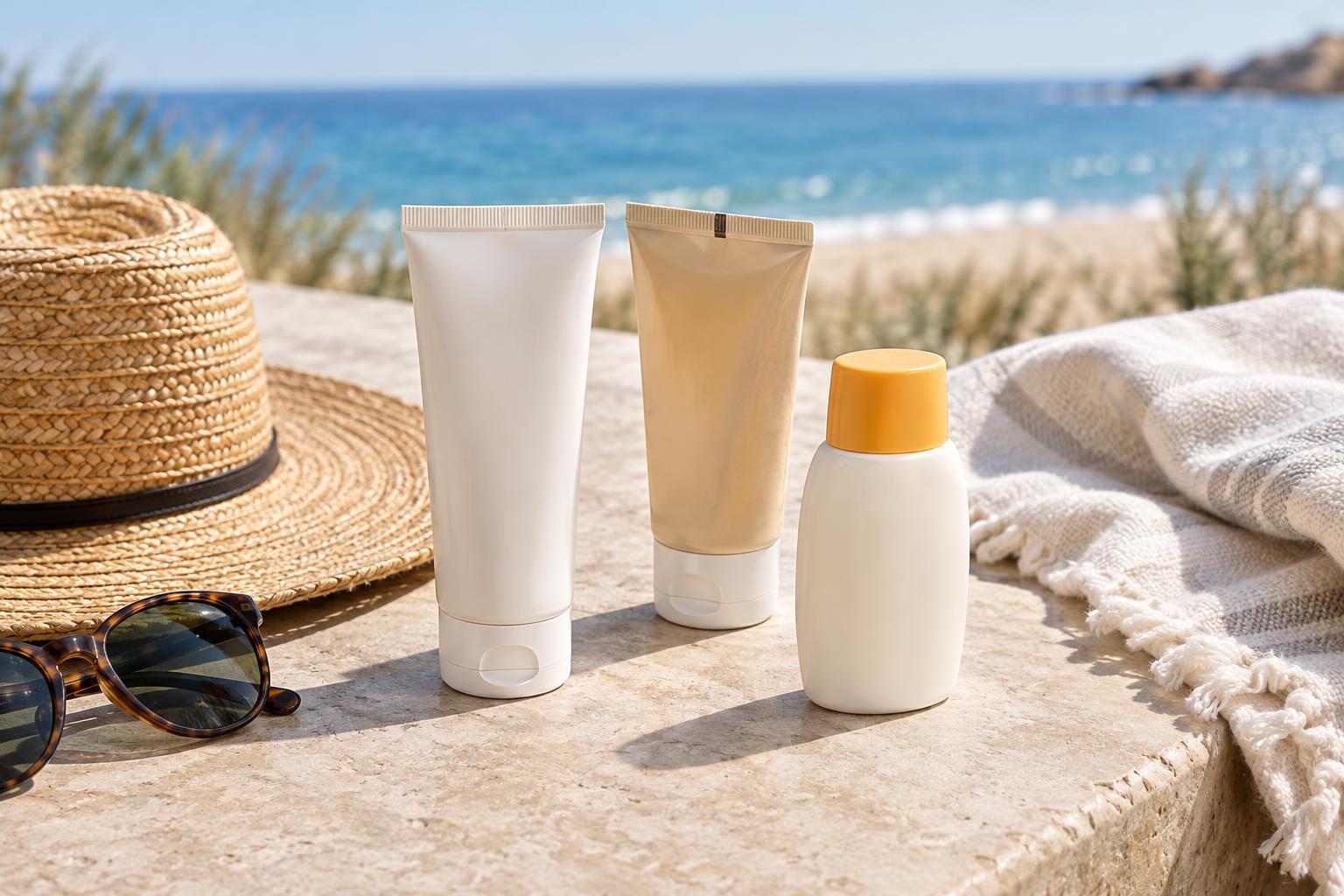
For everyday use, choose a broad-spectrum sunscreen with SPF 30 or higher. Then focus on coverage, not just the number on the bottle. A thin, hurried layer may leave gaps, especially along the hairline, beside the nose, and around clothing edges. Apply sunscreen to all skin that will be exposed, and spread it evenly rather than trying to stretch a small dab across a large area.
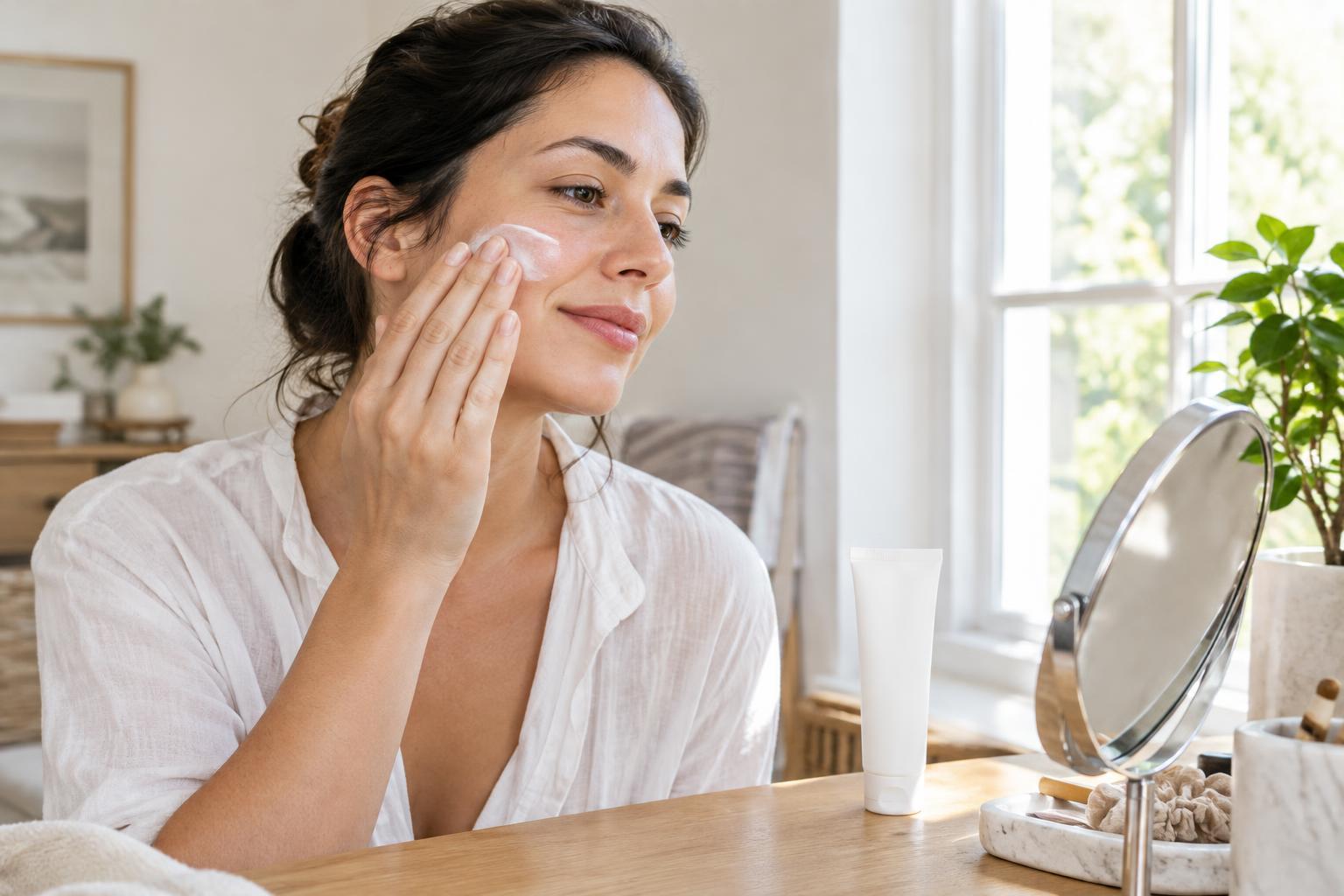
For the face and neck, a common starting point is two generous finger-length lines of sunscreen, but finger width and product texture vary. Treat that as a reminder to use a generous amount, not a precise measurement. If your first pass does not comfortably cover your face, ears, and neck, add more. You can apply it in two thinner layers if that makes it easier to distribute without missing spots.
For an adult wearing a swimsuit, roughly a shot-glass-sized amount is often used as a guide for the whole exposed body. Your needs will change with your size and how much skin your clothing covers. Pay attention to easy-to-forget areas such as the tops of the feet, backs of the hands, ears, and any part in your hair. A hat or clothing can help cover areas where sunscreen is difficult to apply reliably.
Give sunscreen a place in your morning routine
Apply sunscreen before heading outside, following the directions on your product. Many labels advise applying it about 15 minutes before sun exposure. In a skincare routine, sunscreen generally goes after moisturizer and before makeup. Letting one layer settle before adding the next can make the routine more comfortable, but the important step is keeping your sunscreen layer even rather than mixing it with moisturizer or foundation in your palm.
Makeup with SPF can be a useful extra, but it is difficult to apply most foundations or powders in the quantity needed to use them as your main sunscreen. Start with a dedicated sunscreen over exposed skin, then add makeup if you like. Lip balm with SPF can help cover lips, which are easy to overlook when applying a face product.
Reapply based on exposure and activity
When you are outdoors, a simple rule is to reapply sunscreen at least every two hours. Reapply sooner after swimming, heavy sweating, or towel drying, even if the product is labeled water resistant. Water resistance is not the same as waterproofing; check the label for its stated water-resistance time and follow those directions. Rubbing your face, changing clothes, or wiping skin can also disturb coverage.
If you spend most of the day indoors, you may not need to follow an outdoor reapplication schedule minute by minute. Consider what happens next: if you are going outside for a walk, commute, or lunch after your morning application, refresh exposed areas beforehand. If you sit beside a bright window for long periods, sunscreen on exposed skin may also be worth including in your routine. Shade, hats, and clothing remain helpful alongside sunscreen, particularly when staying outside for a while.
Make touch-ups realistic, even with makeup
Reapplying over makeup can feel awkward, but an imperfect plan is less useful than one you can actually follow. One option is to gently press or smooth a compatible sunscreen over your makeup in small sections, using enough to cover the skin rather than only a few dots. A sunscreen stick may make targeted touch-ups convenient around the nose and on ears, but take care to make several passes and blend any missed edges. A powder or mist may be convenient for topping up, yet it can be hard to tell whether you have applied enough for dependable coverage.
Keep the product you will use within reach, and check its label for application instructions. If a sunscreen pills, feels uncomfortable, or makes reapplication so difficult that you skip it, another texture may fit your routine better. The goal is straightforward: a generous, even first application, followed by fresh coverage whenever your time outdoors or your activities call for it.