Start with the texture already in your clothes
Texture is the way a surface looks and feels: denim has a visible weave, satin looks smooth, and a chunky knit has a raised pattern. Before adding accessories, notice what your clothes already contribute. A ribbed sweater and corduroy trousers have plenty of surface detail, while a plain cotton shirt and smooth trousers offer a quieter backdrop. That difference can guide how much contrast an accessory needs to provide.
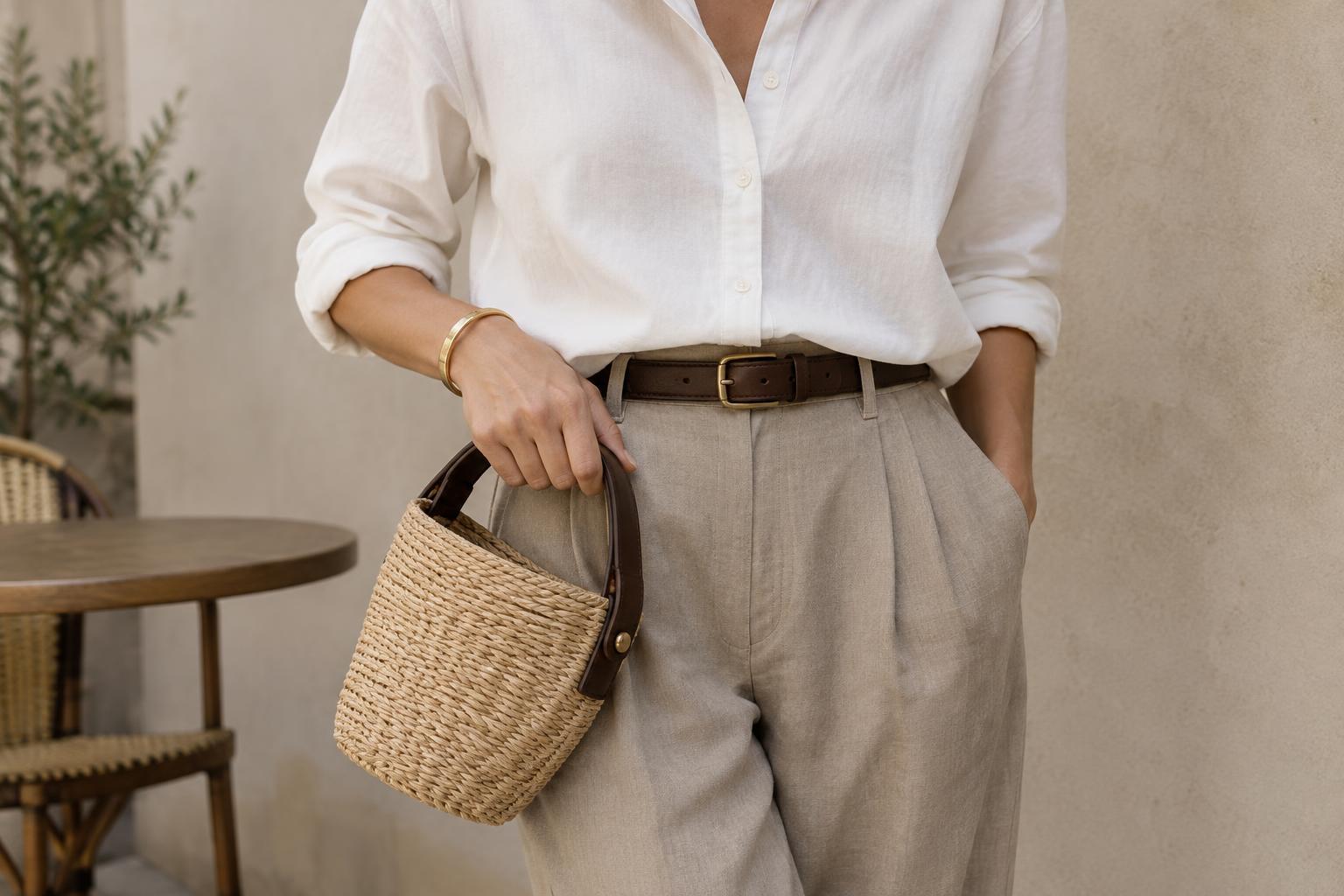
If your outfit is visually quiet, one textured piece can give it a focal point. Try a woven belt with a simple dress or a softly grained bag with a plain shirt and jeans. With heavily textured clothing, a smoother accessory may create a useful pause. The aim is not to make every surface different; it is to give the eye somewhere to rest and somewhere to look.
Choose one noticeable contrast
An easy starting point is to pair a smooth surface with a rougher-looking one. A polished buckle can stand out against a canvas belt, while a woven bag can soften the crisp lines of a tailored outfit. Matte and shiny finishes create contrast too: a small glossy hair clip may be enough to brighten an outfit made mostly of matte fabrics.
Keep the contrast at a scale that suits the outfit. A large, heavily textured tote will draw more attention than a narrow textured belt. If you want a subtle change, start with a small item you already use, such as a watch strap, shoe finish or bag handle. You can see whether the added detail feels right before introducing another piece.
Let color do less work when texture does more
Accessories do not have to introduce a new color to be interesting. A tan woven belt against tan trousers, for example, can still show up because the surfaces catch light differently. Staying within a similar color family is a practical way to try a bolder texture without making the whole outfit feel busy.
If you prefer contrasting colors, keep an eye on how many details are competing. A bright patterned scarf, shiny earrings and a heavily woven bag can each be appealing, but together they may pull attention in different directions. Choose the accessory you want to notice first. Let the others have simpler surfaces or quieter colors so they support it.
Check how the texture works in daily use
Looks are only part of the decision. A textured accessory may brush against delicate clothing, catch on loose threads or feel awkward where you hold it. Run your fingers over a bag edge, buckle or piece of jewelry and check for rough spots before pairing it with a fine knit or easily snagged fabric. A raised surface can also collect dust or lint more readily than a smooth one, so consider how much upkeep you are happy to do.
Think about where the accessory touches you as well. A stiff woven strap may look good but feel less comfortable on a bare shoulder than over a jacket. A bulky hair accessory may press against a chair back. These small checks help you choose a texture you will actually enjoy wearing, rather than one that only works when the outfit is standing still.
Build a repeatable combination
Once you find a pairing you like, make it a simple outfit formula. Smooth clothing with one woven accessory is one option; a textured knit with a polished belt buckle is another. You can repeat the contrast with different items without buying a matching set. The shared idea is the balance between surfaces, not an exact match in material or color.
Before heading out, look at the outfit from a few steps away. If one accessory gives it enough interest, stop there. If it still feels flat, add a small second finish, such as a matte shoe beside a polished bag. This quick check keeps texture a useful styling tool rather than another rule to follow.