The difference in plain language
Fragrance-free generally means a product has no fragrance added for the purpose of making it smell a certain way. It does not necessarily mean the product has no smell. Oils, extracts, and other ingredients can have their own scent, so a fragrance-free moisturizer might smell faintly waxy, herbal, or simply like its base ingredients.
Unscented usually describes the finished product’s smell: it is designed to have little or no noticeable scent. In some formulas, that result comes from leaving fragrance out. In others, a small amount of fragrance or a masking ingredient may be used to cover the smell of the base formula. The two labels can therefore describe products that smell similar but are formulated differently.
Why the front label is only a starting point
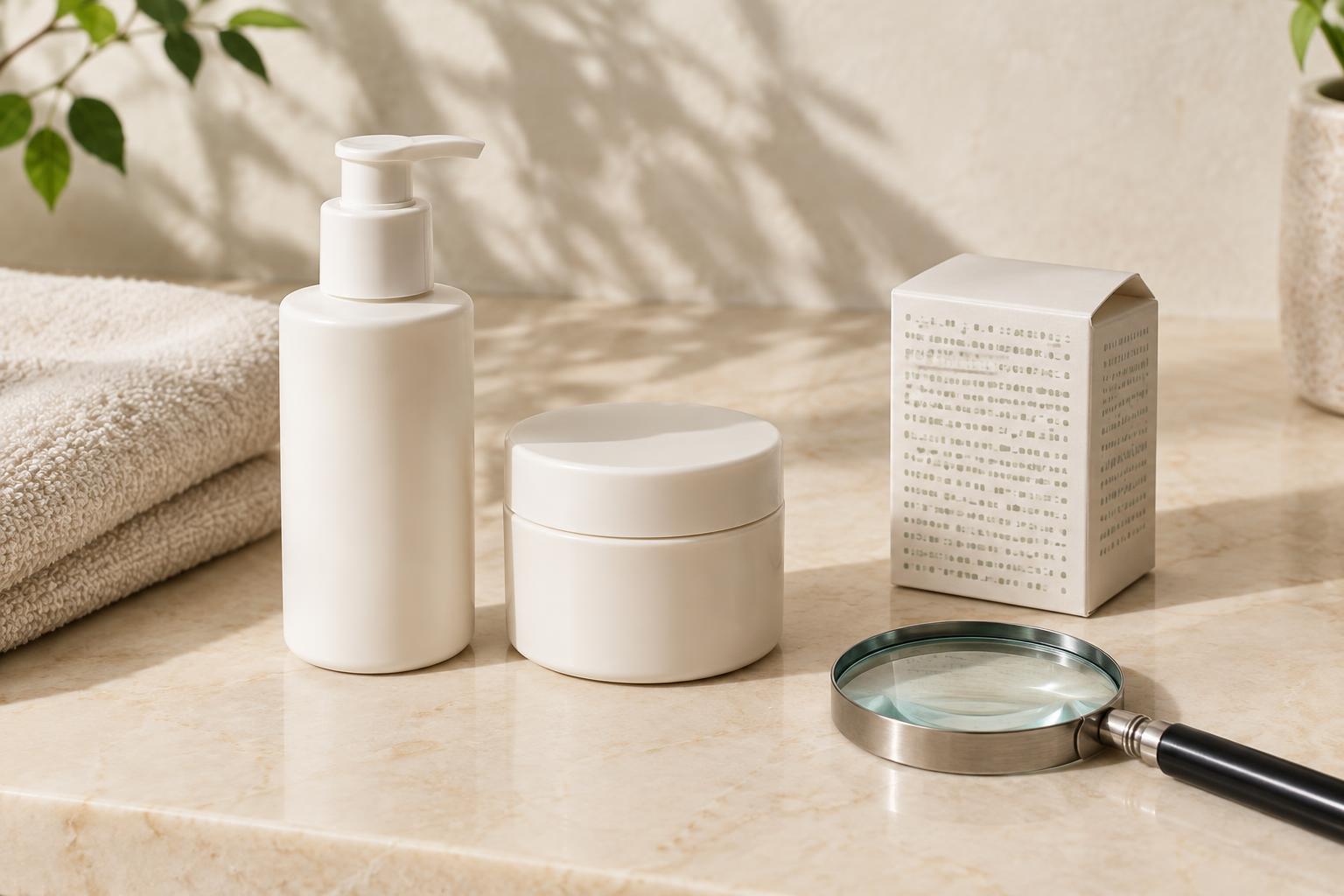
A front-of-pack phrase is useful for narrowing your choices, but it cannot tell you everything about a formula. If your goal is to avoid added fragrance, turn the package over and read the ingredient list. Look for terms such as “fragrance” or “parfum.” Keep in mind that ingredient names and labeling practices can vary by market, so a quick scan is helpful rather than a perfect guarantee.
Botanical ingredients deserve a second look, too. Essential oils and aromatic plant extracts may contribute a scent even when a product is promoted as fragrance-free. Their presence does not automatically make a product unsuitable for you; it means the label alone may not answer your specific question. If an ingredient matters to you, check the full list instead of relying on a broad claim such as “natural” or “gentle.”
Choosing a label that matches your goal
If you dislike smelling your skincare as you apply it, an unscented product may meet your needs. If you want to avoid fragrance ingredients, fragrance-free is the more relevant phrase, followed by an ingredient-list check. These are different preferences, and neither label tells you on its own how a product will feel on your skin.
This distinction can be especially useful when shopping online, where you cannot smell a product before buying it. Read the product description and ingredient list together. If a listing says both “fragrance-free” and “unscented,” the brand may be indicating that it has no added fragrance and little noticeable scent. If the wording remains unclear, the packaging or brand’s product information may offer a more precise answer.
Other claims that can cause confusion
Words such as “hypoallergenic,” “clean,” and “for sensitive skin” are not substitutes for fragrance-free. They may express how a product is positioned, but they do not by themselves identify every ingredient or predict how any one person will respond. Similarly, a product with a noticeable smell is not necessarily fragranced: the scent could come from ingredients that serve another role in the formula.
It also helps to separate scent from texture and performance. A fragrance-free cleanser can still feel rich or foamy, and an unscented lotion can still contain ingredients you would rather avoid. When comparing products, consider the whole formula alongside practical details such as whether the product is a rinse-off cleanser or a leave-on cream.
A simple shopping routine
Start by deciding what you mean by “no scent.” Do you want a product with no noticeable smell, or do you want to avoid added fragrance? Use that answer to choose which label to look for first. Then read the ingredient list for fragrance-related terms and any specific ingredients you already know you prefer to skip.
When you try a new product, add it to your routine one at a time so it is easier to tell how you feel about its scent, texture, and finish. If your skin is easily bothered by new products, testing a small area first is a cautious way to assess comfort before using it more widely. The most useful label is the one that helps you make an informed choice—not a promise that the product will suit everyone.