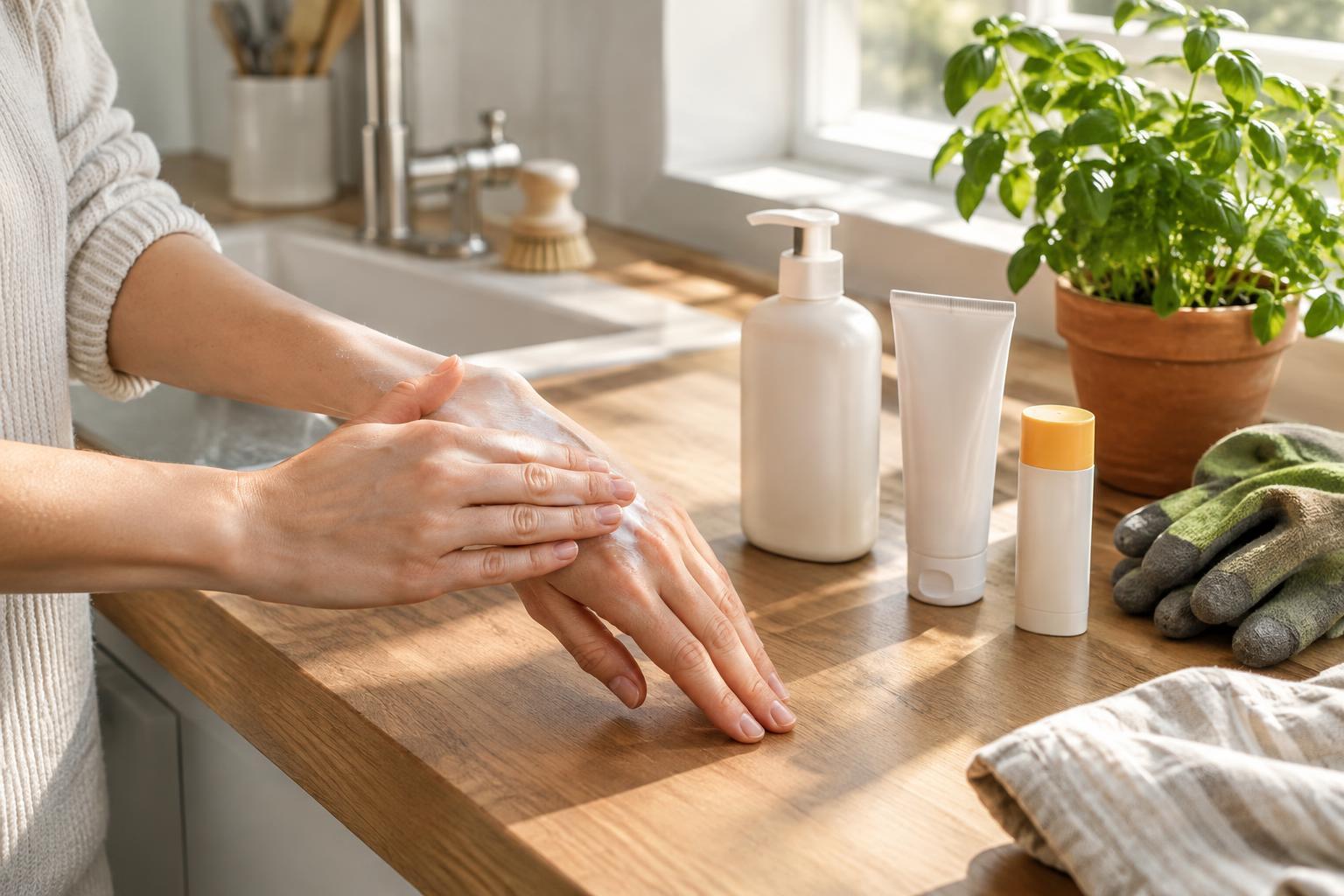
Start with the tasks your hands actually do
A useful hand-care routine does not need a shelf of dedicated products. Start by noticing when your hands feel dry or uncomfortable: after washing dishes, using cleaning products, spending time outdoors or washing your hands repeatedly. Those patterns can help you decide where to keep moisturizer and when a pair of gloves would make a task more comfortable.
For most everyday routines, the basics are straightforward: wash when needed, dry your hands, apply moisturizer and protect exposed skin outdoors. You can adjust the texture of your moisturizer to suit the moment. A lighter lotion may be convenient during the day, while a richer cream may feel more comfortable when you have time to let it settle.
Make washing and moisturizing work together
Wash your hands thoroughly when the task calls for it, rather than skipping necessary washing to avoid dryness. You can keep the process comfortable by using water that does not feel excessively hot and a cleanser that feels pleasant on your skin. Rinse away the cleanser and dry your hands carefully, including between the fingers. You do not need to scrub harder to make an ordinary wash more effective.
Moisturizer is often easiest to remember when it sits near the sink. After drying, smooth a small amount over your palms, the backs of your hands and around your fingers. Add more if needed instead of starting with so much that your hands feel slippery. If you dislike residue before typing or handling objects, try a lighter daytime texture and save a thicker cream for a quieter part of your routine.
Product names can make this step seem more complicated than it is. A product labeled “hand cream” is a convenient option, but the label alone does not determine whether it will feel right for you. Consider its texture, scent and how comfortably you can use it often enough to fit your day.
Plan for outdoor time and hands-on chores
When your hands will be exposed outdoors, remember that the backs of your hands are easy to overlook during sun protection. Apply sunscreen according to its label, and pay attention to reapplication when washing or other activities remove it. Gloves can provide a practical barrier for some tasks, but they are not a substitute for following the directions on sunscreen or cleaning products.
Choose gloves for the job rather than expecting one pair to do everything. Gardening gloves can help with rough surfaces and dirt, while gloves intended for household cleaning may suit wet chores. Check that they fit well enough to let you work comfortably, and replace them if they tear. Afterward, wash your hands as appropriate, dry them and moisturize if they feel dry.
If gardening is part of your routine, browse Seasonal Garden Care · The Community Garden Notebook for ideas about seasonal garden tasks that may shape what you keep by the door. For planting inspiration, explore Flowers and Ornamentals · The Community Garden Notebook before your next flower-focused project. Those browsing stops can help you plan the activity; your hand-care routine can remain simple whatever you choose to grow.
Keep the routine easy to repeat
The best setup is one you can use without rearranging your day. You might keep a small moisturizer near the sink and another where you usually settle in for the evening. If you use gloves, give them a place to dry and store them near the chores they are meant for. These small choices remove the need to remember every step from scratch.
Pay attention to comfort rather than chasing a perfectly polished look. If a product stings or consistently feels unpleasant, stop using it and reconsider that step. If your hands remain uncomfortable despite a gentle routine, a qualified professional can help you assess what is going on. Otherwise, a few repeatable habits are enough to make hand care a practical part of everyday life.